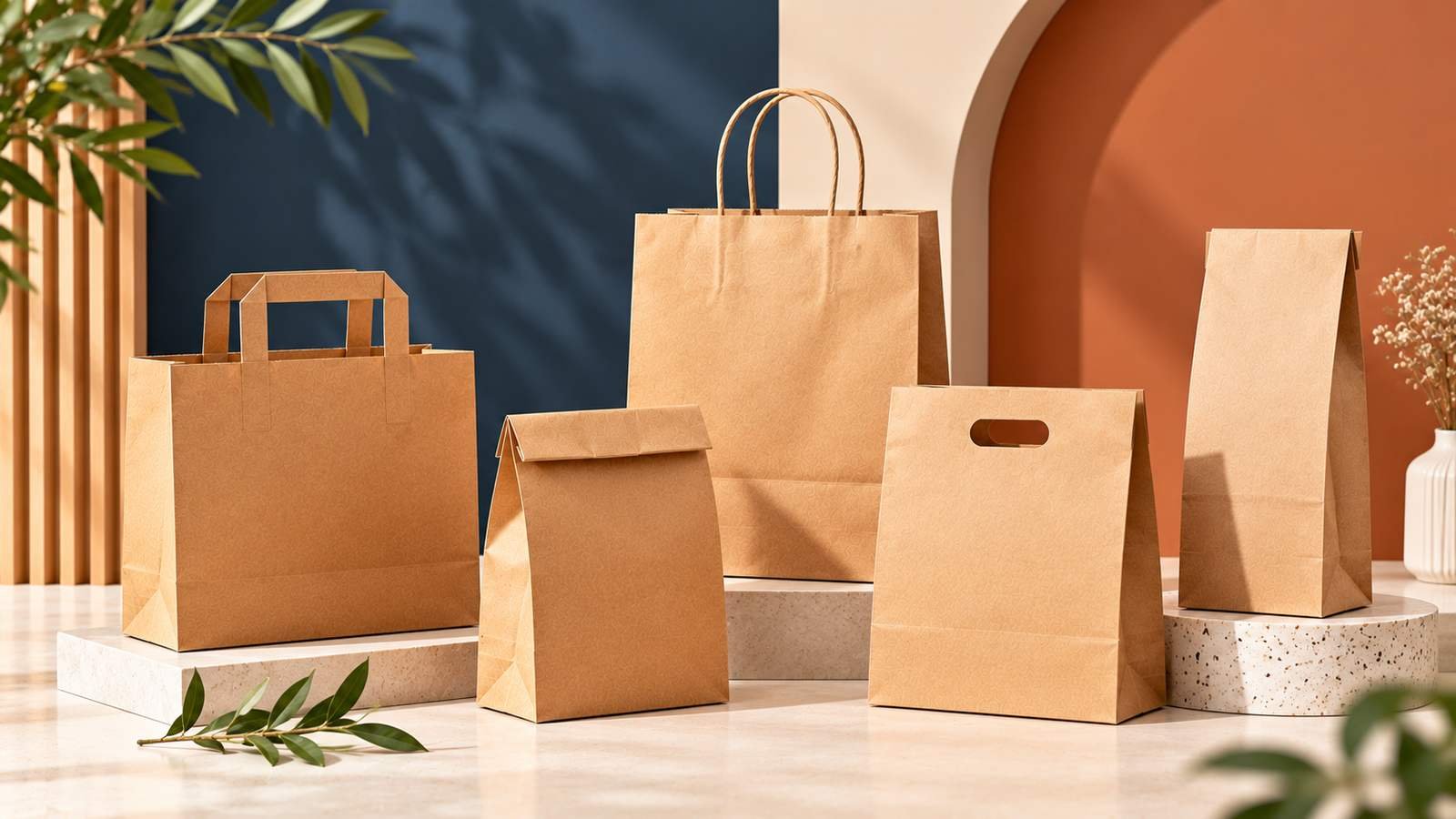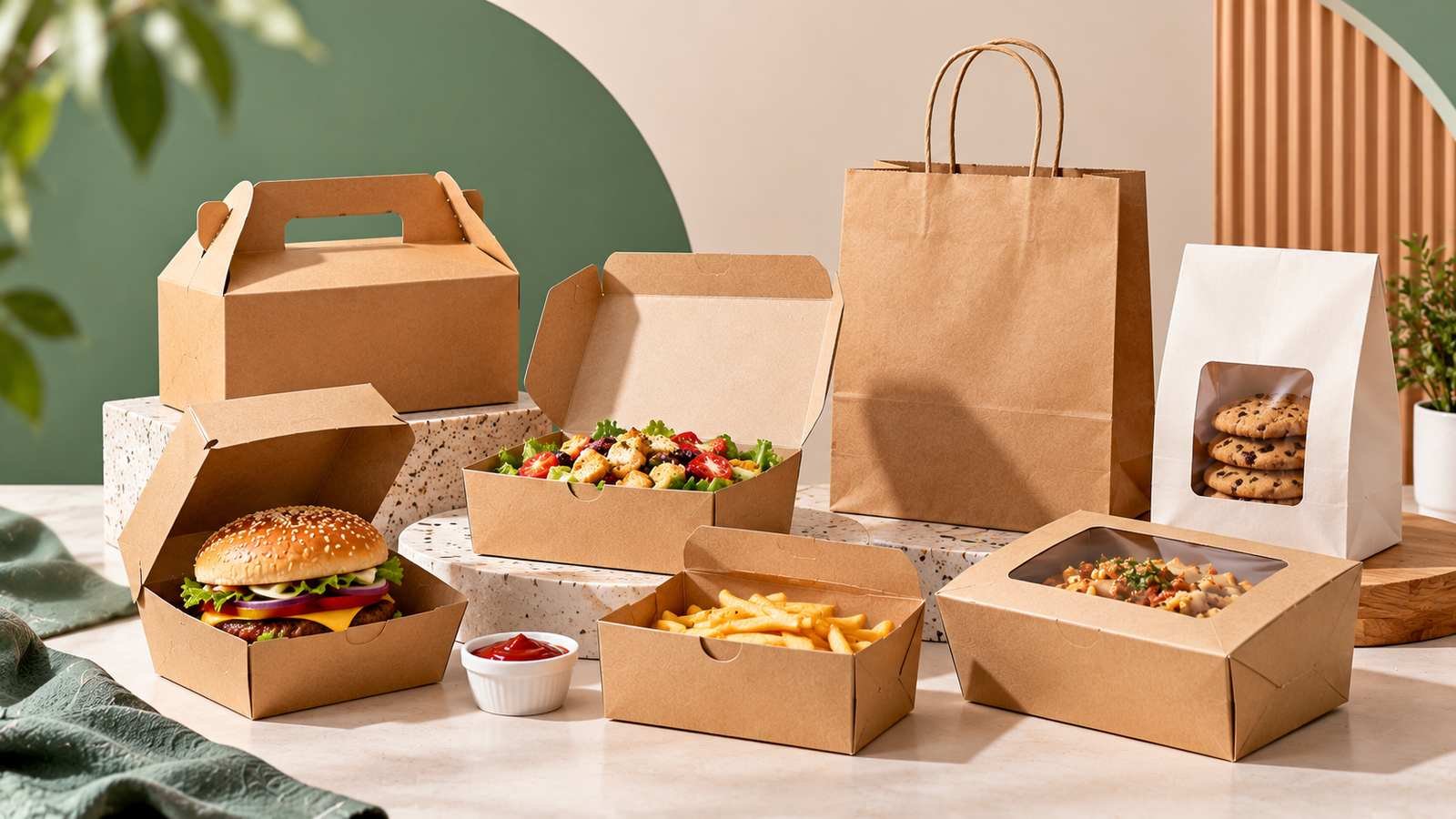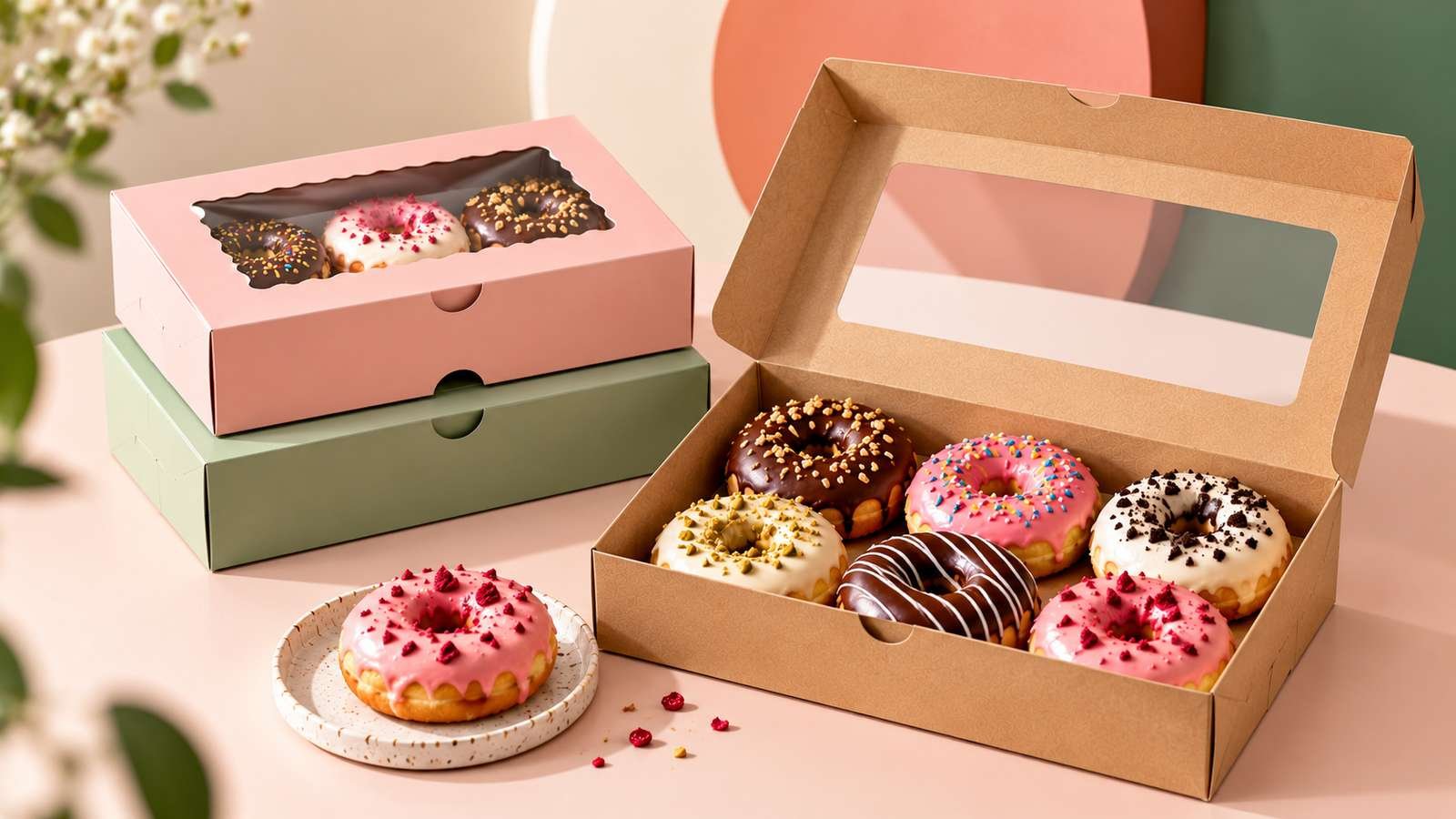

FREE SHIPPING ON ALL ORDERS

How Custom Packaging Can Strengthen Your Brand

Customers often encounter your packaging before they use the product itself. A box, bag, sleeve, or mailer can communicate what your business stands for, help customers recognize your products, and shape the experience of opening a purchase. That is why custom packaging branding should be considered part of your overall brand strategy—not simply a place to print a logo.

When packaging is planned carefully, it can create a consistent visual identity across retail shelves, deliveries, and repeat purchases. This guide explains how custom packaging can strengthen brand recognition, communicate product value, and support a more memorable customer experience, with practical ideas for using kraft packaging.

Quick takeaway
Strong branded packaging combines a recognizable design with the right format, material, and product information. Keep your logo, colors, typography, and messaging consistent, while making sure the package protects the product and is practical to use.

1. Build Brand Recognition With Consistent Packaging

Repeated visual cues help customers connect a package with the business behind it. A consistent logo placement, color palette, typography, and design style can make different products feel like part of the same brand family.

For example, a retailer might use the same logo treatment on kraft bags, product boxes, and labels. An ecommerce business might carry its brand colors from the outer shipping box to the insert card inside. The formats can differ, but the visual identity remains recognizable.

  • Use one approved version of your logo across packaging materials.
  • Choose a small set of brand colors and use them consistently.
  • Keep typography readable at the actual print size.
  • Use repeatable design elements across different packaging formats.

2. Make the First Impression Match Your Brand

Packaging contributes to how a product is presented at checkout, on a shelf, or when a delivery arrives. A neat, well-fitted package can make the purchase feel considered. A premium product may call for a more refined finish, while a natural or handmade brand may prefer a simpler kraft look.

Start by identifying the impression you want customers to have. Then choose packaging details that support it rather than adding decorative elements without a clear purpose.

3. Use Custom Kraft Packaging to Express Your Brand Style

Kraft packaging has a recognizable paper appearance that can suit brands looking for a natural, understated, or practical visual style. It is available in different packaging formats, including boxes and bags, and may be customized with suitable printed artwork and specifications.

Depending on the product and packaging format, you can use a simple one-color logo, a larger printed design, a product label, or a branded sleeve. The most effective approach is one that remains legible and works with the surface and material being printed.

Explore custom printed kraft packaging in the USA to see packaging options for different business and product needs.

4. Choose Packaging That Fits the Product

A strong brand presentation cannot compensate for packaging that is the wrong size or unsuitable for the product. The package should hold the item appropriately, allow for any required protective materials, and suit how it will be stored, displayed, carried, or shipped.

  • Measure the product: check length, width, and height, including components or accessories.
  • Consider product weight: select a construction and closure suited to the expected contents.
  • Plan for protection: use inserts, dividers, or cushioning when products need support.
  • Think about the customer: consider ease of opening, carrying, storage, and disposal.

5. Use Packaging Design to Communicate Brand Values

Packaging can express a brand’s personality through color, typography, imagery, material, and tone of voice. A minimalist design can suggest simplicity; a bold color system can create a more energetic look; and a kraft surface with restrained printing can support a natural visual identity.

Make sure the design reflects real product and business attributes. Avoid claims such as recyclable, compostable, or environmentally friendly unless the specific material, components, and disposal conditions support them.

6. Create a Memorable Unboxing Experience

For online orders and gift purchases, the opening experience is another opportunity to reinforce your brand. A printed insert, tissue paper, sticker, or organized product layout can make the package feel complete. These details should complement the product and not create unnecessary layers or waste.

  • Use a branded seal or sticker to close tissue paper.
  • Add a short thank-you card or helpful product information.
  • Arrange multiple products with suitable inserts or dividers.
  • Keep the opening process straightforward and avoid excessive filler.

7. Make Product Information Easy to Find

Packaging is not only visual. It can also help customers identify a product and understand important details. Depending on the product category, packaging may include the product name, size, variant, instructions, care details, ingredients, warnings, or business information.

Prioritize information customers need and check any applicable labeling requirements for your product and market. Keep the layout organized so required details are not lost among decorative elements.

8. Keep Branding Consistent Across Boxes, Bags, and Labels

Customers may encounter several packaging formats from the same business. A coordinated system helps them recognize the brand even when the product or package changes.

Packaging format Branding opportunity What to check
Product boxes Logo, product name, pattern, or printed panels Fit, construction, print placement, and protection
Shopping and merchandise bags Visible logo, brand colors, and simple messaging Bag dimensions, handle style, and carrying use
Labels and stickers Compact logo, product variant, or seal Legibility, adhesive, and surface compatibility
Sleeves and paper bands Brand story, product details, and visual accents Secure fit and access to product information
Shipping packaging Outer logo, tape, insert cards, and interior print Transit protection, sealing, and shipping dimensions

9. Match Packaging to Your Customer and Sales Channel

Packaging should reflect how customers buy and receive your products. Retail packaging may need to look appealing on a shelf or be comfortable to carry. Ecommerce packaging has to account for handling and delivery, while gift packaging may put more emphasis on presentation.

  • Retail stores: focus on display, easy handling, and bags or boxes that suit checkout purchases.
  • Ecommerce: prioritize shipping protection, efficient packing, and a branded delivery experience.
  • Wholesale: consider consistent product identification, storage, and practical packing quantities.
  • Gift products: consider coordinated boxes, tissue, inserts, and message cards.

10. Avoid Common Custom Packaging Branding Mistakes

Even a good visual concept can be weakened by poor execution. Review these points before sending artwork to production:

  1. Too many design elements: a crowded package can make the brand harder to recognize. Keep the main message clear.
  2. Low-contrast printing: check that logos and text remain readable on the selected material and color.
  3. Incorrect dimensions: confirm the product fit and allow for inserts or protective materials.
  4. Inconsistent artwork: use approved logo files, colors, and fonts across packaging formats.
  5. Unverified claims: ensure material and sustainability statements are accurate and supportable.
  6. Skipping proof approval: review print proofs or samples before approving a production order.

11. How to Plan Custom Printed Kraft Packaging

Before requesting a quote, prepare a clear brief. This helps your packaging supplier understand the product, brand requirements, and intended use.

  • Product type, dimensions, and approximate weight.
  • Packaging format, such as a box, bag, sleeve, or mailer.
  • Material and construction requirements.
  • Logo files, brand colors, and print-ready artwork.
  • Preferred print coverage, colors, and finishing details.
  • Order quantity, delivery location, and target timeline.
  • Any sample, proof, or quality checks required before production.

If you are still comparing formats, our guide to designing custom packaging for small businesses covers practical planning considerations. You can also explore kraft packaging types and uses.

Frequently Asked Questions About Custom Packaging Branding

How can custom packaging strengthen a brand?
Custom packaging can create consistent visual cues, communicate product information, and support a recognizable customer experience across retail and delivery channels.

What is kraft packaging?
Kraft packaging is packaging made using kraft paper or paperboard. It is available in formats such as boxes, bags, and other paper-based packaging styles.

What is kraft packaging used for?
It is used for a range of products, including retail merchandise, gifts, food packaging where suitable, and ecommerce products. The right format and specification depend on the product.

What types of kraft packaging are available?
Common formats include kraft boxes, shopping bags, merchandise bags, mailers, sleeves, and other paper packaging formats.

Can kraft packaging be customized?
Many kraft packaging formats can be specified with different dimensions, constructions, and printed designs, depending on the supplier’s production capabilities.

Can kraft packaging be printed?
Printing may be available for suitable kraft paper and board formats. Confirm the print method, colors, coverage, and artwork requirements for your chosen package.

What should I include in branded packaging?
Start with your logo and recognizable brand elements. Add product information, instructions, or a short message when it is useful to the customer.

How do I get a quote for custom kraft packaging?
Share your product dimensions, packaging format, material preferences, artwork, quantity, and delivery requirements so the supplier can review the specification.

Build a Consistent Brand With Custom Kraft Packaging

Bring your visual identity into every customer interaction with packaging planned around your products and brand. Explore custom printed kraft packaging and prepare your dimensions, artwork, and order requirements.

Explore Kraft Packaging

Ordering note: Packaging formats, printing methods, customization options, and pricing depend on the final specification and production capabilities. Confirm material suitability and print proofs before approving production.
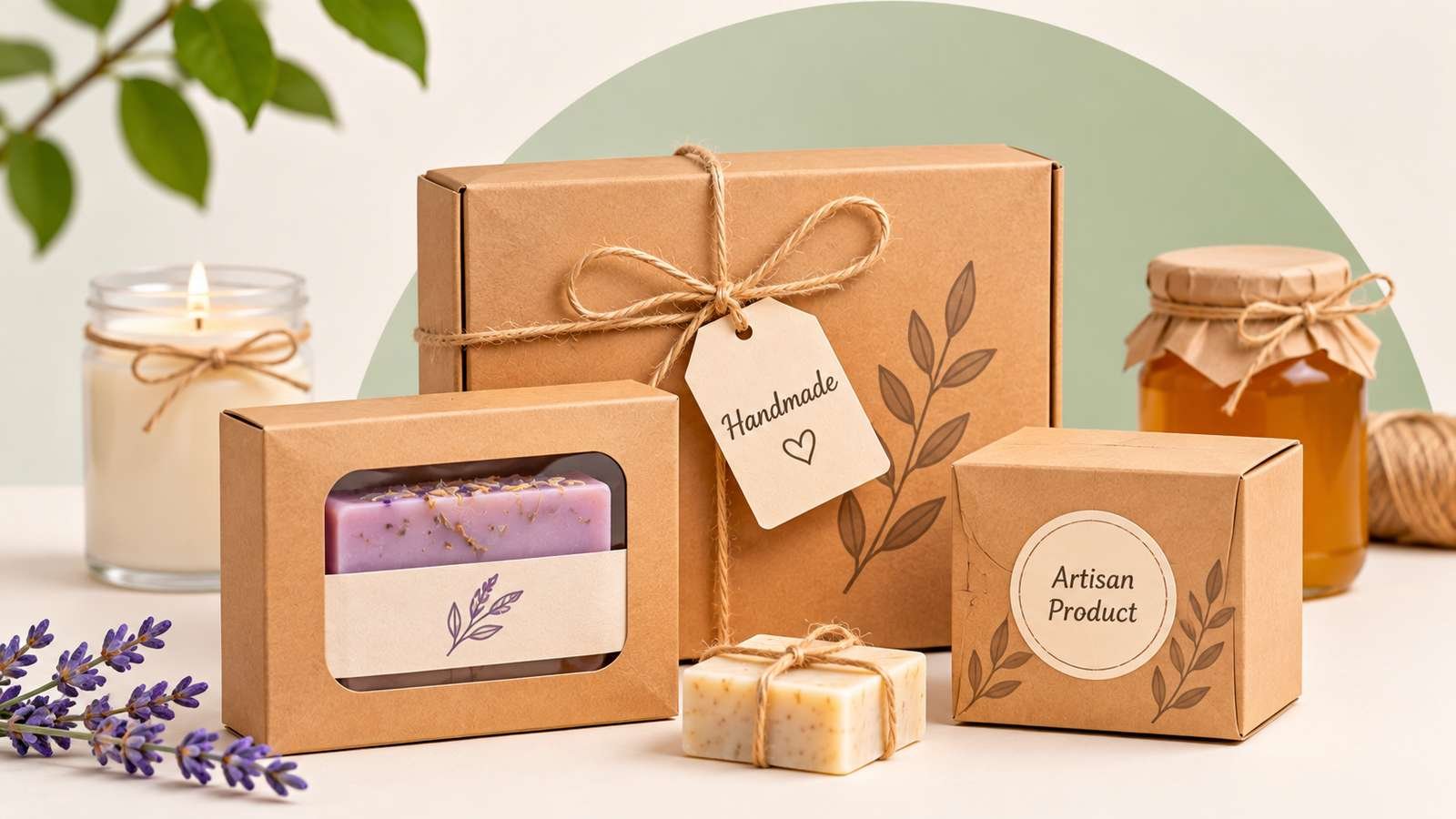
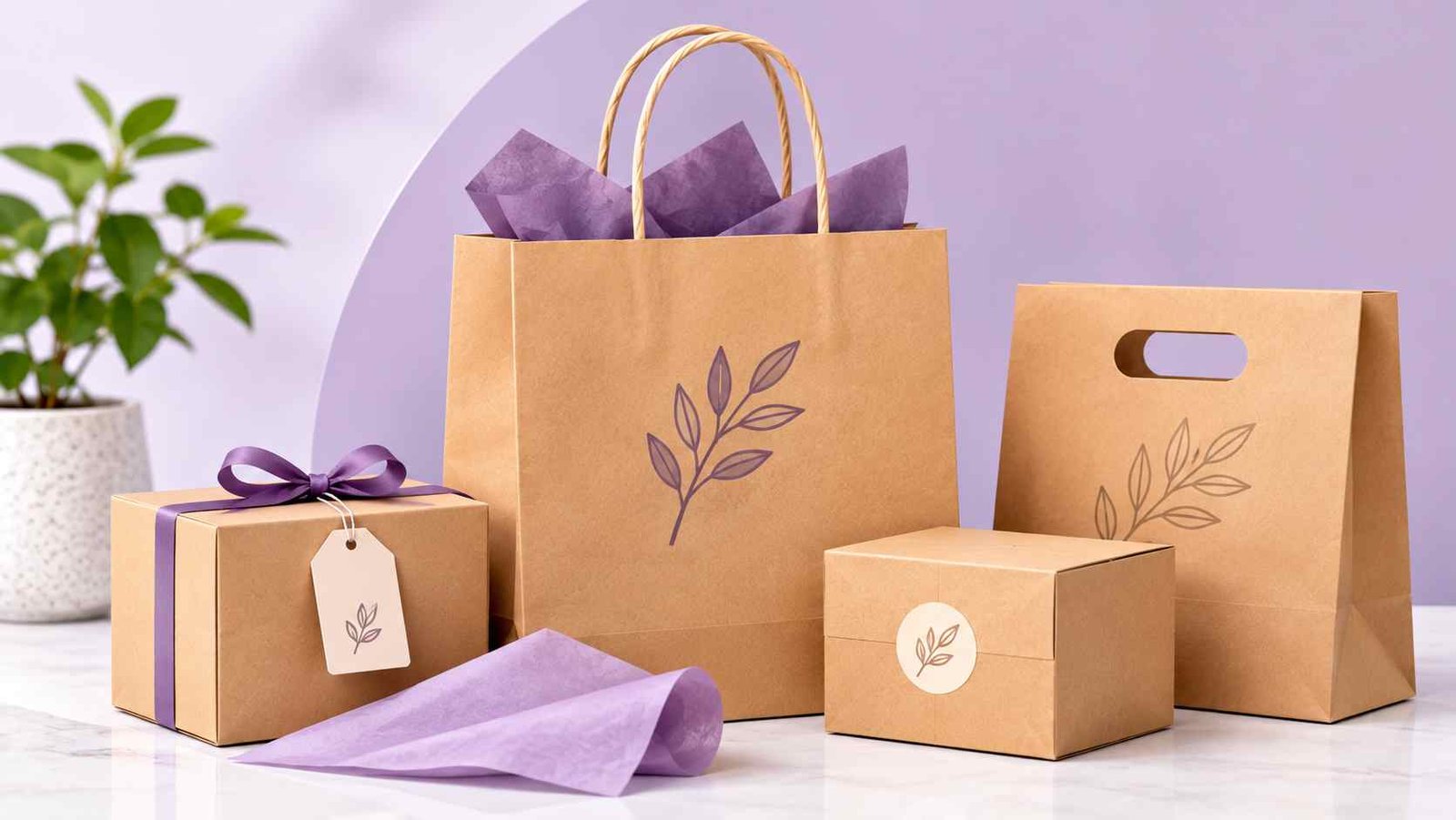
Packaging Ideas for Handmade & Artisan Products

Handmade products carry the care, creativity, and personality of the people who make them. Packaging is one of the first things customers notice, whether they discover your products at a craft market, in a boutique, or through an online order. Thoughtful packaging ideas for handmade products can protect delicate items, communicate your brand story, and make a purchase feel special without making the package unnecessarily complicated.

The right solution depends on what you sell. Handmade soaps, candles, jewelry, ceramics, textiles, and food gifts all have different packaging needs. This guide explores practical ways to package artisan products, choose suitable materials, and create a consistent branded look for a small business.

Quick takeaway
Choose packaging around product protection first, then add brand details such as labels, printed boxes, tissue, tags, or inserts. Custom kraft product boxes can provide a natural-looking, customizable option for many handmade and artisan products.

1. Use Custom Kraft Product Boxes for a Branded Presentation

Kraft boxes are a versatile option for handmade goods that need a defined shape or added protection. Their natural paper appearance works with rustic, minimalist, botanical, and modern brand styles. Depending on the box construction and product, they can be printed with a logo, product name, pattern, or simple brand message.

Use a box that fits the item and its protective materials. A box that is too large may allow products to move during handling, while one that is too small may put pressure on the contents.

  • Good for: candles, soaps, gift sets, accessories, small crafts, and retail products.
  • Branding idea: add a clean logo, a one-color illustration, or a small product label.
  • Practical detail: consider inserts, dividers, or cushioning for fragile or multi-piece products.

Explore custom kraft product boxes for product packaging that can be planned around your item dimensions and branding requirements.

2. Add Simple Branded Labels and Stickers

Labels and stickers are a flexible way to give plain packaging a recognizable identity. A logo sticker can close a box, seal tissue paper, or identify a product. A product label can communicate the item name, scent, color, size, ingredients, or other relevant details where applicable.

  • Keep the logo and product name easy to read.
  • Use a consistent label shape and color palette across product lines.
  • Choose an adhesive and label material suitable for the packaging surface and handling conditions.
  • Check that required product information is accurate and legible.

3. Wrap Products With Tissue Paper

Tissue paper can create a neat first layer inside a box or bag. It is especially useful for lightweight items, apparel accessories, small gifts, and products that benefit from an added presentation layer. Choose a brand color, a neutral shade, or a printed pattern that complements the rest of your packaging.

For delicate items, tissue should be treated as a presentation material rather than the only protective layer. Add suitable cushioning or an insert when the product needs support during shipping or handling.

4. Choose Window Boxes When Product Visibility Matters

A window box lets customers see part of the product without opening the package. This can work well for selected soaps, craft items, gift sets, and products displayed on retail shelves. Window packaging is most useful when the visible part of the product is attractive and the window does not compromise the protection the item needs.

Consider the size and placement of the window, the material used, and whether the contents need additional protection from dust, moisture, or handling.

5. Use Paper Bands, Sleeves, and Belly Bands

A paper band or sleeve can wrap around a product or a simple box to add branding without covering the entire surface. This approach can be useful for handmade notebooks, soaps, candles, textile items, and small gift products when the product already has suitable basic packaging.

Print the product name, logo, short description, or a small illustration on the band. Make sure it fits securely and does not hide important product details.

6. Create Gift Sets With Inserts and Dividers

Artisan products are often purchased as gifts or bundled into collections. A box with an insert or divider can keep several items organized and present them as one coordinated set. For example, a handmade gift box might hold soap bars, a candle, and a small accessory in separate compartments.

  • Measure each item and plan the layout before selecting the box.
  • Use dividers to separate products that may rub against or damage one another.
  • Choose cushioning for fragile contents.
  • Keep the arrangement easy for customers to open and understand.

7. Add a Personal Touch With Thank-You Cards and Product Stories

A small insert card can help handmade brands communicate the story behind a product. It might include a thank-you message, care instructions, information about the maker, or details about how to use the item. Keep the message concise and useful, and ensure any claims about materials or production are accurate.

For products that need special handling or care, clear instructions can be more valuable than decorative copy.

8. Match Packaging to the Handmade Product

There is no single packaging format for every artisan product. Use the table below as a starting point and adjust the specification to the item’s dimensions, fragility, and storage needs.

Product type Packaging ideas Important consideration
Handmade soap Kraft box, paper band, product label Product dimensions, ventilation or wrapping needs, labeling
Candles Fitted product box, insert, warning label Container protection and suitable clearances
Jewelry and accessories Small box, insert, pouch, branded sleeve Prevent movement, tangling, and surface scratches
Ceramics and fragile crafts Sturdy box, fitted insert, cushioning Impact protection and shipping tests
Textiles and handmade apparel Paper wrap, sleeve, merchandise bag Folded dimensions, cleanliness, and presentation
Gift sets Multi-compartment box, dividers, tissue Organize items and prevent contact damage

9. Build a Consistent Handmade Brand Look

Packaging looks more professional when the elements work together. You do not need a complicated design system. Choose a small set of colors, one or two type styles, and a recognizable logo treatment. Apply those choices to boxes, labels, cards, and outer packaging.

  • Use the same logo artwork and color values across print materials.
  • Choose a design that remains readable at small sizes.
  • Keep product names and key information clear.
  • Use a consistent visual style for different scents, flavors, colors, or product collections.
  • Review a printed proof before approving a larger production run.

10. Plan Packaging for Shipping and Retail Separately

A package that looks attractive on a shelf may need additional protection for parcel delivery. If you sell both in person and online, consider a presentation package for the product and a separate outer shipping carton or mailer for transit.

For shipped products, choose protective materials based on the product’s fragility, shape, and shipping conditions. Test the packed product before relying on the packaging for regular orders. For retail display, prioritize easy handling, product visibility where useful, and a format that fits your shelf or counter.

11. How to Order Custom Kraft Product Boxes

Before requesting a quote, prepare the details that determine the box design and production specification:

  1. Product measurements: provide the length, width, and height of the item, including any components that need to fit inside.
  2. Product weight and fragility: explain whether the product is delicate, heavy, or made up of multiple pieces.
  3. Box style: discuss the format and whether you need an insert, divider, or window.
  4. Material and finish: confirm the kraft material, printing requirements, and any finishing options.
  5. Artwork: prepare a high-resolution logo and print-ready design files if available.
  6. Quantity and timeline: share your expected order quantity and required delivery schedule.
  7. Proof or sample: review dimensions, fit, print placement, and construction before approving production.

For more inspiration from a specific handmade category, read our guide to soap packaging ideas for small businesses and handmade brands.

Frequently Asked Questions About Handmade Product Packaging

What are good packaging ideas for handmade products?
Popular options include kraft product boxes, paper bands, branded labels, tissue paper, window boxes, gift packaging, and thank-you cards. The best choice depends on product size, fragility, and how it will be sold or shipped.

What are kraft product boxes used for?
Kraft product boxes are used to package and present many retail and artisan products, including soaps, candles, accessories, gifts, and small merchandise. The box style and material should match the product’s requirements.

Can product boxes be customized?
Custom product boxes may be specified by dimensions, construction, printed artwork, and selected finishing details. Available options depend on the supplier and box format.

Can I add my logo to kraft product boxes?
Logo printing may be available on suitable kraft box formats. Provide your artwork and request a proof to check its size, color, and placement.

What sizes are available for custom kraft product boxes?
Box dimensions depend on the product and the supplier’s production capabilities. Share accurate product measurements to discuss a suitable size.

Are kraft boxes suitable for small businesses?
Kraft boxes can be considered by small businesses looking for paper-based product packaging with branding options. Compare specifications, minimum quantities, and total costs before ordering.

Can I order custom kraft product boxes wholesale?
Wholesale ordering may be available depending on the supplier’s production requirements. Ask about minimum order quantities, price breaks, lead times, and shipping.

How do I protect fragile handmade products?
Use a suitable box with fitted inserts, dividers, or cushioning, and test the packed product under realistic handling and shipping conditions.

Create Custom Packaging for Your Handmade Products

Give your artisan products packaging that fits their size, protects them appropriately, and reflects your brand. Explore custom kraft product boxes and plan your dimensions, artwork, and order requirements.

Explore Custom Kraft Product Boxes

Ordering note: Box availability, customization, minimum quantities, and pricing depend on the final specification and production capabilities. Confirm product fit and protection requirements before approving an order.

Custom Retail Packaging Ideas for Boutiques and Stores

For boutiques and retail stores, packaging is part of the customer experience. A well-chosen bag or box protects a purchase, makes it easier to carry, and gives your brand another opportunity to make a memorable impression. The most effective retail packaging ideas balance appearance with practical details such as product size, weight, storage, and budget.

Whether you run a clothing boutique, gift shop, cosmetics store, or specialty retailer, you can build a consistent packaging style without making every package complicated. This guide covers practical ideas for shopping bags, merchandise bags, boxes, labels, and branded details.

Quick takeaway
Start with packaging that fits your products, then create consistency through colors, logos, materials, and finishing details. Custom kraft merchandise bags can be a useful option for stores that want a natural paper look with room for branding.

1. Use Custom Kraft Merchandise Bags for Everyday Purchases

Shopping bags are often the final packaging customers receive at checkout. Custom kraft merchandise bags offer a paper-based format that can be printed with a store logo, brand colors, or a simple design. They work well for many boutique and retail purchases when the bag dimensions and construction match the products being carried.

Consider a clean logo on one side, a small brand message, or a repeating pattern that reflects your store identity. Keep important information easy to read and avoid overcrowding the design.

  • Best for: apparel, accessories, gifts, books, and general retail merchandise.
  • Design idea: natural kraft color with a one-color logo for a restrained look.
  • Practical tip: select dimensions and handle styles based on the size and weight of typical purchases.

Explore custom kraft merchandise bags for branded retail packaging options.

2. Create a Consistent Brand Color Palette

Consistency makes different packaging pieces feel like part of one brand. Choose a small palette that works with your store logo, signage, and product presentation. You might use a natural kraft base with one or two brand colors, or choose white packaging with a distinctive accent.

  • Use the same logo placement across bags, labels, and boxes.
  • Choose colors that remain legible against the packaging material.
  • Keep typography consistent and limit the number of fonts.
  • Prepare print-ready artwork and review a proof before production.

3. Add Branded Tissue Paper and Product Wrap

Tissue paper can make the unboxing or checkout experience feel more considered, especially for apparel, accessories, cosmetics, and gifts. Use a single brand color, a subtle printed pattern, or a small logo repeat. For products that need extra protection, choose an appropriate wrap and packing method rather than relying on decorative tissue alone.

Coordinate tissue paper with the shopping bag or merchandise box so the packaging looks intentional when customers open it.

4. Choose Retail Boxes That Fit the Product

Boxes are useful when merchandise needs more structure or protection than a bag can provide. Apparel accessories, candles, cosmetics, gifts, and specialty items may benefit from a box selected for the product’s dimensions and handling needs.

  • Choose a box style that fits the product without excessive empty space.
  • Consider inserts or dividers when items need to stay in place.
  • Use a printed label or sleeve when a full custom print is not necessary.
  • Make sure the material and closure suit storage, display, and transport.

5. Use Stickers, Labels, and Hang Tags

Small branded details can help unify plain packaging. Logo stickers can seal tissue paper or close a package, while labels can communicate product information. Hang tags are useful for apparel and accessories, where customers may need details such as size, care, or product identity.

Keep each element purposeful. Include only the information customers need, and make sure required product or business information is accurate.

6. Offer Gift-Ready Packaging

Many retail purchases are intended as gifts, even when customers do not ask for gift wrapping in advance. A simple gift-ready option can include a suitable bag or box, coordinated tissue paper, and a branded sticker or tag. For boutiques, this can make the purchase feel complete without requiring an elaborate package.

Consider offering a standard packaging option and a more decorative option for special purchases or seasonal promotions.

7. Use Window Packaging When Product Visibility Helps

For selected products, a clear window can let customers see the item while keeping it contained. Window packaging may suit accessories, gift sets, and certain specialty retail products. It is not necessary for every product: choose it when visibility adds useful information or improves presentation, and confirm that the window material and construction suit the product.

8. Make Seasonal Packaging Easy to Adapt

Seasonal packaging can help a store refresh its presentation for holidays, events, or limited-time collections. Instead of changing every packaging component, keep your core bag or box design consistent and add a seasonal sticker, sleeve, tag, or tissue color.

  • Use a limited seasonal color accent.
  • Keep the main logo and brand identity recognizable.
  • Plan quantities carefully to avoid excess packaging after a promotion ends.
  • Choose add-ons that can be applied to your regular packaging stock.

9. Select Packaging Based on Product and Store Type

Different stores have different packaging priorities. Use the table below as a starting point, then adjust the materials and dimensions to your products.

Store type Packaging ideas Key consideration
Clothing boutique Kraft merchandise bags, tissue, hang tags Bag size, handles, and garment fit
Gift shop Gift boxes, printed bags, ribbons, stickers Presentation and product protection
Cosmetics retailer Small merchandise bags, cartons, labels Product dimensions and secure packing
Jewelry store Small boxes, pouches, branded bags Protection, presentation, and sizing
Book or stationery store Paper shopping bags, sleeves, labels Product dimensions and carrying comfort

10. How to Plan Custom Retail Packaging on a Budget

A polished package does not require every component to be custom-made. Prioritize the items customers see and use most often, then add optional details as your budget allows.

  1. Start with the essentials. Choose a suitable bag or box for your most common purchases.
  2. Use one strong brand element. A clear logo or consistent color can make plain packaging recognizable.
  3. Standardize sizes where practical. A small range of bag or box sizes may cover many products while simplifying storage.
  4. Compare total order costs. Ask about quantity breaks, print setup, material, finishing, shipping, and storage.
  5. Request a sample or proof. Check dimensions, print appearance, handle attachment, and construction before approving a larger order.

11. What to Check Before Ordering Custom Merchandise Bags

Before you order custom kraft merchandise bags for retail, prepare a clear specification. This helps your packaging supplier recommend a suitable format and provide a more accurate quote.

  • Bag width, height, and gusset depth.
  • Product type, approximate weight, and how customers will carry it.
  • Kraft paper or other material requirements.
  • Handle style and attachment requirements.
  • Logo artwork, print colors, and print area.
  • Order quantity, delivery destination, and required timeline.
  • Sample, proof, and quality approval process.

For more guidance on selecting bag materials and formats, read our guides to how to choose the right paper bag for your business and kraft paper bag types and uses.

Frequently Asked Questions About Retail Packaging

What are kraft merchandise bags?
Kraft merchandise bags are paper shopping or carry bags made with kraft paper. They can be specified in different sizes and handle styles, and may be printed with a retailer’s branding.

What are custom kraft merchandise bags used for?
They are commonly used by boutiques, clothing stores, gift shops, and other retailers to package purchases for customers.

Can kraft merchandise bags be customized?
Customization may include bag dimensions, handle style, printed artwork, and other production details, depending on the available bag format.

Can kraft merchandise bags be printed?
Yes, kraft bags can be produced with branding and artwork when the chosen material and printing specifications support the design. Request a proof to review colors and placement.

How much do custom kraft merchandise bags cost?
Pricing depends on dimensions, paper specification, printing, handle type, finishing, order quantity, and delivery. Share these details to request a quote for your project.

What size merchandise bag do I need?
Measure the products you sell, allow suitable room for packing, and consider whether customers may purchase multiple items together. A supplier can help review dimensions and gusset depth.

Are kraft merchandise bags suitable for retail?
They can be suitable for many retail applications when the paper, bag dimensions, handles, and construction are selected for the products being carried.

Can small businesses order custom kraft merchandise bags wholesale?
Wholesale ordering may be available in different quantities depending on the supplier’s production requirements. Confirm minimum quantities, pricing tiers, and lead times before ordering.

Create Branded Packaging for Your Store

Give retail purchases a consistent look with custom merchandise bags designed around your products and brand. Explore bag options, review your size and handle requirements, and prepare your artwork for a quote.

Explore Custom Kraft Merchandise Bags

Ordering note: Product suitability, print options, minimum quantities, and pricing depend on the final bag specification and supplier production capabilities. Confirm details before placing an order.

How to Choose the Right Handle Style for Paper Bags

Choosing the right handle is an important part of designing a paper bag. The handle affects how comfortable a bag feels to carry, how much weight it can reasonably support, how it looks on a shelf, and how customers experience your brand. A lightweight bag for a boutique purchase has different needs from a larger shopping bag used for clothing, gifts, or groceries.

This guide explains the most common paper bag handle types, how they differ, where each style works best, and what to consider when ordering custom bags. If you are comparing materials and bag formats too, see our guide to kraft paper bag types, uses, and styles.

Quick answer
Common paper bag handle styles include twisted paper handles, flat paper handles, rope handles, die-cut handles, and ribbon or fabric handles. The best option depends on bag size, expected contents, carrying comfort, brand presentation, and budget.

1. What Are the Main Types of Paper Bag Handles?

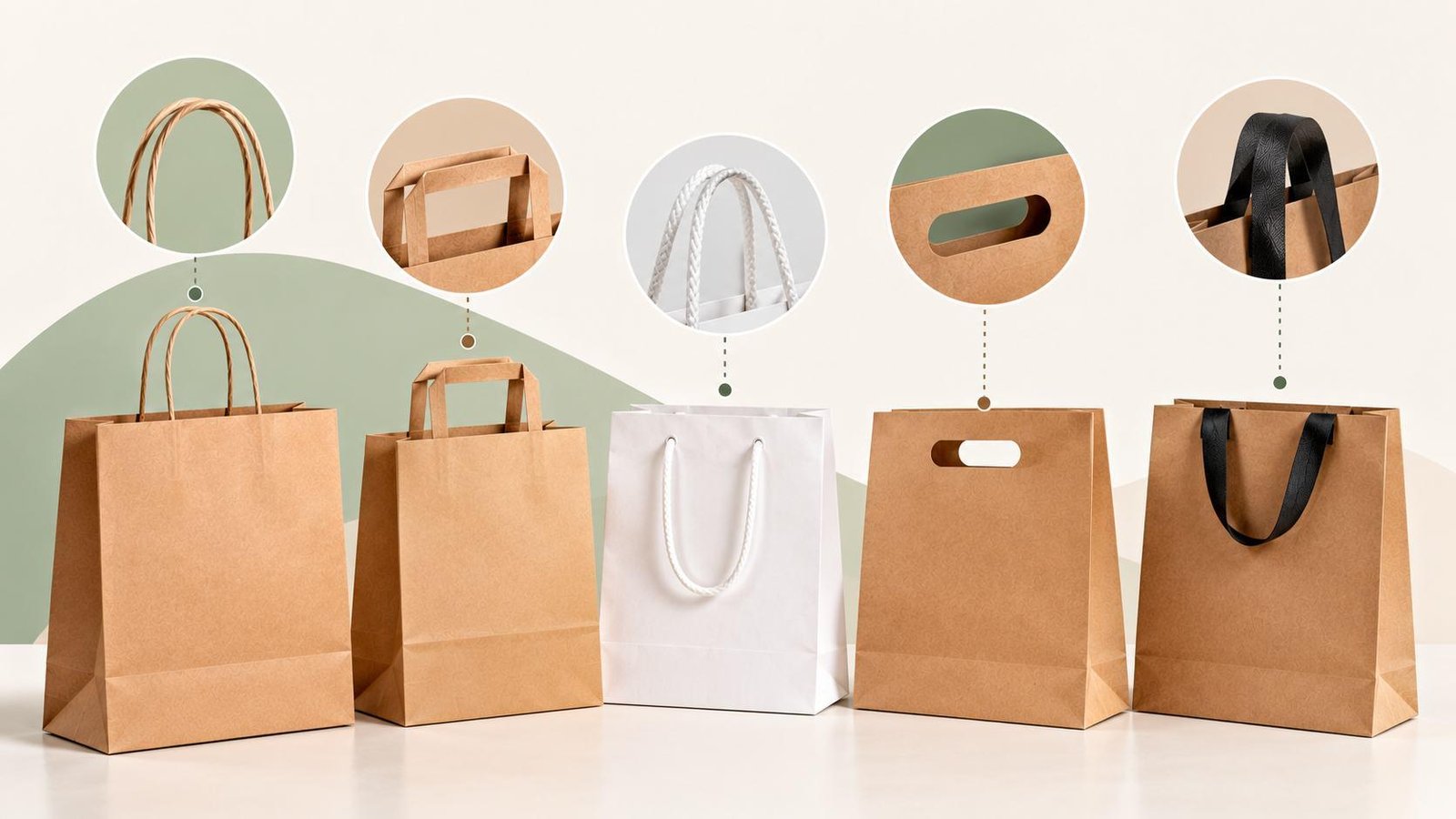
Paper bags are available with several handle constructions. Some use paper twisted or folded into a grip, while others use cord, ribbon, or a cutout in the bag itself. Here is how the main options compare.

Handle type Typical characteristics Common uses
Twisted paper Paper twisted into a cord-like handle and attached inside the bag Retail shopping, apparel, gifts, takeaway
Flat paper Folded paper strip forming a broad, flat grip Grocery, food service, everyday shopping
Rope or cord Separate cord threaded or fixed through reinforced holes Premium retail, gift bags, boutiques
Die-cut A grip opening cut directly into the upper part of the bag Lightweight merchandise, promotional bags
Ribbon or fabric Decorative ribbon or textile handle attached to the bag Luxury gifts, cosmetics, special retail packaging

2. Twisted Paper Handles

Twisted paper handles are made by twisting paper into a narrow, cord-like shape. The ends are usually secured to the inside of the bag, often with reinforcement patches. This style gives a familiar shopping-bag appearance while keeping the handle material consistent with a paper bag.

  • Best for: clothing stores, gift shops, boutiques, and general retail.
  • Why choose it: a neat appearance, a comfortable grip, and a coordinated paper-based look.
  • Check before ordering: handle attachment, paper strength, bag dimensions, and the weight of the products being carried.

3. Flat Paper Handles

Flat paper handles are formed from folded paper strips attached to the bag. Their wider grip can feel practical for everyday carrying, especially for grocery and food-service applications. They are often selected when a simple, functional paper handle is preferred.

  • Best for: grocery stores, cafes, food businesses, and everyday shopping.
  • Why choose it: a broad grip and a straightforward, practical design.
  • Check before ordering: handle width, attachment area, bag construction, and intended load.

4. Rope and Cord Handles

Rope or cord handles add a more substantial and decorative detail. Depending on the specification, they may be made from paper cord, cotton, or another cord material and attached through reinforced holes or other suitable fittings. They are often used when presentation is a priority.

  • Best for: boutiques, premium retail, gift packaging, and event merchandise.
  • Why choose it: a distinctive finish and a handle that can complement a premium design.
  • Check before ordering: cord material, diameter, attachment method, reinforcement, and color availability.

5. Die-Cut Handles

A die-cut handle is an opening cut into the bag itself, rather than a separate handle attached to it. Some designs include a reinforced area around the opening. This creates a clean, integrated look, but the bag material and handle area must be appropriate for the intended contents.

  • Best for: lightweight products, promotional bags, and selected retail uses.
  • Why choose it: an integrated appearance without a separate handle component.
  • Check before ordering: grip dimensions, reinforcement, paper weight, and whether the contents are light enough for the design.

6. Ribbon and Fabric Handles

Ribbon or fabric handles are decorative options often selected for gift bags and premium presentation. They can add contrast, texture, and a more customized appearance. The attachment and material should be chosen to suit the bag construction and expected use.

  • Best for: luxury gifts, cosmetics, fashion retail, and special occasions.
  • Why choose it: a refined look and opportunities to coordinate handle color with brand design.
  • Check before ordering: ribbon or fabric type, width, color, attachment, and carrying requirements.

7. How to Choose the Right Handle for Your Paper Bags

Start with the way customers will use the bag, then compare comfort, construction, and appearance. These factors can help narrow the options:

  1. Consider the product weight. Match the handle and bag construction to the expected contents. Do not assume a particular handle style guarantees a specific load capacity; ask for specifications and testing where needed.
  2. Think about carrying comfort. Flat or wider grips may suit everyday shopping, while cord handles can provide a different feel. Consider how far customers are likely to carry the bag.
  3. Match the handle to the bag size. Larger bags may need a different handle length, attachment area, or reinforcement than small gift bags.
  4. Choose the right appearance. Twisted and flat paper handles give a coordinated paper look; rope, ribbon, and fabric can create a more decorative finish.
  5. Review the attachment method. Handle material is only one part of the construction. Ask how the handle is fixed and whether the top panel needs reinforcement.
  6. Plan for printing and branding. Make sure the handle color and style work with your logo, artwork, and overall packaging design.
  7. Compare the complete order specification. Check dimensions, paper material and weight, handle type, printing, quantity, and delivery requirements before approving production.

8. Which Handle Style Works Best for Different Businesses?

Business or use Handle styles to consider What to prioritize
Clothing and fashion retail Twisted paper, rope, ribbon Appearance, comfort, and bag size
Grocery and convenience stores Flat paper, twisted paper Practical grip and suitable construction
Gift shops and boutiques Rope, ribbon, twisted paper Presentation and coordinated colors
Promotional events Die-cut, twisted paper Artwork, portability, and intended contents
Food and takeaway businesses Flat paper, twisted paper Bag format, food packaging needs, and carrying use

9. Can Paper Bags Be Customized With Different Handle Styles?

Many custom paper bag projects can specify the handle style alongside bag dimensions, paper material, color, and printed artwork. Available combinations depend on the bag format and production specifications. If you are planning branded packaging, explore custom kraft bags in the USA for options for retail and business packaging.

Before placing a wholesale order, share your preferred bag size, intended use, approximate product weight, handle preference, print requirements, and order quantity. Request a sample or production specification when you need to confirm the feel, construction, and appearance.

10. Frequently Asked Questions About Paper Bag Handle Types

What are the most common paper bag handle types?
Common options include twisted paper, flat paper, rope or cord, die-cut, and ribbon or fabric handles.

Which paper bag handle is best for shopping bags?
Twisted and flat paper handles are common choices for everyday shopping. The right option depends on the bag size, contents, construction, and desired appearance.

Are twisted paper handles strong?
They can be suitable for many retail uses when correctly specified and attached. Actual performance depends on the paper, handle construction, attachment, and bag design.

Are flat paper handles comfortable?
Their wider shape can provide a practical grip for everyday carrying. Comfort still depends on handle width, bag weight, and how the bag is used.

Are die-cut handles suitable for heavy products?
Not automatically. A die-cut opening can concentrate stress around the cutout, so material, reinforcement, and intended load should be reviewed before choosing it.

Can I customize the handle color?
Some handle materials and production options allow color coordination. Confirm available colors and specifications with your packaging supplier.

Can I order custom kraft bags wholesale?
Yes, wholesale orders can be planned around bag dimensions, material, handle style, printing, and quantity. Confirm the available specifications and production details before ordering.

Choose Custom Kraft Bags for Your Brand

The right handle can make a paper bag easier to carry and help your packaging look consistent with your brand. Compare bag formats, handle styles, sizes, and printing requirements before choosing your specification.

Explore Custom Kraft Bags

Note: Handle suitability and carrying performance vary by material, dimensions, attachment method, reinforcement, and product weight. Confirm specifications with your packaging supplier before production.

SOS Paper Bags Explained: Uses, Sizes & Common Applications

If you have seen paper bags used by grocery stores, bakeries, cafes, or takeaway businesses, you may have noticed a style that opens easily and stands upright when filled. This is commonly called an SOS paper bag. Its practical shape makes it useful for carrying a range of everyday products, especially when a flat base and a simple opening are helpful.

But what are SOS paper bags, what does SOS mean, and how do you choose the right size for your business? This guide explains their construction, common applications, material and size considerations, printing options, and what to check before placing a wholesale order.

For businesses already considering a branded paper option, explore our custom kraft SOS bags for grocery, bakery, and takeaway packaging. You can also review the custom SOS bag options when planning bag dimensions, paper specifications, and printed branding.

Quick Answer: What Are SOS Paper Bags?

SOS stands for Self-Opening Sack. An SOS paper bag is designed with a flat, squared bottom and side gussets that help it open into a usable shape and stand upright when filled. It is commonly used for groceries, bakery items, dry goods, and selected takeaway packaging applications.

1. What Does SOS Mean for Paper Bags?

The abbreviation SOS means Self-Opening Sack. The name refers to the bag’s construction: its folded base and side gussets allow it to open into a box-like shape without needing a separate rigid bottom insert.

Unlike a simple flat paper envelope, an SOS bag has depth when opened. Its squared base can help it sit upright on a counter or work surface, depending on the size, paper specification, and contents. This makes it convenient for packing products that need a little more room than a flat bag provides.

The exact shape and capacity vary by design. Always check the supplier’s stated dimensions and confirm how those measurements are taken.

2. How Are SOS Paper Bags Constructed?

An SOS paper bag uses a folded paper structure to create a base and expandable sides. Its main construction features include:

  • Flat bottom: The base opens out to help the bag stand upright when filled appropriately.
  • Side gussets: Folded sides expand to provide depth and room for products.
  • Open top: The opening allows products to be loaded from above and can be folded or closed when suitable.
  • Paper body: The paper grade and construction should be selected according to the product weight and intended use.
Important distinction

An SOS bag is generally a handle-free sack-style bag. It should not be confused with a handled kraft shopping bag, even though both can be made from kraft paper. Choose the format according to how customers will carry and use the packaging.

3. What Are SOS Bags Used For?

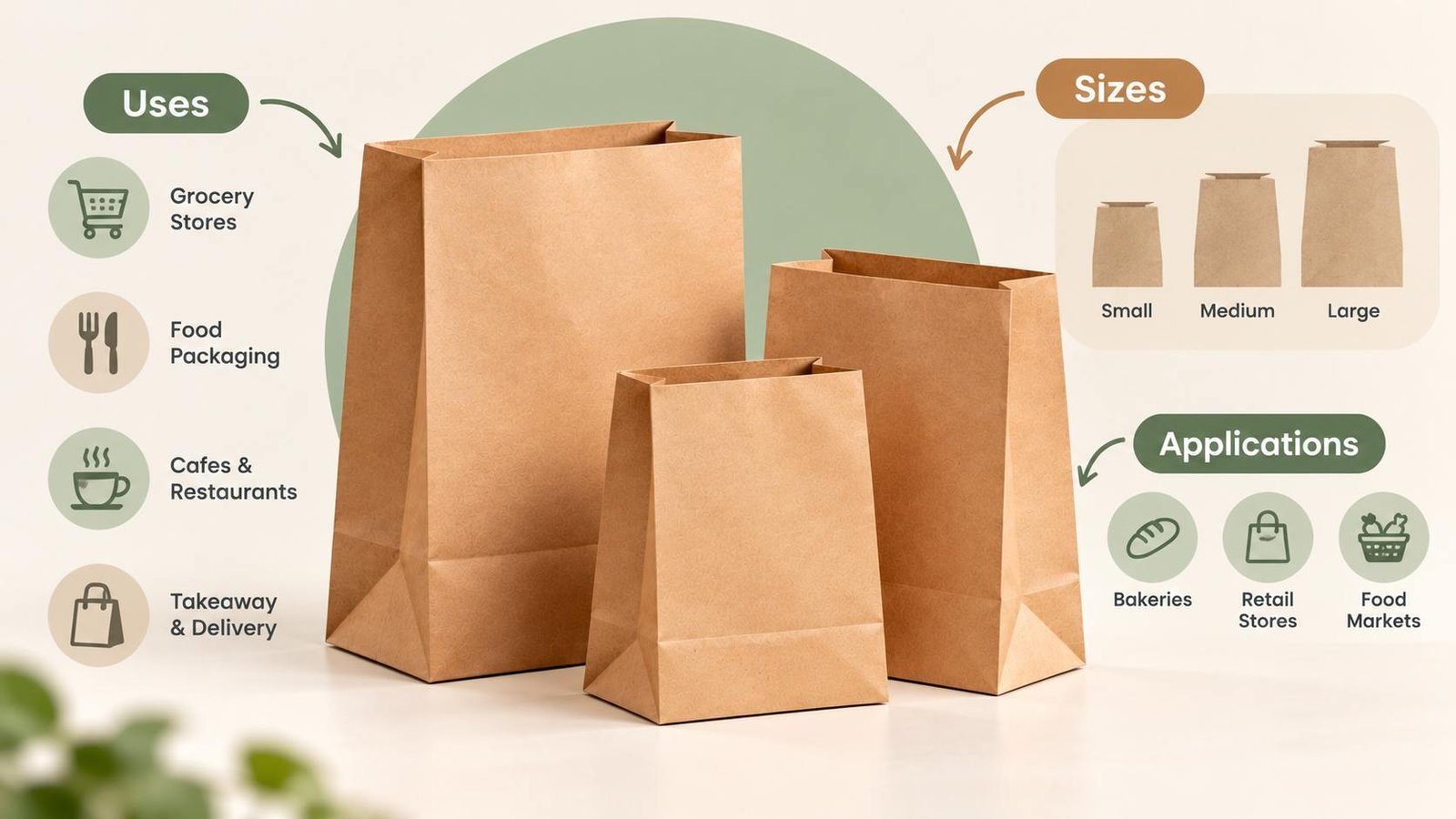
SOS paper bags are used in businesses that need a straightforward paper carrier with a flat base and an easy-to-load opening. Common applications include:

Business or application Potential use What to check
Grocery stores Packing selected dry groceries and lightweight purchases Product weight, dimensions, and bag strength
Bakeries Packing suitable bakery products and dry baked goods Food-contact suitability, ventilation needs, and grease resistance
Cafes and takeaway Carrying selected packaged food orders Container fit, moisture, heat, and handling requirements
Convenience stores Packing small retail items and dry goods Opening size and product fit
Specialty food shops Packing suitable dry food products Paper specification and any required food-contact barrier
Promotional packaging Distributing lightweight items or branded materials Print area, artwork, and quantity

SOS bags are not automatically suitable for every food or takeaway product. Hot, wet, oily, or unwrapped foods may need packaging with specific food-contact, barrier, or temperature-related properties. Confirm suitability with your packaging supplier before use.

4. How to Choose the Right SOS Paper Bag Size

Choosing the right size helps products fit comfortably and makes packing easier. SOS bags are often described using dimensions such as width, gusset, and height. Confirm the supplier’s measurement convention because the usable space can differ depending on how the bag is opened.

Use these steps when selecting a size:

  1. Measure the product: Record its width, depth, and height, including any box or inner wrapping.
  2. Check the opening: Make sure the product can be inserted without forcing or damaging the bag.
  3. Consider the gusset: The side folds determine how much depth becomes available when the bag opens.
  4. Allow practical room: Avoid a fit that is so tight that packing becomes difficult.
  5. Test a sample: Load the bag with representative products and check its stability and handling.
Dimension What it describes
Width The front panel measurement across the bag
Gusset The folded side depth that expands when the bag opens
Height The measurement from the base to the top opening

Do not choose a bag based on width and height alone. The gusset and opening are important when packing containers, boxed products, or items with depth.

5. Kraft Paper and Other Material Considerations

Kraft paper is a common material choice for SOS paper bags. It is available in different paper specifications and appearances, including natural brown and lighter paper options. The right specification depends on the product, bag size, expected load, and intended handling conditions.

  • Paper strength: Ask about the paper grade or basis weight recommended for the bag size and product load.
  • Bag construction: Check the base folds and side seams, as well as the overall finish.
  • Moisture exposure: Ordinary paper can weaken when wet. Confirm whether a suitable barrier or alternative packaging is required.
  • Food-contact use: If the bag will directly contact food, confirm that the material and any inks or coatings are suitable for that application.
  • Storage: Consider the packed dimensions and the conditions in which unused bags will be stored.

Paper thickness alone does not determine carrying performance. The bag’s dimensions, construction, and actual contents all matter.

6. Can SOS Paper Bags Be Printed?

Yes, many SOS paper bag formats can be customized with printed logos, brand names, colors, or other artwork. Printed SOS bags can help grocery stores, bakeries, cafes, and food businesses present a consistent brand identity.

Before approving a custom design, consider:

  • Logo placement: Choose a visible position on the front panel.
  • Print colors: Select colors that remain clear against the paper surface.
  • Artwork size: Keep important text and logos readable at the finished bag dimensions.
  • Print coverage: Ask whether the supplier offers one-side, two-side, or other print options for the selected style.
  • Proof approval: Review artwork, spelling, dimensions, and print positioning before production.

Printing methods, available colors, and coverage depend on the bag material, design, and supplier. Confirm the options for your required size and order quantity.

7. SOS Paper Bags vs. Other Paper Bag Styles

SOS bags are one of several paper bag formats. Comparing their construction with other styles can help you select the right carrier for your products.

Bag style Main design feature Common consideration
SOS paper bags Flat squared base and expandable side gussets Useful for products that need a self-opening sack shape
Flat paper bags Simple flat construction with little or no depth Suitable for slim products that fit the opening
Handled kraft shopping bags Handles designed for carrying by hand Useful when customer carrying comfort and retail presentation matter
Gusseted paper bags Side or bottom folds add expandable space Check the opened dimensions and intended contents

If you are comparing handled retail formats, read our guide to kraft paper bag types, uses, and styles. For broader bag selection advice, see how to choose the right paper bag for your business.

8. Wholesale and Bulk SOS Bag Ordering

Businesses that use SOS bags regularly may consider wholesale kraft SOS bags or bulk SOS bags to plan inventory and maintain consistent packaging. The right order quantity depends on usage, storage space, cash flow, and whether the design may change.

Prepare these details before requesting a quote:

  • Required bag width, gusset, and height.
  • Paper type and specification, if known.
  • Products the bags will carry and their approximate weight.
  • Plain or custom printed requirements.
  • Estimated order quantity and repeat-order frequency.
  • Sample, artwork proof, and production approval needs.
  • Delivery destination and required schedule.

Compare the full delivered cost, including printing or setup charges, minimum order quantities, shipping, and storage. A lower unit price may not be better value if the order is larger than your business can use.

9. SOS Paper Bag Buying Checklist

  • Confirm that an SOS bag is the right style for your products.
  • Measure product width, depth, and height.
  • Confirm bag width, gusset, and height with the supplier.
  • Check paper strength, seams, and base construction.
  • Confirm food-contact or barrier requirements where applicable.
  • Choose plain or printed bags and approve the artwork.
  • Request a sample when fit or performance needs testing.
  • Compare wholesale quantities, shipping, and total cost.

Explore Custom Kraft SOS Bags

Need paper bags for grocery, bakery, or takeaway packaging? Explore custom kraft SOS bags for your business and confirm available sizes, paper specifications, printing options, and order requirements.

View Custom Kraft SOS Bags

Frequently Asked Questions

What are SOS kraft bags?

SOS kraft bags are paper sacks made with a flat, squared bottom and side gussets that allow the bag to open into a usable shape. They are commonly used for selected grocery, bakery, dry goods, and takeaway packaging applications.

What does SOS mean for paper bags?

SOS stands for Self-Opening Sack. It describes the bag construction, which allows the paper bag to open into a squared shape with a flat base.

What are SOS bags used for?

SOS bags are used by grocery stores, bakeries, cafes, convenience stores, and other businesses for suitable dry goods, packaged food, and lightweight products. The right specification depends on the contents and intended use.

Can SOS paper bags be printed?

Many SOS paper bags can be customized with logos, brand names, and graphics. Printing methods, colors, coverage, and minimum quantities depend on the supplier and selected bag specification.

What sizes are available for SOS bags?

Available sizes vary by supplier. SOS bags are commonly specified by width, gusset, and height. Share your product measurements and confirm the usable dimensions before ordering.

Are SOS bags suitable for food packaging?

They can be used for certain food packaging applications, but suitability depends on the food, direct-contact requirements, paper specification, and any necessary barrier properties. Confirm food-contact suitability with the supplier.

Can businesses order wholesale kraft SOS bags?

Wholesale and bulk ordering options depend on supplier minimums, bag size, printing requirements, and production availability. Request a quote based on your required specification and quantity.

Are SOS bags the same as handled kraft shopping bags?

No. SOS bags are generally handle-free sacks with a self-opening base, while handled kraft shopping bags include handles for carrying. Choose the format that fits your product and customer use.

Final Thoughts

SOS paper bags are a practical paper packaging format built around a flat base, expandable side gussets, and an easy-to-load opening. They can serve grocery stores, bakeries, cafes, and other businesses when the bag size and paper specification match the products being packed.

Before ordering, confirm the dimensions, construction, food-contact requirements, and printing options. Compare samples and total order costs when possible. If SOS bags fit your packaging needs, explore custom kraft SOS bags for your next business packaging project.

Paper Shopping Bags vs. Plastic Bags: What Businesses Should Consider

Choosing between paper shopping bags and plastic bags affects more than how customers carry their purchases. Businesses also need to consider product weight, bag dimensions, storage space, branding, order quantities, local requirements, and how customers are likely to reuse or dispose of the packaging.

There is no single bag material that is automatically the best choice for every business or every environmental situation. A practical comparison looks at the intended use and the full life cycle of the bag, including how it is produced, transported, reused, and managed after use.

Quick Takeaway

Paper bags can suit businesses that value a natural paper appearance, printability, and a familiar retail presentation. Plastic bags can offer useful moisture resistance and compact storage, depending on the type. Compare performance, reuse, total cost, branding needs, and local rules before choosing a format.

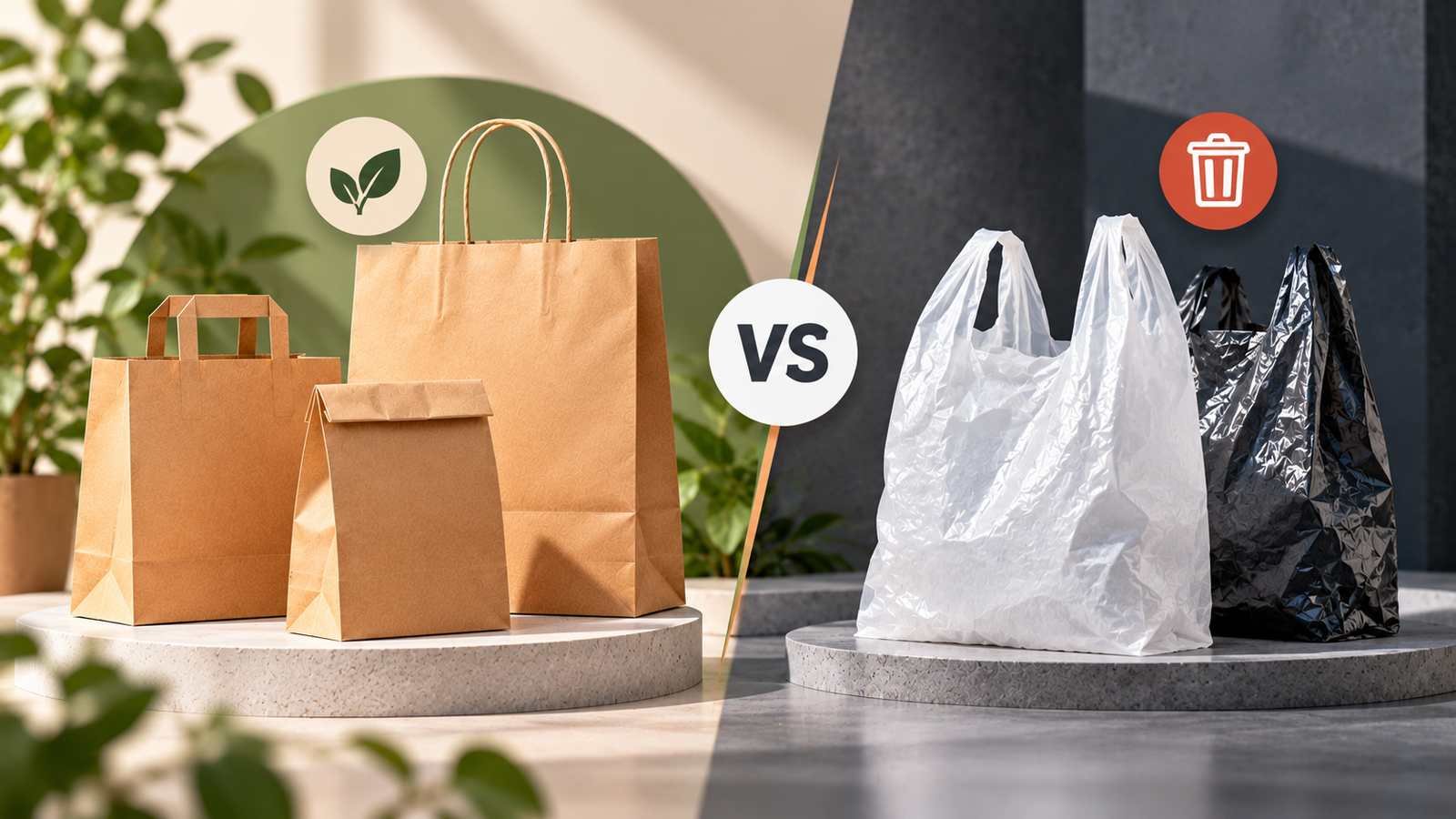
1. Paper Bags vs. Plastic Bags: The Main Differences

Paper and plastic bags are available in different grades, constructions, and sizes. A basic paper bag should not be compared with every possible plastic bag as though each material performs identically. Bag thickness, handles, seams, coatings, and intended use can change the result.

Factor Paper shopping bags Plastic bags
Appearance Often associated with a natural, paper-based retail look Available in many colors, transparencies, and finishes
Moisture Uncoated paper can weaken when wet; specifications matter Many plastic bags resist water, but performance depends on material and construction
Storage Often stored flat, but can take more space than thin film bags Thin bags can be compact to store and transport
Branding Can support logos, typography, and printed graphics Can also support branding; available methods depend on the bag type
Reuse Reuse depends on bag strength, condition, and handling Reuse depends on bag durability, cleanliness, and local practices
End of life Recycling depends on local acceptance and whether the bag is clean or coated Recycling access varies by plastic type and local collection systems

Use this table as a starting point, not as a universal performance guarantee. Ask suppliers for specifications for the exact bag you intend to order.

2. Consider Your Products and Carrying Requirements

The first question is what the bag must carry. Product weight, shape, packaging, and handling conditions are often more important than the material name alone.

For a practical step-by-step selection process, read our guide on how to choose the right paper bag for your business, including advice on dimensions, handles, printing, and wholesale ordering.

  • Lightweight retail items: Both paper and plastic formats may work if the bag dimensions and construction suit the product.
  • Clothing and accessories: Paper shopping bags can provide a structured presentation and a visible print area.
  • Products exposed to moisture: Check the material’s resistance and whether additional protective packaging is needed.
  • Heavy or bulky items: Confirm load specifications, handle attachment, seams, and base construction before ordering.
  • Food and takeaway orders: Choose packaging appropriate for the specific food-contact and handling requirements. A carry bag may hold sealed containers rather than touch food directly.

Test a sample with representative products where possible. A bag that looks suitable when empty may behave differently once loaded.

3. Compare Strength, Durability, and Reuse

Neither paper nor plastic automatically wins on durability in every situation. Paper can lose strength when exposed to moisture, while some plastic bags can stretch, tear, or fail at the handles or seams. The design and quality of the finished bag matter.

When comparing options, ask:

  • What load is the bag designed to carry?
  • How are the handles attached or reinforced?
  • Will the bag be exposed to rain, condensation, grease, or rough handling?
  • Can customers realistically reuse it, and is reuse appropriate for the intended use?
  • Does the bag maintain its shape during normal carrying?

Reuse can affect the overall impact of a bag, but only when the bag is actually reused enough times to offset the resources required to produce it. Avoid assuming that a material is environmentally preferable based on a single feature alone.

4. Understand Environmental and Disposal Considerations

Environmental comparisons depend on more than whether a bag is made from paper or plastic. Relevant factors include raw materials, manufacturing energy, water use, transport weight, recycled content, the number of times a bag is reused, litter risk, and the local end-of-life system.

Consider the following points when making a business decision:

  • Material sourcing: Ask about recycled content and relevant sourcing information where it matters to your business.
  • Transport and storage: Bag weight and packed volume can affect shipping and warehousing.
  • Actual reuse: A durable bag that gets reused can have a different overall result from a single-use bag.
  • Recycling access: Check the rules in the communities where customers will dispose of the packaging.
  • Coatings and contamination: Certain coatings, laminations, food residue, or mixed materials can affect recycling acceptance.
  • Local regulations: Bag bans, fees, labeling rules, and accepted materials vary by jurisdiction and can change.
Practical tip

If environmental claims are important to your brand, use evidence specific to your bag and supply chain. Avoid broad claims such as “always greener” or “100% eco-friendly” unless they are substantiated and appropriately qualified.

5. Think About Brand Presentation and Custom Printing

Packaging can be part of the customer experience. Paper shopping bags are often chosen for their natural appearance and their ability to display logos and printed designs, while plastic bags can also be customized in various ways depending on the material and supplier.

For a branded paper bag, consider:

  • Logo placement: Keep the logo clear and visible from the main viewing angle.
  • Color contrast: Make sure text and graphics remain readable against the bag surface.
  • Print coverage: Decide whether a simple logo or a more detailed design fits your budget and brand.
  • Handle style: Select handles that complement the look and the intended carrying use.
  • Artwork proof: Check dimensions, spelling, print position, and color details before production.

If you are leaning toward kraft paper, our guide to kraft paper bag types, uses, and styles explains common bag formats and handle options in more detail.

Businesses looking for a paper-based retail presentation can explore custom kraft shopping bags for branded packaging options. Confirm available sizes, handles, printing methods, and order requirements with the supplier.

6. Compare Costs Beyond the Unit Price

The cheapest bag per unit may not be the least expensive option overall. Businesses should compare purchase price with bag performance, shipping, storage, printing, waste, and the possibility of product damage or customer inconvenience.

Cost factor What to check
Unit price Compare equivalent sizes, material specifications, and construction.
Printing Ask about setup costs, print coverage, colors, and proofing.
Minimum quantity Confirm minimum order requirements and whether the quantity fits expected demand.
Shipping and storage Compare delivery cost, packed volume, and warehouse space.
Product suitability Consider whether the bag performs adequately for the intended contents and conditions.
Waste and replacements Consider damaged bags, unused stock, and changes to brand artwork.

For regular use, wholesale or bulk orders may help with stock planning, but only if you can use the quantity and store it properly. Compare the complete delivered cost instead of focusing on a single price figure.

7. Which Option Makes Sense for Your Business?

Use your main business requirements to shortlist the right packaging type.

Business priority What to evaluate
Retail presentation Paper bags with suitable handles and a print-ready surface may fit your brand style.
Moisture resistance Compare the actual material and construction specifications for the conditions involved.
Compact storage Compare the packed volume and delivery format of the options you are considering.
Custom branding Review print options, colors, artwork requirements, and minimum quantities.
Environmental goals Assess sourcing, reuse, transport, and local disposal rather than relying on material alone.
Cost control Compare equivalent bag specifications and total delivered cost.

8. A Buying Checklist Before You Order

  • Identify the products and expected carrying load.
  • Measure the products and any inner packaging.
  • Compare paper and plastic options designed for the intended use.
  • Confirm handle, seam, base, and material specifications.
  • Check moisture, food-contact, and other special requirements.
  • Review custom printing options and artwork proofs.
  • Check local bag regulations and disposal guidance.
  • Compare samples, minimum quantities, shipping, and total cost.

Explore Custom Kraft Shopping Bags

If paper bags fit your products and brand requirements, compare available styles and customization options before ordering. Choose dimensions, handles, and printing based on your real business needs.

View Custom Kraft Shopping Bags

Frequently Asked Questions

Are paper bags better than plastic bags?

It depends on the bag specifications, how many times it is reused, transport and manufacturing impacts, and local disposal options. Businesses should compare the intended use and full life cycle rather than assume one material is always better.

What are kraft shopping bags used for?

Kraft shopping bags are commonly used for retail purchases, merchandise, gifts, and selected business packaging applications. Choose the size and construction according to the product and carrying requirements.

Can paper shopping bags be custom printed?

Many paper shopping bags can be printed with logos, brand colors, and graphics. Available methods, print coverage, and minimum quantities depend on the bag style and supplier.

What handle options are available for kraft shopping bags?

Options may include twisted paper handles, flat paper handles, die-cut handles, or handle-free formats. Confirm availability and load suitability for your chosen bag.

What sizes are available for paper shopping bags?

Sizes vary by supplier and design. Provide product measurements, including inner packaging, and confirm usable dimensions and gusset measurements before ordering.

Should a business buy wholesale paper shopping bags?

Wholesale orders may suit businesses with regular demand. Compare minimum quantities, storage, printing charges, shipping, and the risk of unused stock before choosing an order size.

Can paper bags handle moisture?

Uncoated paper can weaken when wet. If moisture is expected, confirm the exact bag specifications and consider whether another format or additional protective packaging is needed.

Are paper and plastic bags recyclable everywhere?

No. Recycling acceptance depends on local collection systems, material type, coatings, contamination, and local rules. Check the guidance for the community where the bag will be disposed of.

Final Thoughts

When comparing paper bags vs plastic bags, start with performance and intended use, then consider branding, total cost, reuse, and disposal. Paper shopping bags can be a good fit for businesses seeking a natural paper look and customizable retail presentation, while some plastic bags may suit needs involving moisture resistance or compact storage.

The most practical choice is the one that meets your product requirements and can be responsibly managed in your business context. Compare specifications, test samples, and check applicable local requirements before placing a large order. If you decide that paper packaging suits your needs, explore custom kraft shopping bags for your retail packaging project.

How to Choose the Right Paper Bag for Your Business

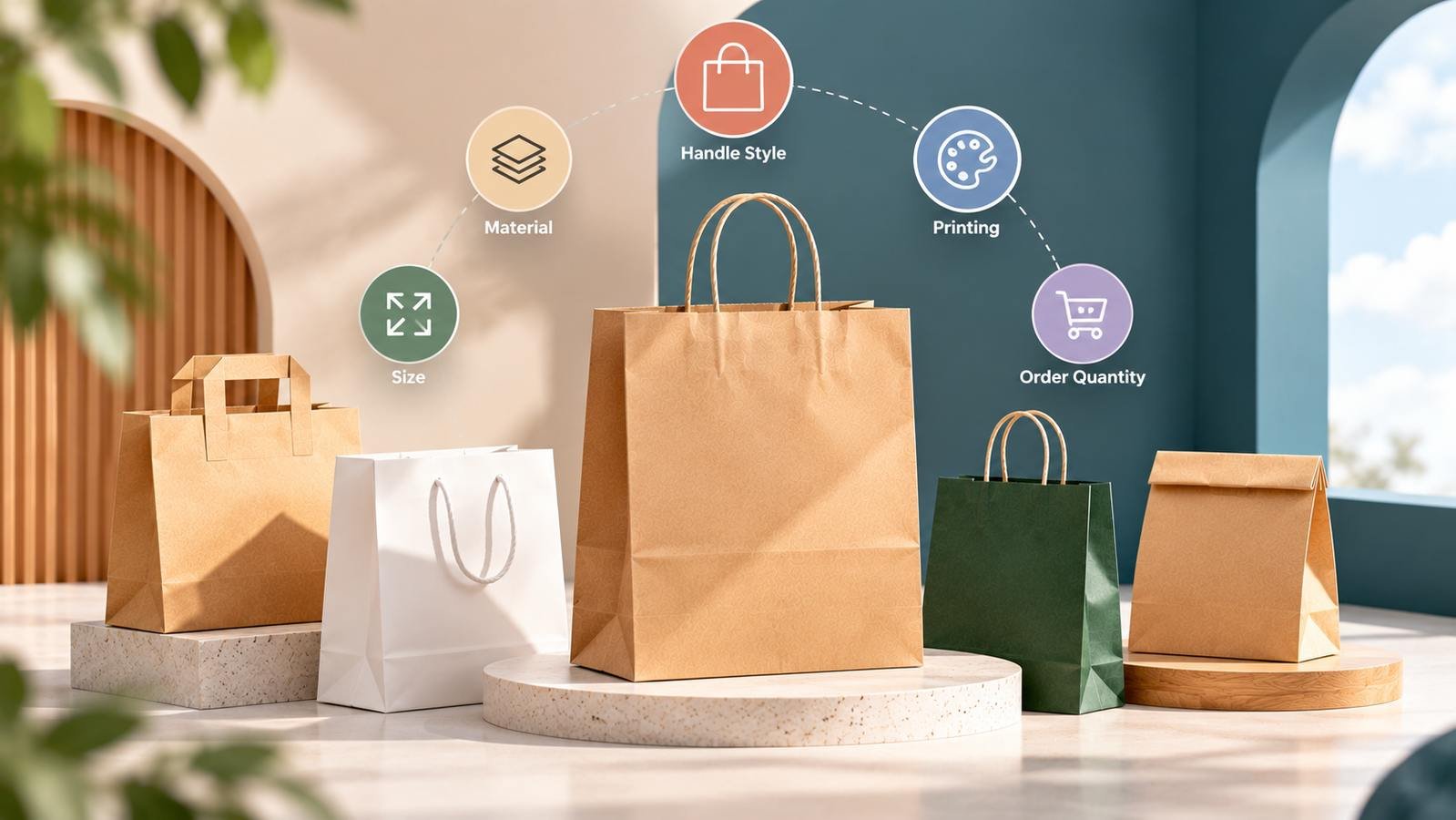
Choosing the right paper bag for your business involves more than selecting a color or adding a logo. The bag should fit your products, carry them comfortably, support your brand, and suit the way customers will use it. Retail stores, boutiques, cafes, gift shops, and small businesses can have very different packaging requirements.

This guide explains how to choose paper bags by comparing common bag styles, dimensions, handles, paper specifications, printing options, and wholesale considerations. Use these steps to prepare a clear brief before you request samples or a quote.

Quick Takeaway

Start with the product you need to carry, then confirm the bag dimensions, paper strength, handle style, and intended use. Decide whether custom printing is important, test a sample when possible, and compare the full cost of wholesale or bulk orders—not only the unit price.

1. Identify What Your Paper Bags Need to Do

Before choosing a bag, list the products it will hold and the experience you want customers to have. A boutique carrying clothing may prioritize presentation and comfortable handles, while a bakery may need a format that accommodates a food container or suitable dry goods.

  • Retail stores: Consider shopping bags that fit merchandise and provide space for branding.
  • Small businesses: Balance practical dimensions, order quantity, and design requirements.
  • Gift shops: Consider appearance, handle comfort, and room for tissue or protective wrapping.
  • Cafes and takeaway: Choose a bag suitable for the packaged items and the conditions in which it will be carried.
  • Events and promotions: Consider printed bags that make your brand easy to recognize.

Also consider how customers will carry the bag, how long it needs to hold the contents, and whether it is intended for in-store handover or parcel shipping. A shopping bag is not automatically a substitute for protective shipping packaging.

2. Compare the Main Paper Bag Styles

Different paper bag styles suit different products and shopping experiences. The names can overlap: for example, a custom kraft shopping bag may have twisted paper handles and a gusseted base.

Bag style Common uses Check before ordering
Kraft shopping bags Retail purchases, boutiques, gifts, and merchandise Paper specification, handles, dimensions, and branding
Flat-handle bags Everyday shopping and selected takeaway uses Handle attachment, load, and bag opening
Twisted-handle bags Retail stores, clothing, accessories, and gifts Carrying comfort, construction, and print area
Flat paper bags Slim, lightweight items and suitable dry products Product fit, closure, and protection requirements
Gusseted bags Items needing extra side or bottom room Expanded capacity, base construction, and stability
Custom printed paper bags Branded shopping, events, promotions, and merchandise Artwork, colors, print placement, and minimum quantities

For a deeper explanation of handle and bag formats, see our guide to kraft paper bag types and their uses. This article focuses on choosing a bag for your business rather than repeating every style detail.

3. Choose the Right Bag Size

A good fit makes a bag easier to use and helps the contents sit securely. If the bag is too small, products may be difficult to insert or could strain the seams. If it is too large, items may shift and the package may look poorly fitted.

Follow these steps to choose suitable dimensions:

  1. Measure the product: Record its width, height, and depth.
  2. Include inner packaging: Account for product boxes, tissue, wrapping, inserts, or containers.
  3. Check the opening: Make sure the item can be placed inside without bending or damaging it.
  4. Confirm the gusset: For bags with side or bottom folds, ask how the supplier measures usable space.
  5. Test the fit: Place an actual product inside a sample and check how it sits and comes out.
Sizing tip

Ask your supplier to confirm whether dimensions refer to the flat bag or usable internal dimensions. For irregular products, a sample is often more useful than choosing from measurements alone.

4. Select Handles That Suit Your Customers

Handle style affects carrying comfort, appearance, and the way customers interact with the bag. The right option depends on the intended load, bag construction, and how the packaging will be used.

Handle option What to consider
Twisted paper handles A familiar retail appearance; check handle attachment and carrying comfort.
Flat paper handles A simple, practical format; confirm that the handle and bag suit the expected load.
Die-cut handles An integrated cutout can create a clean look; check the opening and reinforced construction where applicable.
Handle-free bags May suit lightweight items or products intended to be placed inside another carrier.

Do not assume that a handle style guarantees a particular weight capacity. Ask for the supplier’s specifications and test the bag with representative products when appropriate.

5. Consider Paper Strength and Construction

Paper grade, thickness, seams, folds, base design, and handle attachment can all influence how a bag performs. The right specification depends on the weight and shape of the contents and the conditions in which the bag will be used.

  • Paper specification: Ask which paper options are recommended for your intended use.
  • Base and seams: Check that the construction supports the product and keeps the bag in shape.
  • Handle attachment: Confirm that the handles are suited to the expected load.
  • Moisture and grease: Paper may be affected by wet or greasy conditions, so verify any relevant barrier or coating specifications.
  • Food contact: If food will directly contact the bag, confirm that the complete packaging is suitable for that use.
  • Storage: Consider how much space you have to store the bags before use.

Paper thickness alone does not tell the whole story. Construction and the actual application matter, so request specifications instead of relying only on appearance.

6. Decide Whether You Need Custom Printing

Custom printed paper shopping bags can help create a consistent brand experience across stores, events, and customer handovers. A clear design can make your business easier to recognize without overcrowding the packaging.

Before approving artwork, consider:

  • Logo clarity: Keep your logo readable at the planned print size.
  • Brand colors: Choose colors that work well with the paper surface.
  • Print placement: Check how the design appears on the front, back, sides, and gussets.
  • Typography: Keep text legible and avoid unnecessary details.
  • Proof approval: Review spelling, dimensions, color specifications, and positioning before production.

Printing methods, color availability, and coverage depend on the supplier and bag construction. Ask which options are available for your chosen style and quantity.

7. Choose Bags for Your Business Type

Your business model helps narrow the options. Use the following table as a starting point, then confirm the bag’s suitability for your products.

Business Options to consider Priority
Retail stores Kraft shopping bags or custom printed bags Fit, carrying comfort, and brand visibility
Small businesses Plain or branded kraft carry bags Practical quantities and overall cost
Boutiques and gift shops Twisted-handle or specialty printed bags Presentation and handle comfort
Cafes and takeaway Suitable flat-handle or gusseted bags Container fit and intended use
Events and promotions Custom printed shopping bags Logo visibility and consistent design

8. Compare Wholesale and Bulk Ordering

If your business uses bags regularly, wholesale kraft shopping bags or bulk shopping bags may help you plan stock and maintain a consistent packaging design. The best quantity depends on sales volume, storage space, budget, and how frequently your artwork changes.

Before requesting a quote, prepare these details:

  • Bag style, handle option, and dimensions.
  • Paper specification and intended use.
  • Estimated order quantity.
  • Logo files, print colors, and coverage.
  • Sample requirements and approval process.
  • Delivery destination and required timeline.

Compare the complete cost, including any setup or printing charges, shipping, minimum order requirements, and storage considerations. A lower unit price may not be the best value if you order more bags than your business can use.

If you’re planning to buy paper shopping bags for regular business use, confirm the final specifications and total delivered cost before approving the order.

9. A Simple Paper Bag Buying Checklist

  • Identify the products and their dimensions.
  • Choose a bag style and suitable handle.
  • Confirm paper and construction specifications.
  • Check whether the bag suits the intended use.
  • Decide whether custom printing is required.
  • Review artwork and request a sample where appropriate.
  • Compare wholesale quantities and full order costs.
  • Confirm delivery timing and storage requirements.

Explore Custom Kraft Shopping Bags

Looking for shopping bags tailored to your products and brand? Explore custom kraft shopping bags for retail stores, small businesses, and branded customer packaging. Confirm available sizes, handles, print options, and order requirements for your project.

View Custom Kraft Shopping Bags

Frequently Asked Questions

How do I choose paper bags for my business?

Start with your product dimensions and weight, then compare bag styles, handle options, paper specifications, and intended use. If branding matters, consider printing and review a proof before production.

What are kraft shopping bags used for?

Kraft shopping bags are commonly used for retail purchases, merchandise, gifts, and selected business packaging applications. The right bag depends on the product, construction, and how customers will carry it.

What handle options are available?

Common options include twisted paper handles, flat paper handles, die-cut handles, and handle-free formats. Availability varies by bag style and supplier, so confirm the options for your required size.

Can shopping bags be printed?

Many paper shopping bags can be customized with logos, brand colors, text, or graphics. Printing methods and coverage depend on the bag material, design, supplier, and order requirements.

What sizes are available for paper shopping bags?

Sizes vary by supplier and bag style. Provide product measurements and any inner packaging dimensions, and confirm the bag’s usable space, opening, and gusset before ordering.

Can small businesses order custom kraft shopping bags?

Options depend on the supplier’s minimum order quantities and customization requirements. Ask about available sizes, printing costs, sample options, and the total delivered price for your planned quantity.

Should I buy wholesale kraft shopping bags?

Wholesale ordering may suit businesses with steady packaging needs. Compare unit cost with printing, shipping, minimum quantities, storage space, and the risk of unused bags if your branding changes.

Are paper shopping bags suitable for shipping products?

Shopping bags are generally designed for carrying products, not necessarily for parcel transit. For carrier shipping, choose protective outer packaging appropriate for the product and expected handling conditions.

Final Thoughts

The best paper bag for your business balances product fit, carrying comfort, construction, branding, and cost. Choose dimensions based on real products, confirm the handle and paper specifications, and decide whether custom printing supports your customer experience.

Before placing a wholesale order, compare the complete cost and review a sample or proof when available. For your next step, explore custom kraft shopping bags and confirm the available specifications for your business needs.

Kraft Paper Bags: Types, Uses & How to Choose the Right Style

Kraft paper bags are used by retail stores, boutiques, bakeries, gift shops, restaurants, and ecommerce businesses that need practical packaging with a natural paper appearance. However, not every kraft bag is designed for the same purpose. Handle styles, paper weight, bag dimensions, bottom construction, and printing options can all affect how well a bag works for a particular business.

Understanding the different kraft paper bag types can help you choose packaging that suits your products, customer experience, and brand identity. Whether you need shopping bags for a retail store, takeaway bags for a food business, or custom printed bags for product packaging, this guide explains the main styles, their uses, and the factors to consider before ordering.

Quick Takeaway

Choose kraft paper bags according to product weight, size, shape, handling requirements, and branding needs. Flat-handle bags can suit everyday shopping, twisted-handle bags offer a familiar retail look, and flat or gusseted bags can work for selected lightweight products. Confirm the bag’s specifications and intended use before ordering in bulk.

1. What Are Kraft Paper Bags?

Kraft paper bags are bags made from kraft paper, a paper material commonly associated with a natural brown appearance, although other colors and finishes may be available. Businesses use them for shopping, merchandise, gifts, takeaway orders, and selected product packaging applications.

One reason businesses choose kraft bags is their versatile appearance. The paper surface can work with simple logos, bold graphics, brand colors, labels, and minimalist designs. Depending on the construction and specifications, kraft bags can be ordered in different sizes, handle styles, and formats.

Before choosing a bag, distinguish between its appearance and its performance. A brown kraft paper bag is not automatically suitable for heavy products, direct food contact, wet conditions, or every type of delivery. The paper grade, construction, adhesive, handle attachment, and any coating or liner can affect its intended use.

For a wider look at available materials and formats, explore custom kraft packaging for business packaging applications.

2. Main Kraft Paper Bag Types

Kraft paper bags are available in several styles. The best choice depends on what the bag needs to carry, how customers will handle it, and the appearance you want to create.

Bag type Typical uses What to consider
Twisted-handle kraft bags Retail shopping, boutiques, gifts, and merchandise Handle strength, bag size, and presentation
Flat-handle kraft bags Everyday shopping and selected takeaway orders Load capacity, handle attachment, and ease of carrying
Flat paper bags Lightweight items, small merchandise, and suitable dry products Product dimensions, closure, and protection needs
Gusseted kraft bags Products that need extra side or bottom room Expanded capacity, stability, and product shape
Custom printed kraft bags Branded retail, events, promotions, and product presentation Artwork, print coverage, colors, and production requirements
Specialty kraft bags Selected gift, bakery, or product-specific applications Material specifications and suitability for the intended contents

These categories can overlap. For example, a custom printed kraft shopping bag may also have twisted handles and a gusseted base. When comparing options, focus on the complete bag construction rather than the style name alone.

3. Twisted-Handle Kraft Paper Bags

Twisted-handle kraft bags feature paper handles formed by twisting paper into a cord-like shape. They are commonly considered for retail stores, clothing boutiques, gift shops, and businesses that want a traditional shopping bag appearance.

The handles make the bag convenient to carry, while the paper surface offers space for a logo or other branding elements. Different dimensions and paper specifications may be available depending on the bag design and supplier.

Consider twisted-handle bags when:

  • Your customers need a comfortable way to carry purchases.
  • You sell clothing, accessories, gifts, or other retail merchandise.
  • You want the bag to function as part of the shopping experience.
  • You need space for a visible logo or branded design.

Before ordering, confirm the handle attachment, paper strength, and recommended load. A handle style alone does not establish how much weight a bag can safely carry.

4. Flat-Handle Kraft Paper Bags

Flat-handle kraft bags use folded paper handles attached to the bag. They are often used for everyday shopping and selected food-service or takeaway applications, depending on their material specifications.

Businesses may prefer flat handles for their simple appearance and practical carrying format. As with other paper bags, suitability depends on the bag’s size, construction, intended contents, and handling conditions.

When evaluating flat-handle bags, check the following:

  • Whether the handle attachment suits the expected load.
  • Whether the bag’s width and depth accommodate the product.
  • Whether the base provides sufficient support.
  • Whether moisture or grease could affect the paper.
  • Whether the bag needs a printed logo or other design elements.

For takeaway businesses, confirm that the selected bag is suitable for the intended food packaging arrangement. A carry bag may be used to hold separate food containers rather than provide direct food contact.

5. Flat and Gusseted Kraft Paper Bags

Flat bags have a relatively simple shape and can work for lightweight products that fit within their dimensions. Gusseted bags include expandable side or bottom folds that provide additional room when opened.

The choice between these styles depends on the product’s shape and the space it requires.

  • Flat bags: Consider these for slim, lightweight products that do not require much depth.
  • Side-gusseted bags: Consider these when a product needs more width or volume than a flat bag can provide.
  • Bottom-gusseted bags: Consider these for products that need additional base room, where the bag’s construction supports the application.

Gussets can improve usable space, but they do not automatically make a bag stronger or more stable. Paper weight, seams, folds, and overall construction still matter.

Sizing tip

Measure your product before selecting a bag. Include its width, height, depth, and any protective wrapping. For unusually shaped products, test a sample to check how easily the item enters and leaves the bag.

6. Choose Kraft Bags for Your Business Type

Different businesses use paper bags for different reasons. A retail store may prioritize branded presentation, while a bakery may need a bag that fits its product packaging and supports convenient carrying.

Business type Bag styles to consider Priority
Retail stores and boutiques Twisted-handle or custom printed bags Brand presentation and carrying convenience
Gift shops Printed bags or specialty handle bags Appearance, sizing, and design consistency
Bakeries and cafes Suitable flat-handle or gusseted bags Fit, handling, and intended food-contact use
Small businesses Plain or custom printed kraft bags Practical quantities and flexible branding
Events and promotions Custom printed bags Logo visibility and campaign design
Ecommerce businesses Suitable bags for in-person handover or secondary packaging Product protection and shipping requirements

For ecommerce orders, remember that a shopping bag is not necessarily a substitute for protective shipping packaging. Products shipped through a carrier may need an appropriately designed mailer or box to withstand handling and transit.

7. How to Choose the Right Kraft Paper Bag Size

Correct sizing helps products fit neatly and makes bags easier for customers to carry. A bag that is too small may strain at the seams, while an oversized bag can allow products to shift or make the package look poorly fitted.

Use this process to choose an appropriate size:

  1. Measure the product: Record its length, width, height, and depth.
  2. Account for the packaging inside: Include boxes, wrapping, tissue paper, or other inserts.
  3. Check the opening: Make sure the product can be placed inside without damaging the bag or its contents.
  4. Review the base: Confirm that the product sits securely and that the bag can support its weight.
  5. Consider the handles: Check the handle drop and carrying comfort for the expected use.
  6. Test a sample: Use an actual product to check fit and handling before committing to a bulk order.

Ask your supplier whether listed dimensions refer to the bag’s flat measurements or usable internal dimensions. For gusseted bags, clarify how the width and depth are measured.

8. Select the Right Paper and Construction

Paper weight and bag construction affect the way a kraft bag performs. The right specification depends on the weight and shape of the contents, the intended carrying conditions, and the design of the bag.

When comparing kraft paper bags, consider:

  • Paper grade and weight: Ask which options are appropriate for your product and expected load.
  • Bottom construction: Check the base, folds, and seams for the intended application.
  • Handle attachment: Confirm that handles are secured appropriately.
  • Moisture exposure: Paper can be affected by wet conditions, so verify any relevant barrier or coating specifications.
  • Product contact: If the bag will directly contain food, confirm that the complete bag is suitable for that use.
  • Storage: Consider how the bags will be stored and whether they will remain flat until needed.

Do not select a bag based on paper thickness alone. Construction and the way the bag is used also affect its practical performance.

9. Customize Kraft Paper Bags with Printing

Custom printed kraft bags give businesses an opportunity to carry their visual identity beyond the storefront. A well-planned bag design can help customers recognize a brand and create a consistent appearance across shopping, gifting, and promotional activities.

Common design elements include:

  • Brand logo: Make the logo clear and easy to recognize.
  • Brand colors: Choose colors that complement the kraft paper and match your identity.
  • Typography: Use readable text and avoid crowding the available print area.
  • Simple graphics: Use illustrations or patterns that support the brand rather than overwhelm the bag.
  • Print placement: Check how artwork appears on the front, back, sides, and any gusseted areas.

Before production, review the artwork proof carefully. Confirm the dimensions, spelling, logo proportions, print placement, and any color specifications. Available printing methods and finishes vary by supplier and bag construction.

Explore custom kraft bags for packaging that can be planned around your business’s product sizes and branding requirements.

10. Consider Wholesale and Bulk Kraft Bags

Businesses with regular packaging needs may consider wholesale kraft bags or bulk orders to maintain consistent stock. The most suitable order quantity depends on sales volume, storage capacity, budget, and how frequently the packaging design changes.

Before requesting a quote, prepare the following information:

  • Bag style and preferred handle type.
  • Required dimensions and gusset measurements.
  • Estimated order quantity.
  • Paper and construction requirements.
  • Printing artwork, colors, and print coverage.
  • Intended use and expected load.
  • Delivery location and required timeline.

Compare the complete order cost rather than unit price alone. Ask about minimum order quantities, setup or printing charges, production timelines, shipping, and sample availability. Ordering more bags than your business can reasonably use may create storage challenges or leave you with outdated branding.

For businesses sourcing custom kraft bags in the USA, confirm the available specifications, delivery arrangements, and total cost before placing an order.

11. Kraft Bags vs. Kraft Boxes: Which Should You Choose?

Kraft bags and kraft boxes serve different packaging purposes. Bags are useful for carrying suitable products, while boxes provide a more structured enclosure for items that need shape retention or additional organization.

Factor Kraft bags Kraft boxes
Main purpose Carrying and presenting suitable products Containing and organizing products
Structure Flexible paper construction More defined shape and enclosure
Common use Shopping, gifts, merchandise, and selected takeaway orders Retail products, gifts, and suitable ecommerce packaging
Branding Printed logos and bag graphics Printed panels and customized box designs

Some businesses use both formats: a product is placed in a custom kraft box and then carried in a branded kraft bag. To explore box styles, visit custom kraft boxes. For a broader selection of packaging formats, browse kraft packaging.

Looking for Custom Kraft Bags?

Choose a bag style, size, handle, and print design that suits your products and brand. Plan your packaging requirements before requesting a quote.

Explore Custom Kraft Bags

Kraft Paper Bag Buying Checklist

  • Choose the bag style based on the product and how it will be carried.
  • Measure the product and confirm bag dimensions.
  • Check paper specifications, seams, base, and handle attachment.
  • Confirm suitability for the intended contents and conditions.
  • Prepare a clear logo and print-ready artwork.
  • Request a sample when appropriate.
  • Compare wholesale pricing, minimum order quantities, and delivery costs.
  • Confirm production timing and storage requirements.

Frequently Asked Questions

What are kraft paper bags used for?

Kraft paper bags are used for shopping, retail merchandise, gifts, selected bakery and takeaway applications, and product presentation. The suitable bag depends on the contents, weight, dimensions, and intended use.

What types of kraft paper bags are available?

Common options include twisted-handle bags, flat-handle bags, flat paper bags, gusseted bags, and custom printed kraft bags. Specialty formats may also be available depending on the supplier.

Which handle options are available for kraft bags?

Common paper handle styles include twisted handles and flat handles. Availability depends on the bag design and supplier. Choose a handle based on carrying comfort, product weight, and the bag’s construction.

Can kraft paper bags be custom printed?

Many kraft paper bags can be customized with a logo, brand colors, text, or other artwork. Printing methods, available colors, and coverage depend on the bag material and supplier’s capabilities.

How do I choose the right kraft bag size?

Measure the product, including any inner packaging, and confirm the bag’s width, height, and gusset dimensions. Check the opening and base, and test a sample if the product has an unusual shape or needs additional support.

Can I order wholesale kraft bags?

Wholesale or bulk ordering may be available depending on the bag style, customization, and quantity. Ask the supplier about minimum order quantities, printing costs, production times, and shipping.

Are kraft paper bags suitable for food packaging?

Some kraft bags are designed for specific food packaging applications, while others are intended for carrying packaged products. Confirm the bag’s food-contact suitability and any relevant moisture, grease, or temperature limitations before use.

Are kraft bags suitable for ecommerce shipping?

Kraft bags can be useful for in-person handover or selected secondary packaging needs, but they do not automatically provide the protection required for parcel shipping. Choose suitable outer packaging based on the product and expected transit conditions.

Final Thoughts

The right kraft paper bag should fit your products, support practical handling, and reflect your brand. Twisted-handle and flat-handle bags suit different carrying needs, while flat and gusseted formats offer options for products with different shapes and dimensions. Custom printing can further align the bag with your business identity.

Before placing an order, confirm the dimensions, construction, intended use, print details, and total cost. Testing a sample and comparing wholesale options can help you choose packaging that works for your business instead of selecting a bag based on appearance alone.

Explore Kraft Packaging for Your Brand

Compare kraft bags, kraft boxes, and other packaging formats to find an option that suits your product and presentation needs.

Browse Kraft Packaging

Food Packaging Guide: How to Choose Boxes and Bags for Food Products

Choosing the right food packaging is important for restaurants, bakeries, cafes, food brands, catering companies, and takeaway businesses. The packaging you select affects product presentation, convenience, storage, transportation, and how customers experience your brand. However, not every food product requires the same type of box or bag.

This food packaging guide explains how to choose suitable boxes and bags for different food products, compare packaging materials, select the right size, evaluate food-contact requirements, and plan custom packaging for your business. Whether you sell baked goods, takeaway meals, snacks, or packaged food products, understanding these factors can help you make more informed packaging decisions.

Quick Takeaway

Choose food packaging according to the product’s weight, temperature, moisture, grease, serving size, and transportation needs. Kraft food boxes can provide a versatile packaging option, while suitable food bags can work well for lighter items and convenient takeaway orders. Always confirm material specifications and food-contact suitability before ordering.

1. Understand Your Food Packaging Requirements

Before selecting boxes or bags, identify what your packaging needs to accomplish. A box designed for dry cookies may not be appropriate for a hot, greasy meal. Similarly, a lightweight paper bag may work for bakery purchases but may not provide enough support for heavy food containers.

Start by considering these requirements:

  • Food type: Determine whether you sell baked goods, dry snacks, sandwiches, takeaway meals, confectionery, or other products.
  • Temperature: Consider whether the food is served hot, chilled, frozen, or at room temperature.
  • Moisture and grease: Identify whether the product releases moisture, oil, sauce, or condensation.
  • Weight and shape: Select packaging that supports the product without collapsing or becoming difficult to carry.
  • Transportation: Consider whether the package will be used for counter service, takeaway, catering, or delivery.
  • Branding: Decide whether plain packaging, a printed logo, or a fully customized design suits your business.

Making these decisions early can help narrow your options and reduce the risk of ordering packaging that does not perform as expected.

2. Choose Between Food Packaging Boxes and Bags

Food boxes and bags serve different purposes. The best choice depends on the product, how it is sold, and the protection it needs. Some businesses use both formats as part of a complete packaging system.

Packaging type Common applications What to consider
Kraft food boxes Bakery items, selected takeaway foods, snacks, and packaged products Structure, size, grease resistance, and intended food contact
Paper food bags Bakery purchases, sandwiches, snacks, and lightweight takeaway orders Weight capacity, closure, moisture, and carrying convenience
Window food boxes Cookies, pastries, confectionery, and display-oriented products Visibility, product protection, and window material suitability
Compartment boxes Food assortments and products that benefit from separation Compartment dimensions, leakage control, and lid clearance
Rigid or reinforced cartons Selected gift assortments and products requiring additional support Weight, durability, storage, and cost

For many food businesses, boxes are useful when products need shape retention or organized presentation, while bags offer convenience for lighter purchases. Your supplier can help you identify suitable structures based on the product and intended application.

3. Consider Kraft Food Packaging for Your Business

Kraft food packaging is a popular option for businesses that want a natural-looking, versatile appearance. Its neutral surface can work with minimalist branding, colorful graphics, logos, and simple product labels.

Depending on the construction and specifications, kraft boxes may be considered for bakery products, dry foods, snacks, takeaway packaging, and other suitable applications. The important point is to select a box designed for the specific food and conditions involved.

When evaluating kraft food boxes, review:

  • Material construction: Confirm that the board or paper is appropriate for the intended application.
  • Food-contact suitability: Check the documentation and specifications for the complete packaging structure, including any coatings, inks, adhesives, liners, or windows.
  • Grease and moisture performance: Ask whether the selected construction is suitable for the product’s oil and moisture levels.
  • Strength: Make sure the packaging can support the food during normal handling.
  • Printing: Check which colors, finishes, and design options are available.

Explore custom kraft food boxes when planning packaging around your product dimensions, branding, and business requirements.

Remember that kraft describes a material or paper style, not a guarantee of food safety, grease resistance, or heat resistance. These properties depend on the actual packaging specification.

4. Match Packaging to the Type of Food

Different foods create different packaging challenges. Selecting packaging according to the product can help protect its appearance and make it easier for customers to handle.

Food product Packaging to consider Key requirement
Cookies and biscuits Boxes, window cartons, or suitable bags Prevent breakage and maintain presentation
Cakes and pastries Structured boxes with sufficient clearance Protect delicate toppings and decorations
Sandwiches and wraps Suitable cartons, wraps, or food bags Convenient handling and moisture management
Dry snacks Suitable cartons or food-grade bags Product containment and required barrier properties
Takeaway meals Food-service boxes or containers designed for the meal Temperature, grease, moisture, and transport conditions
Confectionery and gift assortments Printed or windowed boxes Product separation and visual presentation

This table is a starting point, not a universal specification. For example, a box suitable for dry cookies may not be suitable for a hot meal with sauce. Check the exact product conditions and packaging performance before making a final selection.

5. Select the Correct Box or Bag Size

Packaging dimensions affect product protection, presentation, storage, and transportation. Packaging that is too small can crush food, while excessive space may allow products to move around during handling.

Use these steps to choose the right size:

  1. Measure the product’s length, width, and height.
  2. Include toppings, decorations, wrapping, or inserts where relevant.
  3. Decide how many items each package must hold.
  4. Check the usable internal dimensions rather than relying only on external measurements.
  5. Consider whether the package needs room for a liner or divider.
  6. Test a sample with the actual product before ordering in bulk.
Sizing tip

Test the packaging under realistic conditions. Check how the product fits, whether the closure works properly, and whether the package remains practical to carry and store.

6. Check Food-Contact and Material Requirements

Packaging intended for food must be suitable for its intended use. Material selection becomes especially important when products are hot, oily, moist, acidic, or intended to remain in contact with the packaging for an extended period.

Before placing an order, ask your supplier about:

  • Material specifications and intended food-contact applications.
  • Any coatings, barriers, liners, inks, adhesives, or window materials.
  • Suitability for the food’s temperature, moisture, and grease levels.
  • Restrictions on microwave use, refrigeration, freezing, or reheating, if relevant.
  • Available documentation supporting the intended application.

Businesses selling food in the United States should ensure that their packaging and food-contact materials meet the requirements applicable to their products and use conditions. Requirements can vary according to the material and application, so confirm the relevant details with your supplier and compliance adviser.

Do not assume that every paper bag, kraft carton, printed box, or coated container is automatically suitable for direct food contact. Confirm the complete packaging specification before use.

7. Use Custom Printing to Strengthen Your Brand

Packaging can help customers recognize your business before they even open the package. Consistent colors, a clear logo, readable typography, and a simple visual style can make food packaging feel more professional.

Custom printed kraft food boxes can be useful for restaurants, bakeries, cafes, catering businesses, and packaged food brands that want a consistent presentation across their product range.

When planning your design:

  • Make your logo easy to recognize: Place it where customers can see it clearly.
  • Use consistent brand colors: Keep the visual identity recognizable across different packaging formats.
  • Keep the layout readable: Avoid overcrowding small boxes with too much text.
  • Plan for required information: Make sure any applicable labeling information has appropriate space.
  • Review the proof: Check artwork, spelling, colors, dimensions, and print placement before production.

Explore custom printed kraft food boxes to plan packaging that reflects your brand and fits your product requirements.

For food businesses selling multiple items, a consistent packaging system can help different box sizes and styles feel connected without requiring identical designs for every product.

8. Plan for Takeaway, Delivery, and Storage

Packaging must work beyond the point of sale. A box or bag may need to be assembled quickly, stacked in storage, carried by a customer, or placed inside a delivery bag. Each situation can influence the best design.

Consider the following practical details:

  • Assembly: Choose a structure staff can prepare efficiently during busy periods.
  • Closure: Check that the package closes securely under normal handling.
  • Stacking: Consider how filled packages will be stored or transported.
  • Leakage and movement: Select packaging suitable for the product’s consistency and transport conditions.
  • Storage space: Check how much room flat-packed or assembled packaging will require.
  • Delivery conditions: Test the complete package during the type of transportation you expect.

For takeaway and delivery businesses, the retail package may need an additional outer bag or delivery packaging. The appropriate setup depends on the food, delivery distance, handling conditions, and any temperature-control requirements.

9. Compare Wholesale and Bulk Food Packaging Options

Buying food packaging in bulk may help businesses maintain consistent stock and simplify replenishment. However, the right order quantity depends on sales volume, available storage, budget, and how frequently products or designs change.

Before ordering wholesale kraft food boxes, prepare these details:

  • Packaging style and intended food application.
  • Required dimensions and quantity per package.
  • Material and food-contact specifications.
  • Printing requirements and approved artwork.
  • Estimated monthly usage and available storage.
  • Minimum order quantity, production time, and delivery arrangements.

Compare the total cost, not just the unit price. A larger order may lower the cost per box, but it can also increase storage needs and leave you with unused packaging if your menu or branding changes.

For businesses purchasing in the United States, confirm shipping arrangements, production timelines, specifications, and the full order cost before placing an order for custom food boxes in the USA.

10. Test Your Packaging Before Production

A design proof can help you review the appearance of your packaging, but a physical sample allows you to assess its fit and usability with the actual food product.

Before approving a large order, check that:

  • The food fits without unnecessary compression.
  • The box or bag can support the product under normal handling.
  • The closure works as intended.
  • Grease, moisture, or temperature conditions have been considered.
  • The packaging can be assembled and stored efficiently.
  • The branding and any required information are legible.
  • The supplier has confirmed the material specifications for the intended use.

Testing early gives you an opportunity to address sizing, design, and handling issues before committing to a larger quantity.

Need Custom Food Packaging for Your Business?

Explore packaging options for food products, takeaway orders, bakery items, and branded food ranges. Plan the dimensions, material requirements, and printing around the products you sell.

Explore Custom Kraft Food Boxes

Food Packaging Checklist

  • Identify the type of food and its packaging requirements.
  • Choose between boxes, bags, or a combination of formats.
  • Measure products and confirm usable internal dimensions.
  • Review weight, temperature, grease, and moisture conditions.
  • Confirm food-contact suitability and material specifications.
  • Plan the logo, print design, and required product information.
  • Test a sample under realistic handling conditions.
  • Compare bulk pricing, storage needs, and delivery timelines.

Frequently Asked Questions

What are kraft food boxes used for?

Kraft food boxes are used for suitable food packaging applications, including selected bakery products, snacks, takeaway items, and packaged foods. The right box depends on the product, its dimensions, and the material’s suitability for the intended food-contact conditions.

Can food boxes be customized?

Yes, custom food boxes may be available in different sizes, structures, and designs, depending on the supplier. Customization can include dimensions, printing, and selected structural features. Confirm the available options and material requirements before ordering.

Can kraft food boxes be printed?

Many kraft food box styles can be customized with logos, brand colors, product names, or other artwork. Available printing methods and finishes depend on the material, box structure, and supplier’s capabilities.

What sizes are available for food packaging boxes?

Available sizes vary by box style and supplier. Measure the food, account for any wrapping or inserts, and confirm the usable internal dimensions. Custom sizing may be available for suitable orders.

Are kraft food boxes suitable for direct food contact?

Some kraft food boxes are designed for direct food contact, while others may require a suitable liner or may be intended for secondary packaging. Confirm the complete material specifications and suitability for your food, temperature, grease, and moisture conditions.

Can I order wholesale kraft food boxes?

Wholesale or bulk ordering may be available depending on the supplier, packaging style, and quantity. Ask about minimum order quantities, pricing, printing options, production times, and shipping before placing your order.

How do I choose food packaging for takeaway products?

Consider the food’s weight, temperature, moisture, grease, and how it will be carried or delivered. Choose a package with suitable strength, closure, and material properties, and test it under realistic handling conditions before ordering in bulk.

Final Thoughts

The right food packaging should suit the product, protect its presentation, support practical handling, and reflect your brand. Boxes can provide structure for many food products, while bags offer convenience for suitable lightweight purchases. Kraft packaging can be a versatile option when its construction and specifications match the intended application.

Start by understanding your food’s requirements, select the appropriate size and material, confirm food-contact suitability, and test a sample before committing to a large order. A well-planned packaging system can help restaurants, bakeries, cafes, and food brands maintain a consistent customer experience.

Explore Custom Food Packaging

Plan your packaging around your food products, brand identity, and business needs.

View Custom Kraft Food Boxes

Donut Packaging Guide: Choosing Boxes for Bakeries & Takeaway

Donuts are popular bakery treats, but their shape, toppings, fillings, and glazes can make them challenging to package. The right donut packaging helps keep products organized, protects delicate decorations, and gives customers a convenient way to carry their purchases home.

For bakeries, cafes, donut shops, and takeaway businesses, choosing a box involves more than finding the right dimensions. You also need to consider the number of donuts per package, grease management, product presentation, branding, and how the boxes will be stored and handled. This guide explains how to choose donut boxes for different products and occasions.

Quick takeaway

Choose donut packaging based on donut size, topping height, quantity, and how the order will be handled. Single-donut cartons, multi-donut boxes, and custom printed kraft boxes can serve different purposes. Measure your products, test the fit, and confirm the material specifications before placing a large order.

1. Understand What Makes Donut Packaging Different

Donuts can have soft glazes, chocolate coatings, sprinkles, cream fillings, or decorative toppings. Packaging should provide enough room for these features without pressing against them. A box that fits a plain ring donut may not be suitable for a filled or heavily decorated variety.

Before selecting a box, consider the following factors:

  • Donut dimensions: Measure the widest part of the donut and its overall height.
  • Toppings and glaze: Allow clearance for icing, sprinkles, chocolate, and decorations.
  • Quantity: Decide whether the box will hold one donut, a half-dozen, a dozen, or a mixed assortment.
  • Grease management: Check whether a suitable liner or other packaging component is needed.
  • Handling: Consider whether customers will carry the box by hand or whether orders will be delivered.
  • Presentation: Decide whether a window, printed design, or simple kraft finish suits your bakery.

Thinking through these details first can help you avoid choosing packaging that looks good but does not work well for your products.

2. Choose the Right Box for Single Donuts and Small Orders

Single-donut packaging can be useful for takeaway counters, cafes, events, and bakeries that sell individual treats. A compact carton is convenient to carry and can give even a single donut a finished, branded presentation.

When choosing a single-donut box, make sure the product fits without being squeezed. Leave enough vertical clearance for toppings and check that the lid does not touch the glaze. If the donut is unusually tall or decorated, test the box with the actual product before ordering.

Small cartons can also support promotional packaging. A printed logo or short brand message can help customers remember the bakery without requiring a large design across every surface.

3. Select Boxes for Half-Dozen and Dozen Donuts

Multi-donut boxes need enough space to hold the products in an organized layout. The donuts should not press against one another, and the lid should close without damaging toppings. Larger boxes also need to remain manageable to carry.

For half-dozen and dozen assortments, consider:

  • Whether the box layout suits the size and shape of each donut.
  • Whether dividers or inserts would help separate delicate varieties.
  • Whether the lid has enough clearance for icing and toppings.
  • Whether the box base provides suitable support for the order.
  • Whether the package is practical to stack, carry, and store.

If you sell mixed assortments, test the arrangement with your largest or tallest donut rather than checking only the smallest product. This can help prevent the lid from touching decorations when the box is full.

4. Use Kraft Donut Boxes for a Versatile Brand Look

Kraft packaging offers a natural, understated appearance that can suit artisan bakeries, independent donut shops, cafes, and specialty dessert businesses. Its neutral color works with minimalist typography, bright accent colors, playful illustrations, or a simple bakery logo.

Plain kraft boxes can create a clean presentation, while custom printing gives you more control over how your brand appears across different box sizes. A shared design system can make single donuts, multi-packs, and gift assortments feel like part of the same product range.

Explore custom kraft donut boxes for bakeries when planning packaging around your product dimensions, quantity, branding, and intended use.

When comparing kraft donut packaging, confirm the box construction, dimensions, printing options, and material specifications with your supplier. Do not assume every kraft box is automatically greaseproof or suitable for direct food contact.

5. Consider Window Boxes for Product Display

Donuts often have visual appeal that customers want to see before purchasing. A window box can display colorful sprinkles, glazed finishes, filled varieties, and assorted flavors while keeping the product inside the package.

Window packaging may be useful for bakery counters, gift assortments, and retail displays. However, the window should be considered alongside product protection, available print space, and the box’s overall construction.

Before choosing a window design, check the following:

  • Does the window show the donuts clearly?
  • Is there enough clearance between the toppings and the lid?
  • Does the box still provide the protection your products need?
  • Can the brand name and product information remain readable?
  • Are the window material and construction suitable for the intended application?

Window options vary by supplier and box style, so confirm availability and specifications before finalizing the design.

6. Match the Box to the Type of Donut

Different donuts may require different packaging arrangements. Plain ring donuts are often easier to arrange than filled donuts or varieties covered with thick icing and toppings. Seasonal decorations and mixed assortments can also affect how much space each product needs.

Donut type Packaging to consider Main consideration
Plain ring donuts Compact single or multi-donut carton Fit and easy handling
Glazed donuts Box with sufficient lid clearance Prevent contact with glaze
Sprinkle-covered donuts Roomy box with an appropriate layout Protect decorative toppings
Filled donuts Suitable carton with enough space Avoid compression and messy contact
Assorted donuts Multi-donut box or compartmentalized layout Organize varieties securely
Gift or seasonal donuts Printed or windowed gift box Presentation and product protection

This comparison is a starting point. Always test your own donuts because dimensions, toppings, fillings, and recipes can change the packaging requirements.

7. Choose Donut Packaging for Takeaway Orders

Takeaway packaging should be easy to fill, close, carry, and store. Staff may need to pack many orders during busy periods, so a practical box design can help keep the workflow organized.

For takeaway donut packaging, consider:

  • Easy assembly: Select a box that staff can prepare consistently.
  • Secure closure: Check that the lid stays closed during normal handling.
  • Stable arrangement: Reduce unnecessary movement inside the box.
  • Convenient carrying: Consider the size and weight of a full order.
  • Clear identification: Use labels or printed designs to distinguish varieties or orders when needed.

If your bakery offers delivery as well as counter pickup, test the closed package during typical handling. The retail box may also need an outer bag or additional shipping packaging depending on the delivery process.

8. Manage Grease, Glaze, and Food Contact Requirements

Donuts may leave oil marks or have toppings that can stick to unsuitable packaging. Depending on the recipe and the box material, a suitable liner or inner wrap may help keep the presentation neat.

Before choosing a packaging material, review:

  • Whether the box structure suits the weight and shape of the donuts.
  • Whether the product needs a liner or individual wrapping.
  • Whether grease or moisture may affect the packaging.
  • Whether the material and any coatings are appropriate for the intended food application.
  • Whether the packaging works with your storage and handling process.

Confirm food-contact suitability and material specifications with your supplier. Do not assume that all paperboard or kraft packaging is grease-resistant, moisture-resistant, or appropriate for direct contact with every food product.

9. Use Custom Printing to Build Brand Recognition

Custom printed donut boxes help your packaging become part of your bakery’s identity. A recognizable logo, consistent colors, and clear product names can help customers identify your brand across takeaway orders, retail displays, and gift purchases.

For custom printed kraft donut boxes, use a design that suits your audience and the way your products are sold.

  • Keep the logo visible: Choose a placement that can be seen when the box is displayed.
  • Use readable text: Avoid tiny lettering on small cartons.
  • Choose consistent colors: Maintain a recognizable look across box sizes.
  • Leave space for product details: Avoid crowding the design with too many elements.
  • Review the final proof: Check spelling, color, dimensions, and print placement before production.

A simple design system can be adapted for different donut flavors, seasonal products, and box quantities without making every package look unrelated.

10. Select the Right Donut Box Size

The correct box size helps protect the donuts and makes the package look intentional. A box that is too small may damage the glaze or toppings, while an oversized box may allow products to shift during handling.

Follow these steps to choose the right size:

  1. Measure the donut’s widest point and overall height.
  2. Include toppings, fillings that affect the shape, and any individual wrapping.
  3. Decide how many donuts the box must hold.
  4. Confirm the usable internal dimensions with the supplier.
  5. Arrange the donuts in a sample box and check the spacing.
  6. Close the box and confirm the lid does not touch the toppings.

For mixed assortments, test the box with the tallest and most delicate donut. If you use inserts or dividers, include their dimensions when checking the available space.

Sizing tip

Test a sample using the actual donuts you plan to sell. Check fit, closure, product movement, and how easily staff can pack the order before committing to a larger quantity.

11. Plan Wholesale and Bulk Donut Box Orders

Wholesale or bulk ordering may help donut shops maintain consistent packaging and simplify replenishment. However, the ideal quantity depends on order volume, storage space, available cash flow, and how frequently your branding or product range changes.

Before ordering wholesale custom kraft donut boxes, prepare the following information:

  • Box style and intended donut type.
  • Required dimensions and quantity per package.
  • Whether you need windows, inserts, or other features.
  • Logo files, print artwork, and preferred colors.
  • Material specifications and intended food packaging application.
  • Expected delivery timing and storage capacity.

Compare total costs and practical requirements rather than focusing only on unit price. Ordering too many boxes can create storage challenges if your product range or packaging design changes.

If your business serves customers across the United States, confirm shipping arrangements, lead times, and specifications before ordering custom donut boxes in the USA.

Ready to Plan Your Donut Packaging?

Explore packaging options for single donuts, multi-packs, takeaway orders, and branded bakery collections.

Explore Custom Kraft Donut Boxes

12. Test Your Packaging Before Production

A digital design proof helps you review the artwork, but a physical sample allows you to check the fit and usability with actual products. Testing can reveal issues with box dimensions, closure, topping clearance, or the arrangement of a multi-donut order.

Use this checklist when reviewing a sample:

  • Do the donuts fit without being compressed?
  • Does the lid close without touching glaze or toppings?
  • Do products stay in place during normal handling?
  • Can staff assemble and fill the box efficiently?
  • Are the logo and printed details easy to read?
  • Does the box suit takeaway, retail, or gifting needs?
  • Have material and food-contact specifications been confirmed?

Keep the approved dimensions and artwork for future orders. Documenting these details can make reordering more consistent and help avoid preventable packaging mistakes.

Donut Packaging Checklist

  • Measure the donuts, including toppings.
  • Choose a box size based on quantity and product height.
  • Decide whether a window, liner, insert, or divider is needed.
  • Check the box construction and closure.
  • Plan the logo, colors, and product information.
  • Confirm material specifications with the supplier.
  • Test a sample with actual donuts.
  • Choose an order quantity that suits demand and storage.

Frequently Asked Questions

What are kraft donut boxes used for?

Kraft donut boxes are used to package and present donuts for bakery sales, takeaway orders, retail displays, and gifts. The appropriate box depends on the number of donuts, their dimensions, toppings, and intended handling.

Can donut boxes be customized?

Custom donut boxes may be available in different sizes, styles, and designs depending on the supplier. Ask about available structures, printing options, windows, and minimum quantities before selecting a packaging solution.

Can donut boxes be printed?

Yes, printed donut boxes may feature a bakery logo, brand colors, product names, or custom artwork. Confirm the print area, available colors, artwork requirements, and production specifications before ordering.

What sizes are available for donut boxes?

Available sizes vary by supplier and box style. Measure the donuts and their toppings, decide how many the package should hold, and confirm the usable internal dimensions. Custom sizing may be available for suitable orders.

Can I order wholesale kraft donut boxes?

Wholesale or bulk orders may be available depending on the supplier, box style, and quantity. Confirm minimum order quantities, pricing, production timing, shipping, and material specifications before placing your order.

Final Thoughts

The right donut packaging protects delicate toppings, keeps orders organized, and creates a consistent presentation for your bakery. Single-donut cartons, multi-pack boxes, window designs, and custom printed kraft packaging each serve different purposes.

Start with the size and shape of your donuts, choose a box that suits the order, and test the complete package before ordering in bulk. With a clear packaging plan, your bakery can make takeaway orders easier to handle and create a recognizable brand experience for customers.

Find Packaging for Your Donut Range

Plan your box dimensions, printed design, and order quantity around the donuts you sell.

View Custom Donut Box Options