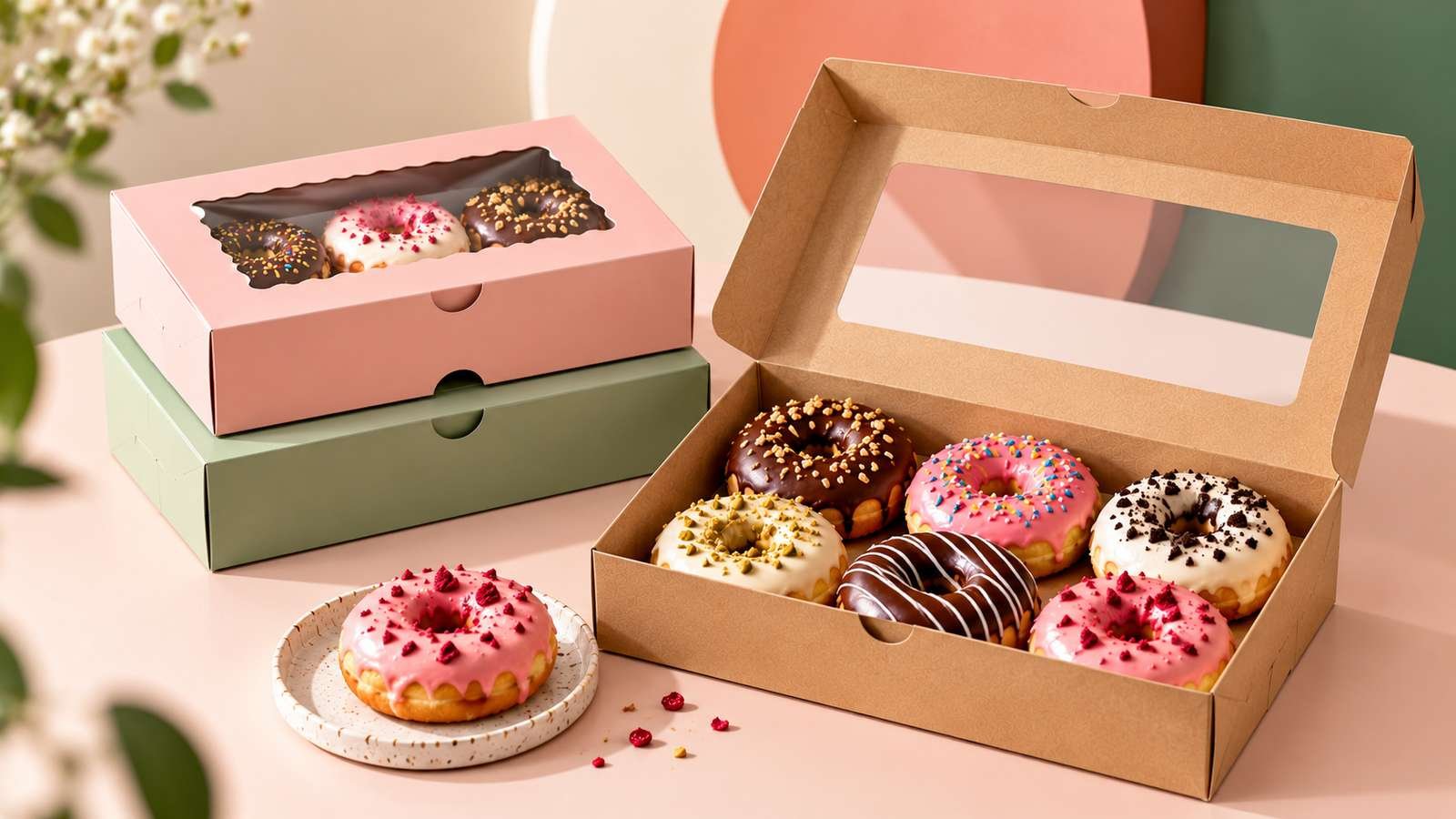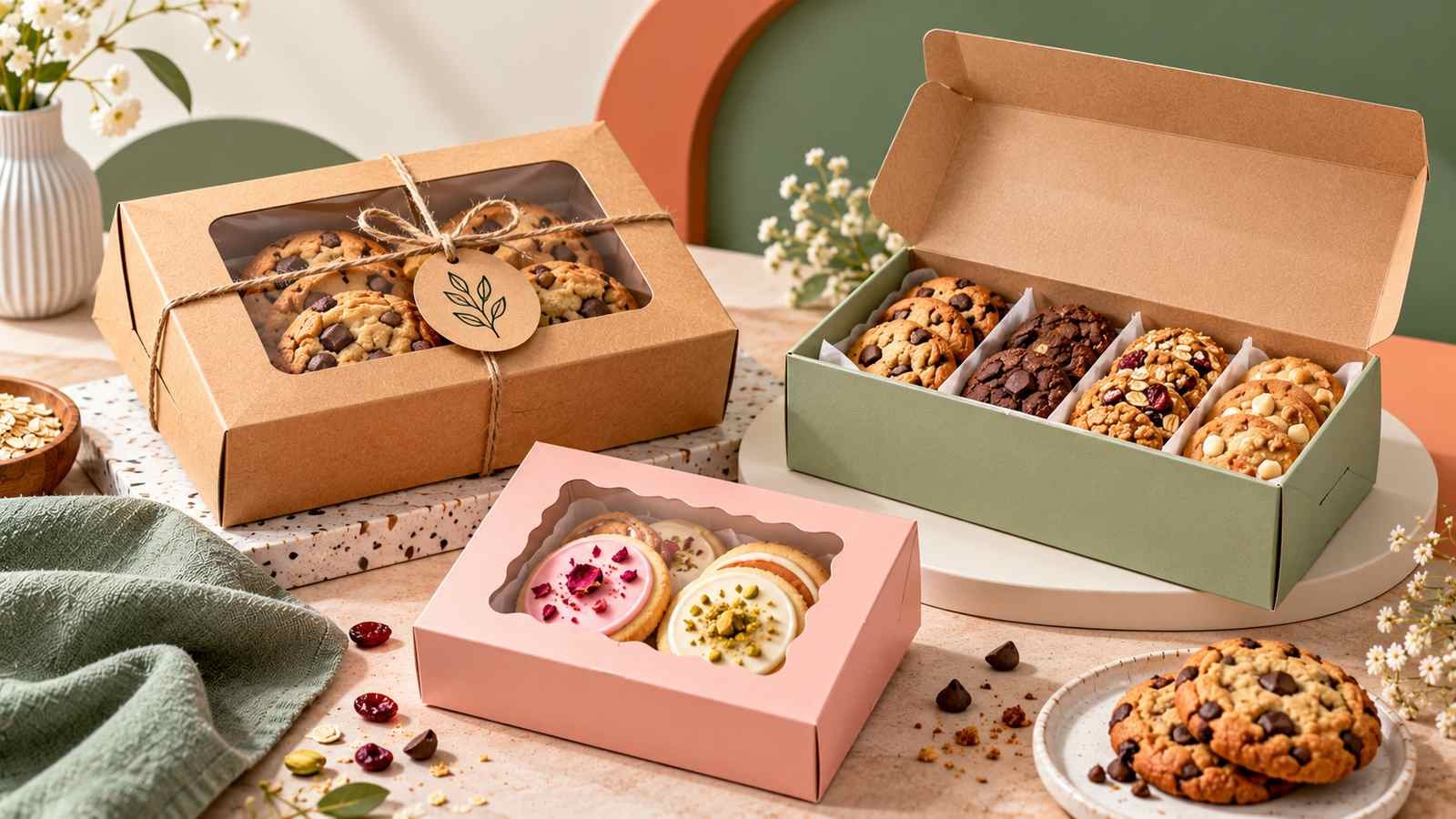
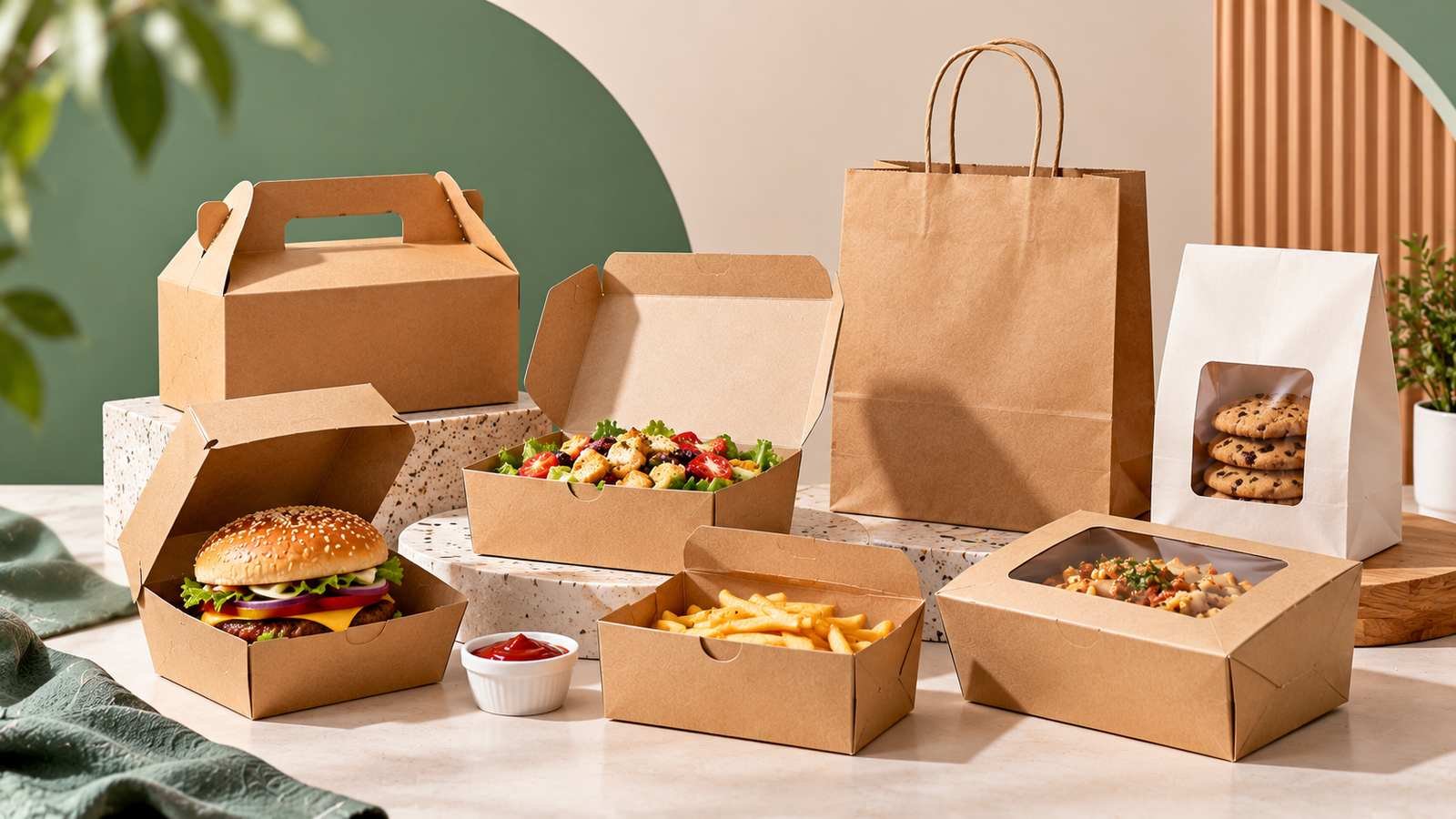
Choosing the right food packaging is important for restaurants, bakeries, cafes, food brands, catering companies, and takeaway businesses. The packaging you select affects product presentation, convenience, storage, transportation, and how customers experience your brand. However, not every food product requires the same type of box or bag.
This food packaging guide explains how to choose suitable boxes and bags for different food products, compare packaging materials, select the right size, evaluate food-contact requirements, and plan custom packaging for your business. Whether you sell baked goods, takeaway meals, snacks, or packaged food products, understanding these factors can help you make more informed packaging decisions.
Quick Takeaway
Choose food packaging according to the product’s weight, temperature, moisture, grease, serving size, and transportation needs. Kraft food boxes can provide a versatile packaging option, while suitable food bags can work well for lighter items and convenient takeaway orders. Always confirm material specifications and food-contact suitability before ordering.
1. Understand Your Food Packaging Requirements
Before selecting boxes or bags, identify what your packaging needs to accomplish. A box designed for dry cookies may not be appropriate for a hot, greasy meal. Similarly, a lightweight paper bag may work for bakery purchases but may not provide enough support for heavy food containers.
Start by considering these requirements:
- Food type: Determine whether you sell baked goods, dry snacks, sandwiches, takeaway meals, confectionery, or other products.
- Temperature: Consider whether the food is served hot, chilled, frozen, or at room temperature.
- Moisture and grease: Identify whether the product releases moisture, oil, sauce, or condensation.
- Weight and shape: Select packaging that supports the product without collapsing or becoming difficult to carry.
- Transportation: Consider whether the package will be used for counter service, takeaway, catering, or delivery.
- Branding: Decide whether plain packaging, a printed logo, or a fully customized design suits your business.
Making these decisions early can help narrow your options and reduce the risk of ordering packaging that does not perform as expected.
2. Choose Between Food Packaging Boxes and Bags
Food boxes and bags serve different purposes. The best choice depends on the product, how it is sold, and the protection it needs. Some businesses use both formats as part of a complete packaging system.
For many food businesses, boxes are useful when products need shape retention or organized presentation, while bags offer convenience for lighter purchases. Your supplier can help you identify suitable structures based on the product and intended application.
3. Consider Kraft Food Packaging for Your Business
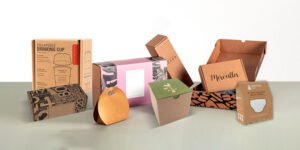
Kraft food packaging is a popular option for businesses that want a natural-looking, versatile appearance. Its neutral surface can work with minimalist branding, colorful graphics, logos, and simple product labels.
Depending on the construction and specifications, kraft boxes may be considered for bakery products, dry foods, snacks, takeaway packaging, and other suitable applications. The important point is to select a box designed for the specific food and conditions involved.
When evaluating kraft food boxes, review:
- Material construction: Confirm that the board or paper is appropriate for the intended application.
- Food-contact suitability: Check the documentation and specifications for the complete packaging structure, including any coatings, inks, adhesives, liners, or windows.
- Grease and moisture performance: Ask whether the selected construction is suitable for the product’s oil and moisture levels.
- Strength: Make sure the packaging can support the food during normal handling.
- Printing: Check which colors, finishes, and design options are available.
Explore custom kraft food boxes when planning packaging around your product dimensions, branding, and business requirements.
Remember that kraft describes a material or paper style, not a guarantee of food safety, grease resistance, or heat resistance. These properties depend on the actual packaging specification.
4. Match Packaging to the Type of Food
Different foods create different packaging challenges. Selecting packaging according to the product can help protect its appearance and make it easier for customers to handle.
This table is a starting point, not a universal specification. For example, a box suitable for dry cookies may not be suitable for a hot meal with sauce. Check the exact product conditions and packaging performance before making a final selection.
5. Select the Correct Box or Bag Size
Packaging dimensions affect product protection, presentation, storage, and transportation. Packaging that is too small can crush food, while excessive space may allow products to move around during handling.
Use these steps to choose the right size:
- Measure the product’s length, width, and height.
- Include toppings, decorations, wrapping, or inserts where relevant.
- Decide how many items each package must hold.
- Check the usable internal dimensions rather than relying only on external measurements.
- Consider whether the package needs room for a liner or divider.
- Test a sample with the actual product before ordering in bulk.
Test the packaging under realistic conditions. Check how the product fits, whether the closure works properly, and whether the package remains practical to carry and store.
6. Check Food-Contact and Material Requirements
Packaging intended for food must be suitable for its intended use. Material selection becomes especially important when products are hot, oily, moist, acidic, or intended to remain in contact with the packaging for an extended period.
Before placing an order, ask your supplier about:
- Material specifications and intended food-contact applications.
- Any coatings, barriers, liners, inks, adhesives, or window materials.
- Suitability for the food’s temperature, moisture, and grease levels.
- Restrictions on microwave use, refrigeration, freezing, or reheating, if relevant.
- Available documentation supporting the intended application.
Businesses selling food in the United States should ensure that their packaging and food-contact materials meet the requirements applicable to their products and use conditions. Requirements can vary according to the material and application, so confirm the relevant details with your supplier and compliance adviser.
Do not assume that every paper bag, kraft carton, printed box, or coated container is automatically suitable for direct food contact. Confirm the complete packaging specification before use.
7. Use Custom Printing to Strengthen Your Brand
Packaging can help customers recognize your business before they even open the package. Consistent colors, a clear logo, readable typography, and a simple visual style can make food packaging feel more professional.
Custom printed kraft food boxes can be useful for restaurants, bakeries, cafes, catering businesses, and packaged food brands that want a consistent presentation across their product range.
When planning your design:
- Make your logo easy to recognize: Place it where customers can see it clearly.
- Use consistent brand colors: Keep the visual identity recognizable across different packaging formats.
- Keep the layout readable: Avoid overcrowding small boxes with too much text.
- Plan for required information: Make sure any applicable labeling information has appropriate space.
- Review the proof: Check artwork, spelling, colors, dimensions, and print placement before production.
Explore custom printed kraft food boxes to plan packaging that reflects your brand and fits your product requirements.
For food businesses selling multiple items, a consistent packaging system can help different box sizes and styles feel connected without requiring identical designs for every product.
8. Plan for Takeaway, Delivery, and Storage
Packaging must work beyond the point of sale. A box or bag may need to be assembled quickly, stacked in storage, carried by a customer, or placed inside a delivery bag. Each situation can influence the best design.
Consider the following practical details:
- Assembly: Choose a structure staff can prepare efficiently during busy periods.
- Closure: Check that the package closes securely under normal handling.
- Stacking: Consider how filled packages will be stored or transported.
- Leakage and movement: Select packaging suitable for the product’s consistency and transport conditions.
- Storage space: Check how much room flat-packed or assembled packaging will require.
- Delivery conditions: Test the complete package during the type of transportation you expect.
For takeaway and delivery businesses, the retail package may need an additional outer bag or delivery packaging. The appropriate setup depends on the food, delivery distance, handling conditions, and any temperature-control requirements.
9. Compare Wholesale and Bulk Food Packaging Options
Buying food packaging in bulk may help businesses maintain consistent stock and simplify replenishment. However, the right order quantity depends on sales volume, available storage, budget, and how frequently products or designs change.
Before ordering wholesale kraft food boxes, prepare these details:
- Packaging style and intended food application.
- Required dimensions and quantity per package.
- Material and food-contact specifications.
- Printing requirements and approved artwork.
- Estimated monthly usage and available storage.
- Minimum order quantity, production time, and delivery arrangements.
Compare the total cost, not just the unit price. A larger order may lower the cost per box, but it can also increase storage needs and leave you with unused packaging if your menu or branding changes.
For businesses purchasing in the United States, confirm shipping arrangements, production timelines, specifications, and the full order cost before placing an order for custom food boxes in the USA.
10. Test Your Packaging Before Production
A design proof can help you review the appearance of your packaging, but a physical sample allows you to assess its fit and usability with the actual food product.
Before approving a large order, check that:
- The food fits without unnecessary compression.
- The box or bag can support the product under normal handling.
- The closure works as intended.
- Grease, moisture, or temperature conditions have been considered.
- The packaging can be assembled and stored efficiently.
- The branding and any required information are legible.
- The supplier has confirmed the material specifications for the intended use.
Testing early gives you an opportunity to address sizing, design, and handling issues before committing to a larger quantity.
Need Custom Food Packaging for Your Business?
Explore packaging options for food products, takeaway orders, bakery items, and branded food ranges. Plan the dimensions, material requirements, and printing around the products you sell.
Food Packaging Checklist
- Identify the type of food and its packaging requirements.
- Choose between boxes, bags, or a combination of formats.
- Measure products and confirm usable internal dimensions.
- Review weight, temperature, grease, and moisture conditions.
- Confirm food-contact suitability and material specifications.
- Plan the logo, print design, and required product information.
- Test a sample under realistic handling conditions.
- Compare bulk pricing, storage needs, and delivery timelines.
Frequently Asked Questions
What are kraft food boxes used for?
Kraft food boxes are used for suitable food packaging applications, including selected bakery products, snacks, takeaway items, and packaged foods. The right box depends on the product, its dimensions, and the material’s suitability for the intended food-contact conditions.
Can food boxes be customized?
Yes, custom food boxes may be available in different sizes, structures, and designs, depending on the supplier. Customization can include dimensions, printing, and selected structural features. Confirm the available options and material requirements before ordering.
Can kraft food boxes be printed?
Many kraft food box styles can be customized with logos, brand colors, product names, or other artwork. Available printing methods and finishes depend on the material, box structure, and supplier’s capabilities.
What sizes are available for food packaging boxes?
Available sizes vary by box style and supplier. Measure the food, account for any wrapping or inserts, and confirm the usable internal dimensions. Custom sizing may be available for suitable orders.
Are kraft food boxes suitable for direct food contact?
Some kraft food boxes are designed for direct food contact, while others may require a suitable liner or may be intended for secondary packaging. Confirm the complete material specifications and suitability for your food, temperature, grease, and moisture conditions.
Can I order wholesale kraft food boxes?
Wholesale or bulk ordering may be available depending on the supplier, packaging style, and quantity. Ask about minimum order quantities, pricing, printing options, production times, and shipping before placing your order.
How do I choose food packaging for takeaway products?
Consider the food’s weight, temperature, moisture, grease, and how it will be carried or delivered. Choose a package with suitable strength, closure, and material properties, and test it under realistic handling conditions before ordering in bulk.
Final Thoughts
The right food packaging should suit the product, protect its presentation, support practical handling, and reflect your brand. Boxes can provide structure for many food products, while bags offer convenience for suitable lightweight purchases. Kraft packaging can be a versatile option when its construction and specifications match the intended application.
Start by understanding your food’s requirements, select the appropriate size and material, confirm food-contact suitability, and test a sample before committing to a large order. A well-planned packaging system can help restaurants, bakeries, cafes, and food brands maintain a consistent customer experience.
Explore Custom Food Packaging
Plan your packaging around your food products, brand identity, and business needs.