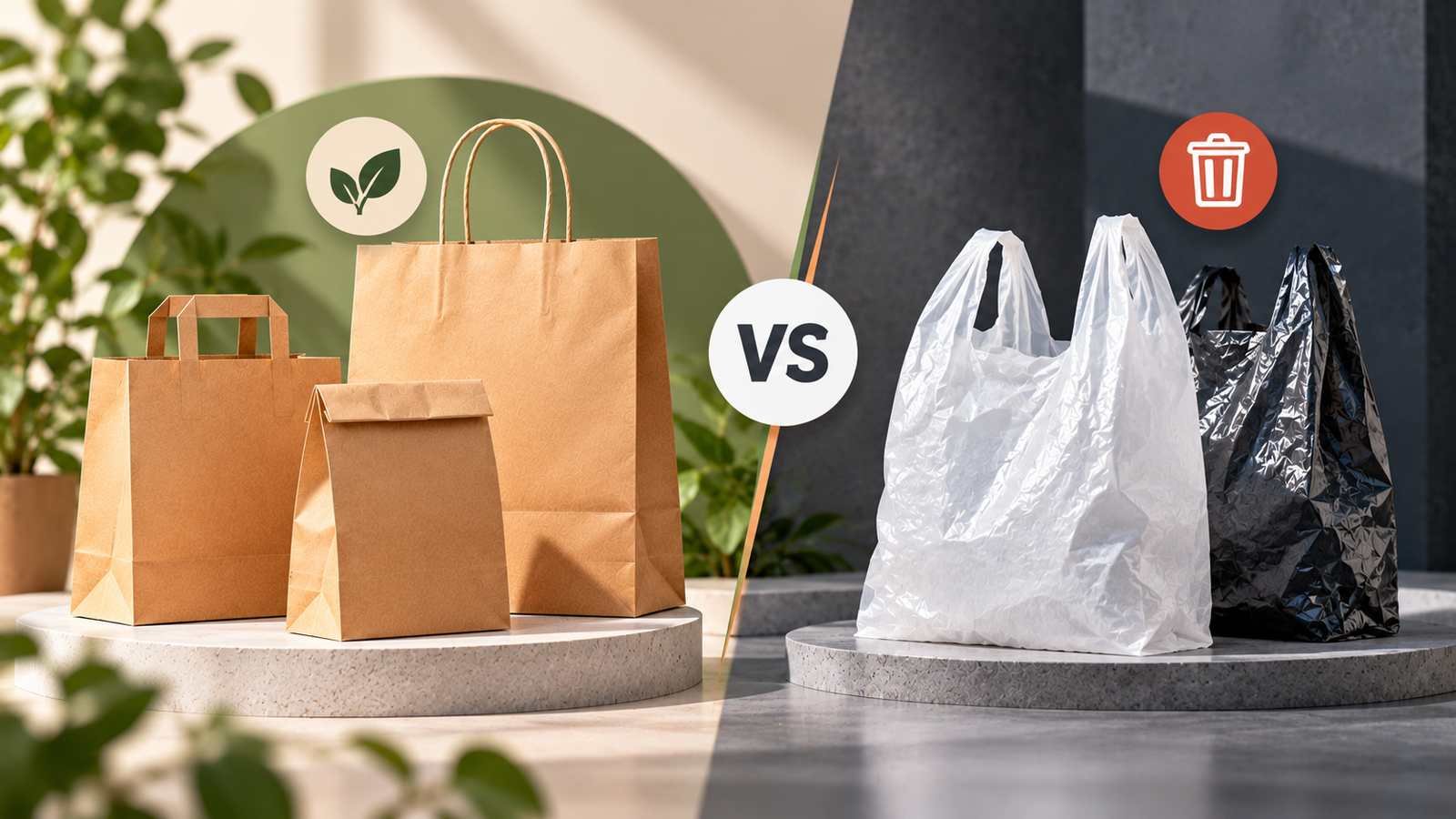
Choosing between paper shopping bags and plastic bags affects more than how customers carry their purchases. Businesses also need to consider product weight, bag dimensions, storage space, branding, order quantities, local requirements, and how customers are likely to reuse or dispose of the packaging.
There is no single bag material that is automatically the best choice for every business or every environmental situation. A practical comparison looks at the intended use and the full life cycle of the bag, including how it is produced, transported, reused, and managed after use.
Quick Takeaway
Paper bags can suit businesses that value a natural paper appearance, printability, and a familiar retail presentation. Plastic bags can offer useful moisture resistance and compact storage, depending on the type. Compare performance, reuse, total cost, branding needs, and local rules before choosing a format.
1. Paper Bags vs. Plastic Bags: The Main Differences
Paper and plastic bags are available in different grades, constructions, and sizes. A basic paper bag should not be compared with every possible plastic bag as though each material performs identically. Bag thickness, handles, seams, coatings, and intended use can change the result.
Use this table as a starting point, not as a universal performance guarantee. Ask suppliers for specifications for the exact bag you intend to order.
2. Consider Your Products and Carrying Requirements
The first question is what the bag must carry. Product weight, shape, packaging, and handling conditions are often more important than the material name alone.
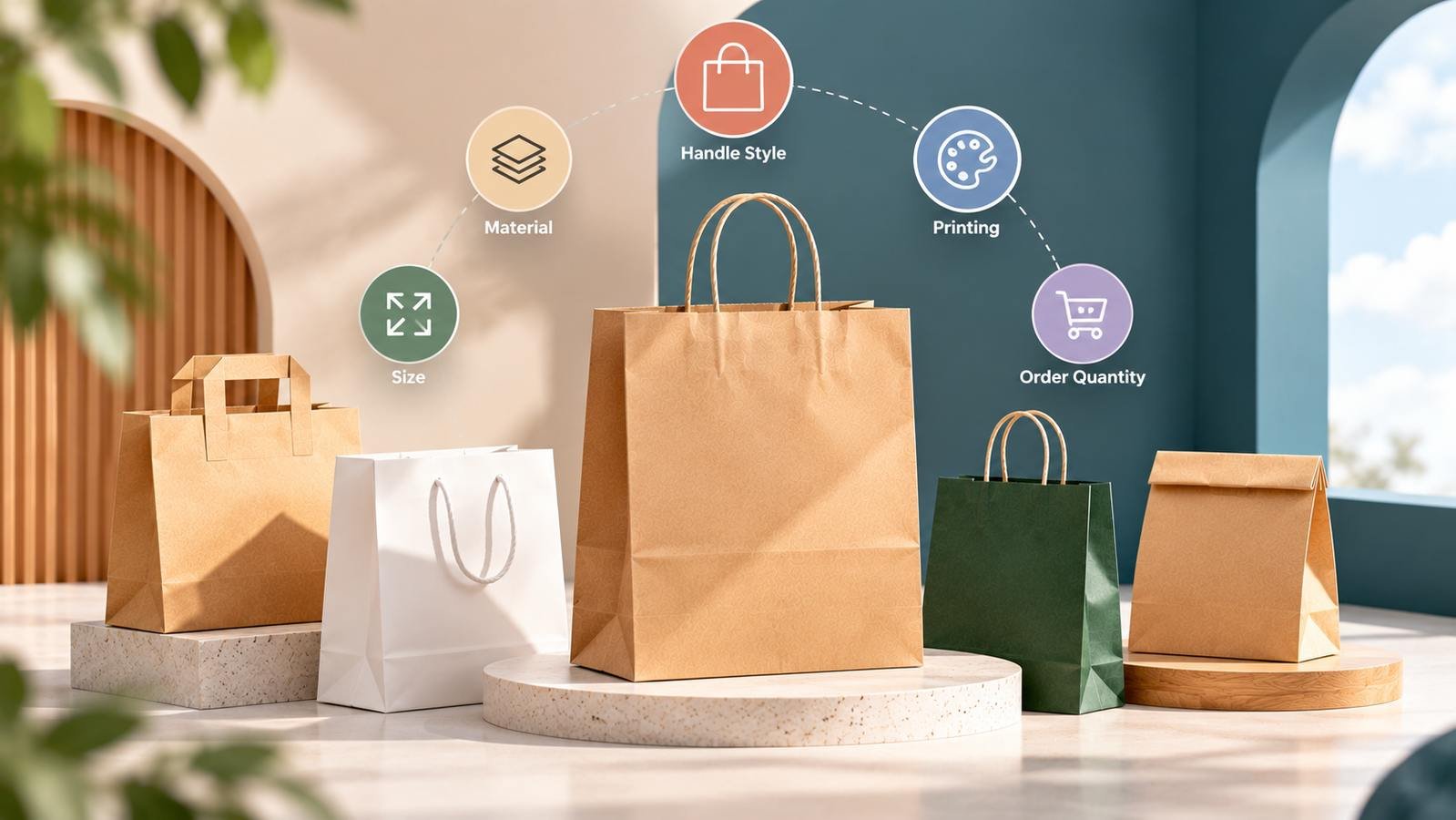
For a practical step-by-step selection process, read our guide on how to choose the right paper bag for your business, including advice on dimensions, handles, printing, and wholesale ordering.
- Lightweight retail items: Both paper and plastic formats may work if the bag dimensions and construction suit the product.
- Clothing and accessories: Paper shopping bags can provide a structured presentation and a visible print area.
- Products exposed to moisture: Check the material’s resistance and whether additional protective packaging is needed.
- Heavy or bulky items: Confirm load specifications, handle attachment, seams, and base construction before ordering.
- Food and takeaway orders: Choose packaging appropriate for the specific food-contact and handling requirements. A carry bag may hold sealed containers rather than touch food directly.
Test a sample with representative products where possible. A bag that looks suitable when empty may behave differently once loaded.
3. Compare Strength, Durability, and Reuse
Neither paper nor plastic automatically wins on durability in every situation. Paper can lose strength when exposed to moisture, while some plastic bags can stretch, tear, or fail at the handles or seams. The design and quality of the finished bag matter.
When comparing options, ask:
- What load is the bag designed to carry?
- How are the handles attached or reinforced?
- Will the bag be exposed to rain, condensation, grease, or rough handling?
- Can customers realistically reuse it, and is reuse appropriate for the intended use?
- Does the bag maintain its shape during normal carrying?
Reuse can affect the overall impact of a bag, but only when the bag is actually reused enough times to offset the resources required to produce it. Avoid assuming that a material is environmentally preferable based on a single feature alone.
4. Understand Environmental and Disposal Considerations
Environmental comparisons depend on more than whether a bag is made from paper or plastic. Relevant factors include raw materials, manufacturing energy, water use, transport weight, recycled content, the number of times a bag is reused, litter risk, and the local end-of-life system.
Consider the following points when making a business decision:
- Material sourcing: Ask about recycled content and relevant sourcing information where it matters to your business.
- Transport and storage: Bag weight and packed volume can affect shipping and warehousing.
- Actual reuse: A durable bag that gets reused can have a different overall result from a single-use bag.
- Recycling access: Check the rules in the communities where customers will dispose of the packaging.
- Coatings and contamination: Certain coatings, laminations, food residue, or mixed materials can affect recycling acceptance.
- Local regulations: Bag bans, fees, labeling rules, and accepted materials vary by jurisdiction and can change.
If environmental claims are important to your brand, use evidence specific to your bag and supply chain. Avoid broad claims such as “always greener” or “100% eco-friendly” unless they are substantiated and appropriately qualified.
5. Think About Brand Presentation and Custom Printing
Packaging can be part of the customer experience. Paper shopping bags are often chosen for their natural appearance and their ability to display logos and printed designs, while plastic bags can also be customized in various ways depending on the material and supplier.
For a branded paper bag, consider:
- Logo placement: Keep the logo clear and visible from the main viewing angle.
- Color contrast: Make sure text and graphics remain readable against the bag surface.
- Print coverage: Decide whether a simple logo or a more detailed design fits your budget and brand.
- Handle style: Select handles that complement the look and the intended carrying use.
- Artwork proof: Check dimensions, spelling, print position, and color details before production.
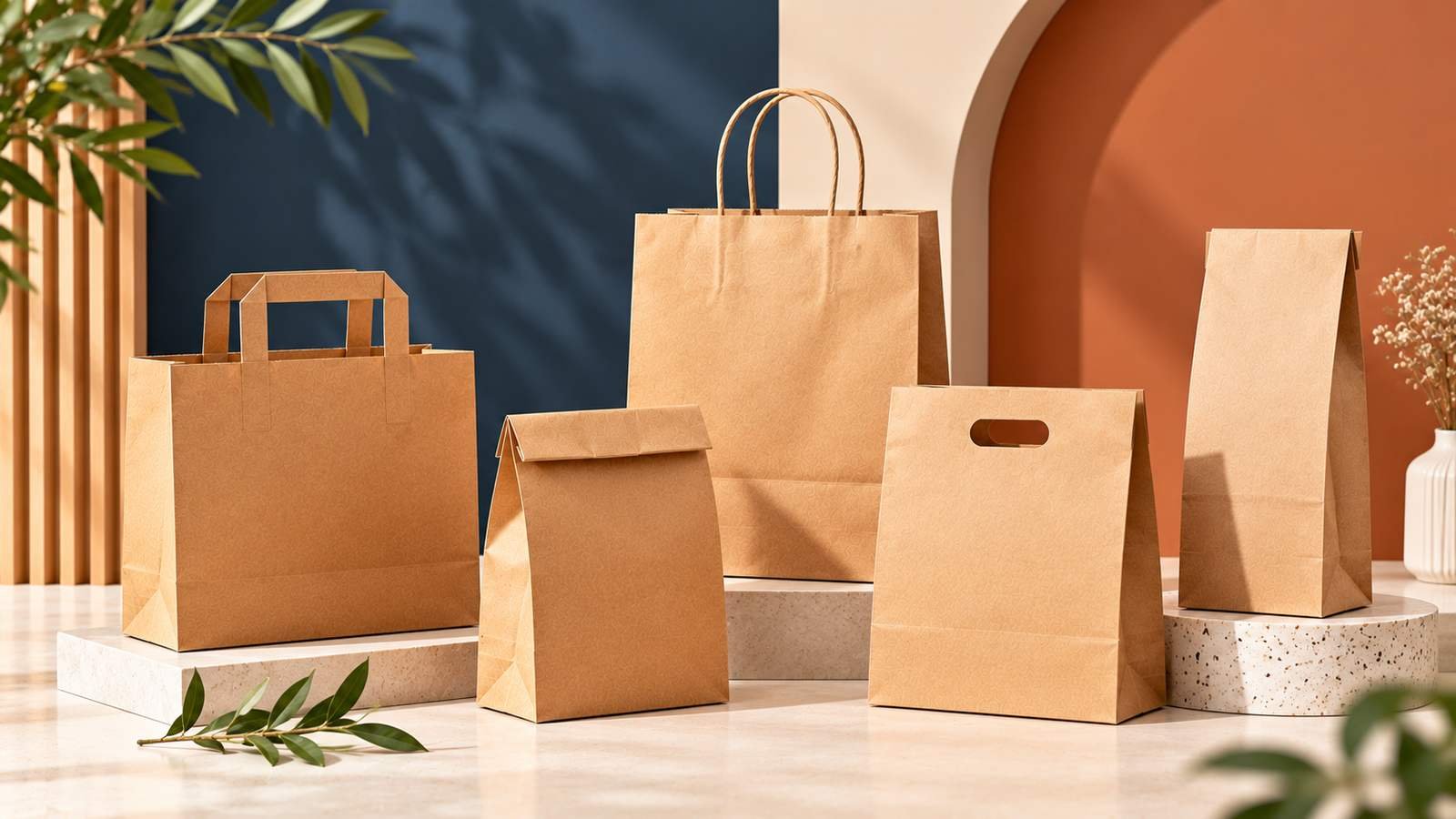
If you are leaning toward kraft paper, our guide to kraft paper bag types, uses, and styles explains common bag formats and handle options in more detail.
Businesses looking for a paper-based retail presentation can explore custom kraft shopping bags for branded packaging options. Confirm available sizes, handles, printing methods, and order requirements with the supplier.
6. Compare Costs Beyond the Unit Price
The cheapest bag per unit may not be the least expensive option overall. Businesses should compare purchase price with bag performance, shipping, storage, printing, waste, and the possibility of product damage or customer inconvenience.
For regular use, wholesale or bulk orders may help with stock planning, but only if you can use the quantity and store it properly. Compare the complete delivered cost instead of focusing on a single price figure.
7. Which Option Makes Sense for Your Business?
Use your main business requirements to shortlist the right packaging type.
8. A Buying Checklist Before You Order
- Identify the products and expected carrying load.
- Measure the products and any inner packaging.
- Compare paper and plastic options designed for the intended use.
- Confirm handle, seam, base, and material specifications.
- Check moisture, food-contact, and other special requirements.
- Review custom printing options and artwork proofs.
- Check local bag regulations and disposal guidance.
- Compare samples, minimum quantities, shipping, and total cost.
Explore Custom Kraft Shopping Bags
If paper bags fit your products and brand requirements, compare available styles and customization options before ordering. Choose dimensions, handles, and printing based on your real business needs.
Frequently Asked Questions
Are paper bags better than plastic bags?
It depends on the bag specifications, how many times it is reused, transport and manufacturing impacts, and local disposal options. Businesses should compare the intended use and full life cycle rather than assume one material is always better.
What are kraft shopping bags used for?
Kraft shopping bags are commonly used for retail purchases, merchandise, gifts, and selected business packaging applications. Choose the size and construction according to the product and carrying requirements.
Can paper shopping bags be custom printed?
Many paper shopping bags can be printed with logos, brand colors, and graphics. Available methods, print coverage, and minimum quantities depend on the bag style and supplier.
What handle options are available for kraft shopping bags?
Options may include twisted paper handles, flat paper handles, die-cut handles, or handle-free formats. Confirm availability and load suitability for your chosen bag.
What sizes are available for paper shopping bags?
Sizes vary by supplier and design. Provide product measurements, including inner packaging, and confirm usable dimensions and gusset measurements before ordering.
Should a business buy wholesale paper shopping bags?
Wholesale orders may suit businesses with regular demand. Compare minimum quantities, storage, printing charges, shipping, and the risk of unused stock before choosing an order size.
Can paper bags handle moisture?
Uncoated paper can weaken when wet. If moisture is expected, confirm the exact bag specifications and consider whether another format or additional protective packaging is needed.
Are paper and plastic bags recyclable everywhere?
No. Recycling acceptance depends on local collection systems, material type, coatings, contamination, and local rules. Check the guidance for the community where the bag will be disposed of.
Final Thoughts
When comparing paper bags vs plastic bags, start with performance and intended use, then consider branding, total cost, reuse, and disposal. Paper shopping bags can be a good fit for businesses seeking a natural paper look and customizable retail presentation, while some plastic bags may suit needs involving moisture resistance or compact storage.
The most practical choice is the one that meets your product requirements and can be responsibly managed in your business context. Compare specifications, test samples, and check applicable local requirements before placing a large order. If you decide that paper packaging suits your needs, explore custom kraft shopping bags for your retail packaging project.