FREE SHIPPING ON ALL ORDERS

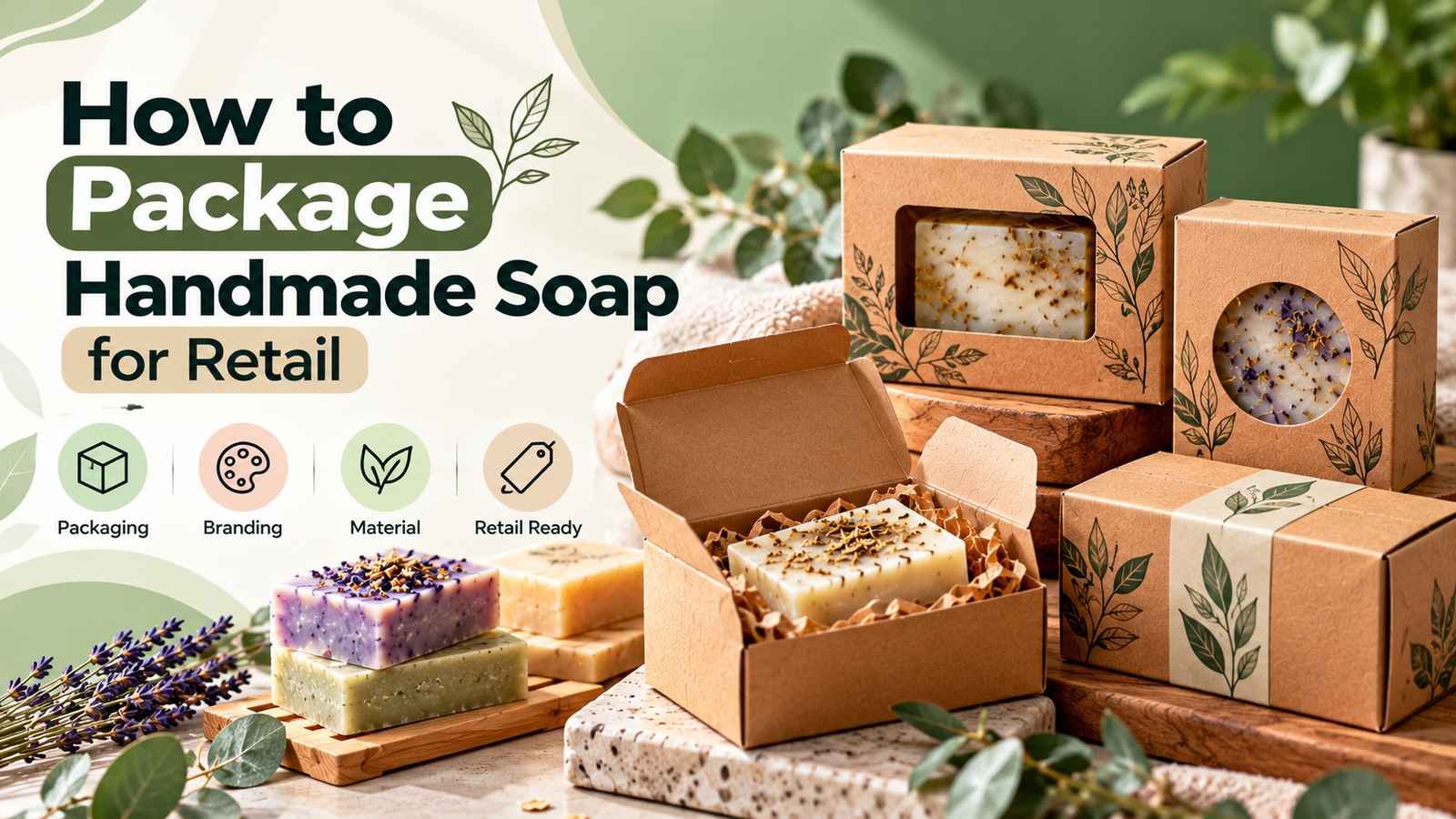
How to Package Handmade Soap for Retail

Knowing how to package handmade soap for retail involves more than choosing a box that fits the bar. Your packaging should protect the soap, communicate important product information, reflect your brand, and make the product appealing to customers. Whether you sell handmade soap online, at craft fairs, in boutiques, or through retail stores, the right packaging can help create a more professional and consistent presentation.

From selecting suitable materials to adding your logo and choosing the correct box dimensions, every packaging decision should support the product’s appearance and practical requirements.

Quick answer: Package handmade soap for retail by allowing the soap to cure fully when required by your soap-making process, selecting a suitable wrapping or box, choosing dimensions that fit the bar, adding necessary product information, and designing consistent branding. Test the packaging under realistic storage and handling conditions before ordering in bulk.

Why Retail Packaging Matters for Handmade Soap

Handmade soap often has distinctive colors, textures, shapes, scents, and ingredients. Packaging helps present these qualities while giving customers useful information about the product and its maker.

Good retail packaging can help keep bars organized, reduce unnecessary handling, and create a recognizable appearance across your product range. The exact packaging requirements depend on the soap formula, moisture characteristics, sales environment, and applicable labeling rules.

Packaging Element Why It Matters
Box or wrap Helps present and handle the soap
Material Influences appearance and suitability for the product
Size Helps provide a neat fit without unnecessary movement
Printed design Supports brand recognition and product presentation
Product label Communicates the required product details

Step 1: Prepare the Soap Before Packaging

Before selecting packaging, consider the type of soap you make and its condition when it is ready for sale. Cold-process soap, for example, generally requires an appropriate curing period before packaging. The exact timing depends on the formulation and process.

Packaging soap too early or choosing a material that does not suit its moisture characteristics can contribute to presentation or storage problems. Follow your established soap-making process and test how the finished bars behave in the intended packaging.

  • Confirm that the soap is ready for sale.
  • Check that the bars have consistent dimensions.
  • Inspect the surface for imperfections before packing.
  • Consider the soap’s scent, oils, and moisture characteristics.
  • Choose packaging appropriate for the expected storage environment.
Practical tip: Test your intended packaging with the actual soap over time. A material that looks attractive on day one may not be suitable for the product’s storage conditions.

Step 2: Choose the Right Packaging Style

There is no single packaging style that works for every handmade soap brand. Your choice should depend on the bar’s dimensions, retail display requirements, branding goals, and the level of coverage or protection needed.

Packaging Style Potential Use
Paper band or sleeve Displays selected product information while leaving parts of the bar visible
Kraft soap box Creates a structured package with room for branding
Printed carton Supports a more graphic or color-led retail design
Gift-style packaging Presents individual bars or soap sets as gifts

For brands seeking a natural, understated appearance, custom kraft soap boxes offer a way to combine a kraft-style look with packaging designed around the bar and brand.

Step 3: Measure the Soap and Select the Right Box Size

Correct sizing is essential when designing custom soap boxes. Measure the finished bar rather than relying only on the mold dimensions, because the final size may vary depending on the soap-making process.

Record the length, width, and height of the bar. Then consider the room required for any inner wrap, paper band, insert, or other component you plan to include.

Measurement What to Check
Length The longest side of the finished bar
Width The bar’s second horizontal dimension
Height The thickness of the bar
Extra clearance Space required for wraps or inserts

A box that is too tight may make packing difficult, while an oversized box can allow the bar to move around. The aim is a practical fit that supports neat presentation and efficient packing.

Step 4: Select Kraft Soap Packaging That Fits Your Brand

Kraft packaging is often chosen for its natural paper appearance and versatility. It can work well for brands with rustic, botanical, minimalist, artisan, or understated visual identities.

However, the material should be selected for the soap’s actual needs rather than appearance alone. Consider the bar’s moisture characteristics, intended shelf life, storage conditions, handling, and whether the packaging will be used for shipping as well as retail display.

Kraft soap packaging can be customized with different artwork and box dimensions, subject to the available packaging specifications. If you want a cohesive retail range, use a consistent visual system across your different scents and soap varieties.

Step 5: Design Your Logo and Printed Soap Boxes

Packaging is an opportunity to make your soap brand recognizable. Your logo, colors, typography, product name, and supporting graphics should work together to communicate a clear identity.

Printed soap boxes can display brand graphics, scent names, product descriptions, decorative patterns, and other relevant details. Before finalizing the artwork, decide which information customers should notice first.

  • Place the brand name or logo where it is easy to see.
  • Give each scent or variety a clear product name.
  • Use typography that remains readable at the finished box size.
  • Choose colors that fit the brand and product range.
  • Leave sufficient space for required product information.
  • Review the final artwork at actual print size before approval.

For example, a botanical soap line might use restrained colors and plant illustrations, while a bright, playful range may use bolder colors to distinguish different scents.

What Information Should Handmade Soap Packaging Include?

Retail packaging should communicate useful product details and meet the labeling requirements that apply to your product and market. Requirements can differ depending on how a soap is formulated, marketed, and regulated.

Depending on the product and applicable rules, packaging or an accompanying label may need information such as:

  • Brand or business name
  • Product identity or name
  • Net quantity or weight, where required
  • Ingredients or other required disclosures, where applicable
  • Business contact or responsible-party information, where required
  • Warnings or directions, where applicable

In the United States, the regulatory treatment of soap depends on factors including its composition and intended claims. Products marketed as cosmetics or drugs may be subject to different requirements than products that meet the applicable definition of soap. Check the rules relevant to your particular product before printing large quantities of packaging.

Are Kraft Soap Boxes Suitable for Handmade Soap?

They can be suitable, provided the box construction and material are appropriate for the soap’s characteristics and storage conditions. Handmade soaps vary in formulation, moisture content, shape, and fragrance, so it is important to test the packaging with the actual product.

A kraft box can provide a structured surface for branding and product information. Depending on the soap and packaging design, an inner wrap or other suitable component may also be needed.

For makers selling several scents or bar sizes, custom kraft soap boxes for handmade soap can help create a consistent packaging format across a product line.

Ready to Create Custom Packaging for Your Handmade Soap?

Explore soap packaging designed around your bar dimensions, brand style, and retail presentation.

Explore Custom Kraft Soap Boxes →

Custom Soap Boxes for Small Businesses

Small soap businesses often need packaging that looks consistent without making the production process unnecessarily complicated. A useful starting point is to standardize packaging for your most popular bar sizes and build a repeatable design system for different scents or collections.

Custom kraft soap boxes for small businesses can be planned around the products you sell most often, your brand artwork, and your retail requirements.

Before committing to a large order, consider your sales volume, available storage, number of product variations, and how frequently you expect to reorder. These factors can help you avoid accumulating packaging that no longer matches your product range.

Can I Choose Custom Sizes for Soap Boxes?

Custom dimensions can be considered when standard box sizes do not fit your soap bars properly. A custom size may be useful for unusually shaped bars, multi-bar sets, gift collections, or products that require an inner component.

Provide accurate measurements and, where possible, test a sample with the finished soap. Check that the box closes correctly, the product is easy to insert and remove, and the packaging presents well on a retail shelf.

Wholesale and Bulk Kraft Soap Boxes

As a soap business grows, buying packaging in larger quantities may help maintain consistency across recurring production runs. However, wholesale ordering works best when the design, dimensions, and product range are reasonably stable.

Before ordering wholesale custom kraft soap boxes, confirm:

  • Finished soap dimensions and packaging style
  • Approved artwork and print specifications
  • Quantity required for each scent or product variation
  • Storage space and expected reorder frequency
  • Any labeling updates needed for future batches

Businesses searching for wholesale kraft soap boxes USA should also consider production schedules, delivery timelines, and how packaging inventory will be managed as the product range changes.

Common Handmade Soap Packaging Mistakes to Avoid

  • Packaging before the soap is ready: Follow the appropriate preparation and curing process for your formula.
  • Choosing the wrong box size: Measure the finished bar and account for any inner wrap.
  • Ignoring storage conditions: Test the material with the actual soap over time.
  • Overcrowding the design: Keep the brand and product name easy to read.
  • Leaving out required information: Check applicable labeling rules before printing.
  • Ordering too much too soon: Confirm dimensions and artwork before committing to a large quantity.
  • Skipping sample testing: Test the complete packaging before using it for every product.

How to Test Your Soap Packaging Before Retail

Before ordering packaging in bulk, pack several bars using the intended box, wrap, and label. Check the fit, closure, print readability, and ease of packing.

Store the packaged samples under conditions similar to those expected in your shop, stockroom, or shipping process. Inspect them over time for changes in appearance, fragrance transfer, moisture-related issues, or other signs that the packaging may not be suitable.

If you sell through ecommerce as well as retail, evaluate the outer shipping package separately. A retail soap box may need additional protection during transit.

Handmade soap packaging checklist:

  • Prepare the soap according to your process.
  • Measure the finished bar.
  • Select a suitable box or wrapping style.
  • Check material compatibility and storage needs.
  • Prepare clear, consistent brand artwork.
  • Review required product information.
  • Test samples before ordering in bulk.
  • Keep packaging consistent across scents and sizes.
Give Your Soap Range a Consistent Retail Look

Create packaging that brings your soap products, printed design, and brand identity together.

Explore Custom Soap Packaging →

Frequently Asked Questions

What are kraft soap boxes used for?

Kraft soap boxes are used to package individual soap bars and soap sets for retail, gifting, or other sales channels. Their suitability depends on the soap’s dimensions, formulation, and packaging requirements.

Can soap boxes be printed?

Yes. Depending on the selected specifications, soap boxes can feature logos, brand colors, product names, illustrations, patterns, and other artwork.

Can I choose custom sizes?

Custom dimensions can be considered when standard box sizes do not fit your finished soap bars or packaging components. Accurate measurements and sample testing are recommended.

Are kraft soap boxes suitable for handmade soap?

They can be suitable when the material, box structure, and storage conditions match the soap’s characteristics. Test the packaging with the actual product before placing a large order.

Can I order wholesale?

Wholesale or bulk ordering may be available depending on the supplier’s product specifications and order terms. Confirm the required dimensions, artwork, quantity, and production details before ordering.

Final Thoughts

Learning how to package handmade soap for retail starts with understanding the product. Choose a suitable box or wrap, measure the finished bars carefully, create readable branding, and make sure the packaging suits the soap’s storage and handling requirements.

For businesses looking to create a consistent kraft-style presentation, custom kraft soap boxes in the USA can be considered as part of a retail packaging strategy. Test the finished design before ordering in bulk so your packaging supports both the product and your brand.
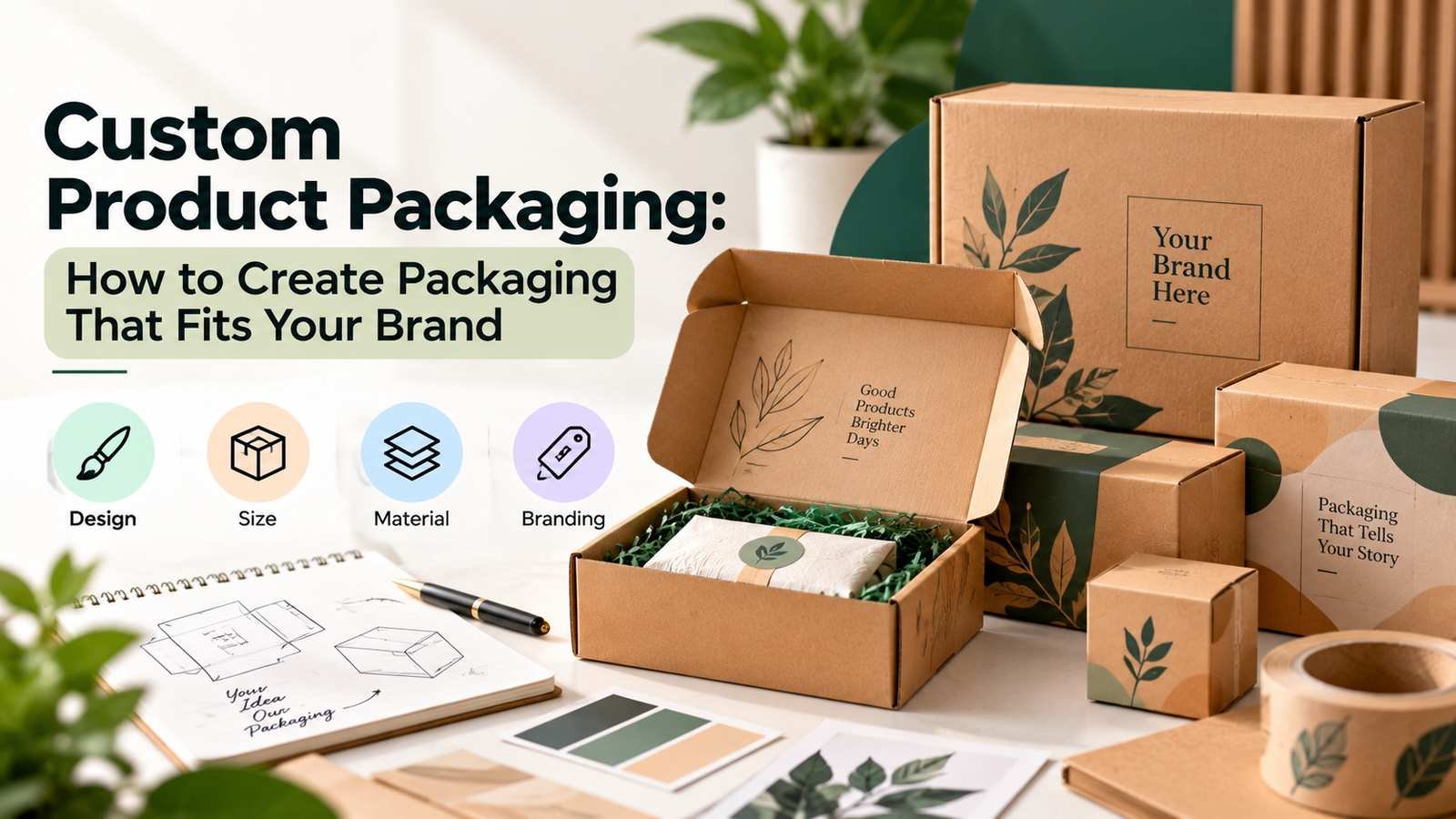
Custom Product Packaging: How to Create Packaging That Fits Your Brand

Your packaging is often one of the first physical experiences customers have with your product. Custom product packaging can help your brand create a consistent presentation, protect the product, and make the unboxing experience more memorable. The right packaging should not only hold your product—it should also fit your brand identity, product dimensions, customer expectations, and selling environment.

Whether you sell through ecommerce, retail stores, boutiques, or direct-to-consumer channels, choosing the right product box can make your packaging feel more intentional and professional.

Quick answer: Create custom product packaging by defining your brand style, measuring your product, selecting the right box structure and material, planning your printing and branding, and testing the finished package before ordering in bulk.

Why Custom Product Packaging Matters for Your Brand

Packaging plays several roles at the same time. It protects the product, communicates information, supports your visual identity, and influences how customers perceive the item before they use it.

Generic packaging can work for basic shipping needs, but it may not communicate what makes your brand different. Custom product boxes allow businesses to create packaging around their actual products and brand requirements.

Packaging Element Brand Benefit
Box structure Creates the right product presentation and functionality
Size Provides a better product fit and reduces unnecessary space
Colors Supports recognizable brand identity
Logo and graphics Makes the packaging easier to associate with your brand
Material Influences appearance, feel, and perceived quality

Step 1: Define Your Brand Packaging Style

Before choosing a box, determine how you want customers to perceive your brand. Packaging should feel like a natural extension of your website, product design, store, and other brand materials.

For example, a minimalist skincare brand may prefer a clean design with restrained graphics, while a children’s product company may use brighter illustrations and more playful elements.

Branding tip: Do not start with colors and graphics alone. Decide what your packaging should communicate first—premium, natural, playful, minimalist, bold, sustainable, practical, or another clear brand characteristic.

Consistency is important. Your logo, typography, colors, imagery, and messaging should work together rather than making every side of the package visually crowded.

Step 2: Choose the Right Product Box Structure

The structure of your packaging should match the product and the way customers interact with it.

Some products need a simple box that opens quickly, while others benefit from a more presentation-focused structure. The packaging may also need to accommodate inserts, multiple products, or additional protective materials.

Product Requirement Packaging Consideration
Single product Focus on precise fit and presentation
Multiple products Allow enough internal space and organization
Fragile product Consider internal protection and secure positioning
Retail product Prioritize shelf presentation and brand visibility
Ecommerce product Balance presentation, protection, size, and shipping requirements

For brands that want a natural-looking presentation, custom kraft product boxes can provide a versatile packaging option for different types of products.

Step 3: Measure Your Product Before Designing the Box

One of the most important parts of creating custom packaging is getting the dimensions right. Measure the product’s length, width, and height in the condition in which it will actually be placed inside the box.

If you plan to use tissue, inserts, protective paper, trays, or other internal components, account for their space as well.

A box that is too small can make packing difficult and may put pressure on the product. A box that is too large can create unnecessary empty space and make the package feel less intentional.

Size checklist:

  • Measure length, width, and height.
  • Include internal packaging or inserts.
  • Consider how the product will be positioned.
  • Test the actual product inside the prototype.
  • Check single-product and multi-product orders when relevant.

Step 4: Select a Material That Matches Your Brand

The material contributes to both the practical performance and visual character of product packaging.

Kraft packaging can be a strong option for brands that want a natural, understated, or versatile appearance. It can also provide a suitable base for printed branding and product information.

When choosing material, consider more than appearance. Think about the product’s weight, required protection, box dimensions, handling conditions, storage, and the overall customer experience.

For brands looking for packaging with a kraft appearance, kraft product boxes can be designed around the product and the desired brand presentation.

Step 5: Plan Your Logo and Printed Design

One of the biggest advantages of custom packaging is the ability to make the package recognizable as soon as customers see it.

Your logo is usually one of the most important elements, but it should not necessarily be the only design element. Consider adding supporting colors, patterns, illustrations, product information, website details, or short brand messaging when appropriate.

Custom printed kraft product boxes can combine the natural visual character of kraft packaging with branded graphics and messaging.

Keep the design organized. Important information should be easy to see, while decorative elements should support rather than compete with the product and brand identity.

Can Product Boxes Be Customized?

Yes. Product boxes can be customized according to the packaging requirements of the product and brand. Customization may include dimensions, structure, printed artwork, colors, branding, and other specifications.

This is especially useful when standard packaging does not provide the right fit or does not reflect the desired brand presentation.

For smaller brands, custom kraft product boxes for small businesses can provide a consistent packaging format that is built around the products being sold.

Ready to Create Packaging That Fits Your Brand?

Build product packaging around your product dimensions, brand identity, and customer experience.

Explore Custom Product Boxes →

How to Make Packaging Consistent Across Your Product Line

If your business sells several products, your packaging should feel like part of the same product family even when box sizes or structures differ.

You can create consistency by maintaining the same core brand elements across different packages. This might include the same logo placement, typography, color system, design language, or messaging style.

Keep Consistent Can Change
Logo treatment Box dimensions
Primary brand colors Internal inserts
Typography Product-specific information
Overall design language Box structure when required

This approach allows different products to have packaging that fits their individual dimensions while still looking like they belong to the same brand.

Custom Product Packaging for Retail Products

Retail packaging has an additional responsibility: it may need to attract attention before the customer ever opens the package.

Custom kraft product boxes for retail products can be designed with product presentation and shelf visibility in mind.

Consider which information customers need to see quickly. Depending on the product, this may include the brand name, product name, key features, usage information, or other relevant details.

At the same time, avoid overcrowding the package. A clear hierarchy usually makes packaging easier to understand at a glance.

Custom Product Packaging for Small Businesses

Small businesses do not need to copy the packaging strategy of large corporations. Instead, packaging should reflect the actual needs and scale of the business.

A practical approach is to identify your most important products, establish a consistent design system, choose appropriate box sizes, and create packaging that can be repeated as your order volume grows.

Businesses ordering custom kraft product boxes in the USA may also want to consider storage requirements, reorder frequency, product variations, and expected sales volume before finalizing packaging specifications.

What Are Kraft Product Boxes Used For?

Kraft product boxes can be used for a wide range of packaged products where a practical box structure and kraft-style appearance are appropriate.

They can be used for retail products, gifts, accessories, cosmetics, apparel-related items, specialty products, and other consumer goods depending on the required dimensions and construction.

The best box depends on the actual product. Consider its size, weight, fragility, presentation requirements, and whether it will be sold in a store, shipped directly to customers, or used in another sales environment.

Can I Add My Logo to Product Boxes?

Yes. Adding a logo is one of the most common ways to make custom packaging recognizable as part of your brand.

However, logo placement should be planned together with the rest of the design. Consider how the package will be viewed when closed, opened, displayed on a shelf, or photographed for ecommerce content.

A simple, well-positioned logo can often communicate the brand more effectively than filling every available surface with graphics.

What Sizes Are Available for Product Boxes?

Product boxes can be produced in different dimensions depending on the product and packaging requirements. There is no single size that works for every product category.

Start by measuring your product and then determine how much space is needed for inserts, protective materials, or multiple items. Custom sizing can be especially useful when standard box dimensions create too much unused space.

The goal is to create a package that fits the product without making packing unnecessarily difficult.

Wholesale and Bulk Custom Product Boxes

Businesses with established packaging requirements may eventually need larger quantities of product boxes. Ordering in bulk can be useful when your box dimensions, artwork, and specifications are already finalized.

Before ordering wholesale custom kraft product boxes, confirm your product dimensions, artwork, expected order volume, storage capacity, and likely reorder schedule.

Businesses searching for wholesale kraft product boxes USA should also consider whether the selected packaging can support future product growth and additional product variations.

Common Custom Packaging Mistakes to Avoid

  • Designing before measuring: Finalize accurate product dimensions before approving the box.
  • Using too much empty space: Excess space can make the packaging less efficient and may require additional filler.
  • Overloading the design: Too many graphics or messages can make the package difficult to understand.
  • Ignoring the opening experience: Think about how customers will interact with the package.
  • Choosing material only by appearance: Consider product weight, protection, handling, and use.
  • Skipping a physical sample: Test the actual product inside the packaging before placing a large order.

How to Test Your Custom Product Packaging

Before ordering packaging in large quantities, create a sample using the actual product and the planned packaging configuration.

Check whether the product fits correctly and whether there is enough room for any inserts or protective materials. Open and close the package several times to make sure the structure works as expected.

If the packaging will be shipped, test the complete shipping configuration as well. A product box that looks excellent on a shelf may require additional consideration when it becomes part of an ecommerce shipping process.

Custom packaging checklist:

  • Define your brand’s packaging style.
  • Measure the product accurately.
  • Choose the right box structure.
  • Select a suitable packaging material.
  • Plan your logo and printed artwork.
  • Check the packaging size and product fit.
  • Test the complete package before ordering in bulk.
  • Keep the design consistent across your product line.
Ready to Build a More Recognizable Product Package?

Create custom packaging that fits your products while giving customers a consistent and memorable brand experience.

Explore Custom Kraft Product Boxes →

Frequently Asked Questions

What are kraft product boxes used for?

Kraft product boxes can be used for a variety of retail, ecommerce, gift, accessory, cosmetic, and specialty products. The appropriate structure and size depend on the product’s packaging requirements.

Can product boxes be customized?

Yes. Product boxes can be customized in dimensions, structure, material, printed artwork, branding, and other specifications depending on the packaging requirements.

Can I add my logo?

Yes. A logo can be incorporated into the printed design of custom product packaging. Placement should be planned as part of the overall packaging design.

What sizes are available?

Product boxes can be produced in different dimensions. The best size depends on the product, inserts, protective materials, and intended use. Custom dimensions can be considered when standard sizes are not suitable.

Can I order wholesale?

Yes. Businesses with recurring packaging requirements can order product boxes in larger quantities. It is best to finalize the dimensions, artwork, material, and specifications before placing a bulk order.

Final Thoughts

Effective custom product packaging starts with the product and works outward to the brand. The right packaging should fit the product, support protection, communicate your visual identity, and create a consistent experience for customers.

Start with accurate measurements, select an appropriate box structure and material, develop a clear printed design, and test the finished package before scaling your order. For brands that want a natural and customizable presentation, custom kraft product boxes in the USA can provide a practical foundation for branded product packaging.

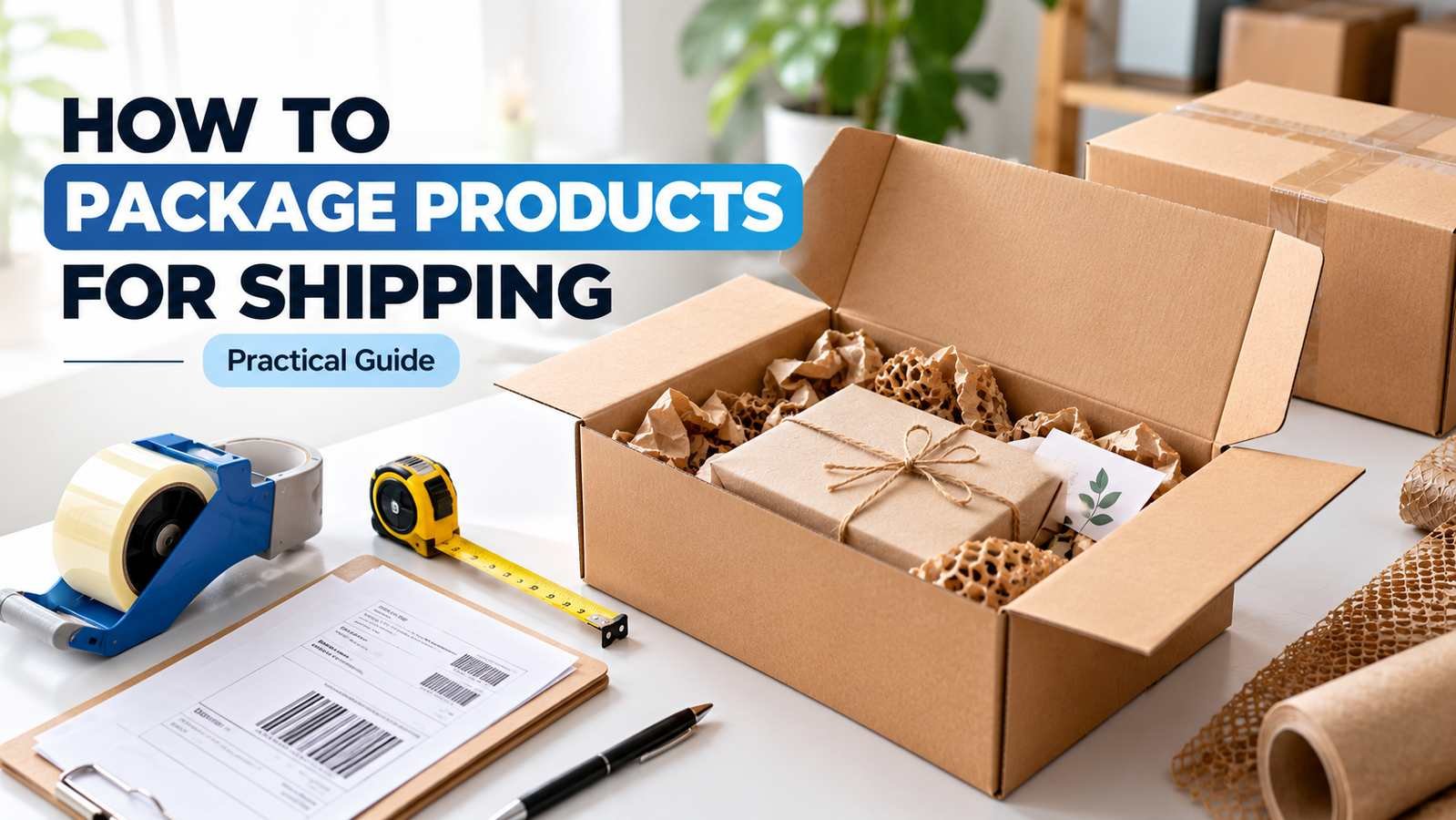
How to Package Products for Shipping: A Practical Guide

Learning how to package products for shipping properly can help reduce product damage, improve fulfillment efficiency, control unnecessary packaging space, and create a better customer experience. Whether you run a small online store or ship products at higher volumes, the right packaging process starts with choosing the right box and protecting the product inside it.

Shipping packaging has to do more than simply hold a product. It needs to keep the contents secure during handling, transportation, and delivery while also fitting your fulfillment process and branding requirements.

Quick answer: Package products for shipping by measuring the product, selecting a properly sized box, adding appropriate protective materials, securing the contents, sealing the package correctly, and testing the finished package before shipping at scale.

Why Proper Product Packaging Matters for Shipping

Products can experience movement, compression, vibration, and repeated handling during the shipping process. Packaging helps create a protective layer between the product and these conditions.

A poorly sized package can allow too much movement inside the box, while an undersized package may place unnecessary pressure on the product. Both situations can increase the chance of damage.

Good shipping packaging should provide a practical balance between protection, product fit, packing speed, appearance, and shipping efficiency.

Packaging principle: The goal is not to use the largest or most heavily protected package possible. The goal is to create a package that fits the product securely and provides the protection it actually needs.

Step 1: Measure the Product Before Choosing a Box

The first step in learning how to package products for shipping is measuring the product accurately. Record the product’s length, width, and height in the condition it will actually be packed.

Measurement What to Check Why It Matters
Length Longest side of the product Helps determine the required box footprint
Width Second horizontal dimension Provides side-to-side clearance
Height Thickness or vertical dimension Allows proper closure and protection

Remember to measure products in their real shipping configuration. If clothing is folded, measure it folded. If a product is already inside a retail package, measure the packaged product. If multiple products are commonly ordered together, test the complete order as well.

Step 2: Choose the Right Shipping Box Size

Once you know the product dimensions, choose a box that provides enough room for the product and the protective materials you intend to use.

The box should not be so tight that the product is forced into position, and it should not be so large that the product moves excessively inside the package.

For ecommerce businesses, custom kraft shipping boxes can be useful when standard dimensions do not provide the right fit. Custom dimensions allow the packaging to be planned around the actual product instead of forcing the product into an oversized generic box.

Step 3: Select Appropriate Protective Materials

The right protective material depends on the product. Not every item requires the same level of cushioning or internal support.

  • Use cushioning around fragile products that can break or crack.
  • Use paper or other protective materials to limit unnecessary movement.
  • Use inserts when products need to remain separated or positioned.
  • Use tissue or wrapping when product presentation is important.
  • Consider additional internal support for products with delicate components.

The objective is to prevent the product from moving excessively while avoiding unnecessary packaging volume.

Ready to Package Your Products More Professionally?

Create shipping packaging that fits your products, supports protection, and gives your brand a consistent presentation.

Explore Custom Shipping Boxes →

Step 4: Position the Product Inside the Box

After selecting your box and protective materials, position the product so it remains stable during transportation.

Try to keep the product centered when appropriate and use internal materials to reduce unnecessary movement. For multiple products, consider how they may contact each other during handling.

If the package contains several items, separate products when needed rather than allowing them to move freely throughout the box.

Step 5: Close and Seal the Package Properly

A properly packed product can still become vulnerable if the package is not securely closed. Follow the closure method appropriate for the selected box structure.

Traditional shipping boxes may require packing tape across the main seams, while certain kraft shipping boxes and mailer-style structures may use integrated folding and locking features.

Check the finished package before it leaves your facility. The box should be fully closed, stable, and ready for labeling.

Step 6: Add the Shipping Label Correctly

Labels should be placed on a flat, visible surface where important information can remain readable throughout the shipping process.

Avoid placing labels across major folds, openings, or heavily curved areas. If your fulfillment process involves automated or repeated handling, create a consistent labeling position for your packages.

For businesses shipping a large number of orders, consistency can make the packing and labeling workflow easier to manage.

How to Package Different Types of Products

The best shipping method depends on the product’s size, weight, fragility, shape, and presentation requirements.

Product Type Packaging Priority
Apparel Compact folding, moisture protection, and presentation
Cosmetics Secure positioning and protection against impact
Accessories Compact fit and controlled internal movement
Fragile products Cushioning, separation, and secure positioning
Multiple products Internal organization and protection between items
Gift sets Protection combined with presentation and branding

Custom Shipping Boxes for Ecommerce

Ecommerce businesses often ship products directly to customers, making packaging both a protective tool and part of the customer experience.

Custom kraft shipping boxes can be designed around the dimensions, weight, presentation, and shipping requirements of the products being sold.

For online stores, custom kraft shipping boxes for ecommerce can provide a consistent packaging format for recurring orders. They can also support a more recognizable branded experience when printed with company graphics or messaging.

Can Shipping Boxes Be Customized?

Yes. Shipping packaging can be customized in terms of dimensions, structure, printed design, branding, and other specifications depending on the packaging requirements.

Customization becomes especially useful when standard boxes leave too much empty space, do not provide the desired presentation, or do not match the product’s dimensions.

For small businesses, custom kraft shipping boxes for small businesses can provide a more consistent packaging solution without requiring the business to rely entirely on generic shipping cartons.

Can Shipping Boxes Be Printed?

Yes. Printed shipping packaging can include logos, brand colors, graphics, product information, messaging, patterns, or other visual elements.

Custom printed kraft shipping boxes can turn the shipping package into an extension of the brand while still serving its primary protective function.

For ecommerce businesses, printed packaging can also make the delivered order feel more intentional and recognizable.

How to Reduce Empty Space Inside Shipping Boxes

Excessive empty space can allow products to move around during transportation and may require additional filler. It can also make the package larger than necessary.

To reduce unnecessary space:

  • Measure products before selecting box dimensions.
  • Consider the packed product rather than the bare product.
  • Choose protective materials based on actual product needs.
  • Test common single-item and multi-item orders.
  • Consider custom dimensions when standard sizes are inefficient.

The right package is usually the one that provides enough room for safe packing without creating large unused areas.

What Sizes Are Available for Shipping Boxes?

Shipping boxes are available in a wide range of dimensions, but the best size depends on what you are shipping.

Instead of selecting a box based only on a product category, measure the actual product and packing configuration. Consider length, width, height, protective materials, inserts, and whether customers commonly purchase multiple units together.

When standard dimensions do not work efficiently, custom shipping packaging can provide a better fit.

Wholesale and Bulk Shipping Boxes

Businesses with recurring shipping requirements may need larger quantities of packaging. Ordering in bulk can make sense when box dimensions, design, and specifications are already established.

Before ordering wholesale custom kraft shipping boxes, confirm your most common product dimensions and packing process.

Businesses looking for wholesale kraft shipping boxes USA or bulk packaging should also consider storage space, reorder frequency, packaging consistency, and expected order volume.

Common Product Shipping Mistakes to Avoid

  • Choosing the box before measuring the product: Start with accurate dimensions.
  • Using excessive empty space: Oversized packaging can create unnecessary movement.
  • Ignoring protective materials: Account for everything that will be packed inside.
  • Using one box for every product: Different products can require different packaging solutions.
  • Skipping a physical test: Test the complete package before ordering large quantities.
  • Forgetting the customer experience: Shipping packaging can also contribute to your brand presentation.

How to Test Your Shipping Package

Before moving to large-scale fulfillment, create a real package using the exact product, box, protective materials, inserts, and closure method you plan to use.

Check whether the product moves inside the package. Confirm that the box closes correctly and that the finished package is practical for your fulfillment team.

It is also useful to test your most common order combinations. A package that works for one product may need a different configuration when customers purchase multiple products together.

Shipping packaging checklist:

  • Measure the product accurately.
  • Select an appropriately sized box.
  • Choose protection based on the product.
  • Position the product securely.
  • Close and seal the package correctly.
  • Apply the shipping label to a suitable flat surface.
  • Test the finished package before ordering in bulk.
Ready to Create Custom Shipping Boxes for Your Brand?

Choose packaging designed around your products, shipping needs, and brand presentation.

Explore Custom Kraft Shipping Boxes →

Frequently Asked Questions

Are kraft shipping boxes suitable for ecommerce?

Yes. Kraft shipping boxes can be suitable for ecommerce when the box dimensions, construction, product fit, and protective materials match the shipping requirements of the product.

Can shipping boxes be customized?

Yes. Shipping boxes can be customized according to dimensions, structure, printed design, branding, and other packaging requirements.

Can shipping boxes be printed?

Yes. Depending on the selected packaging specifications, shipping boxes can incorporate logos, graphics, messaging, patterns, and other brand elements.

What sizes are available?

Shipping boxes can be produced in different dimensions. The appropriate size depends on the product, protective materials, inserts, and order configuration.

Can I order bulk shipping boxes?

Yes. Businesses with recurring packaging requirements can order shipping boxes in larger quantities. It is best to confirm the dimensions, design, and specifications before placing a bulk order.

Final Thoughts

Knowing how to package products for shipping starts with understanding the product and building the packaging around its actual requirements. Measure carefully, choose the right box size, use appropriate protection, secure the product, and test the finished package before scaling your shipping operation.

For businesses that need a more precise or branded solution, custom kraft shipping boxes in the USA can help create packaging that combines product protection, efficient fulfillment, and consistent brand presentation.

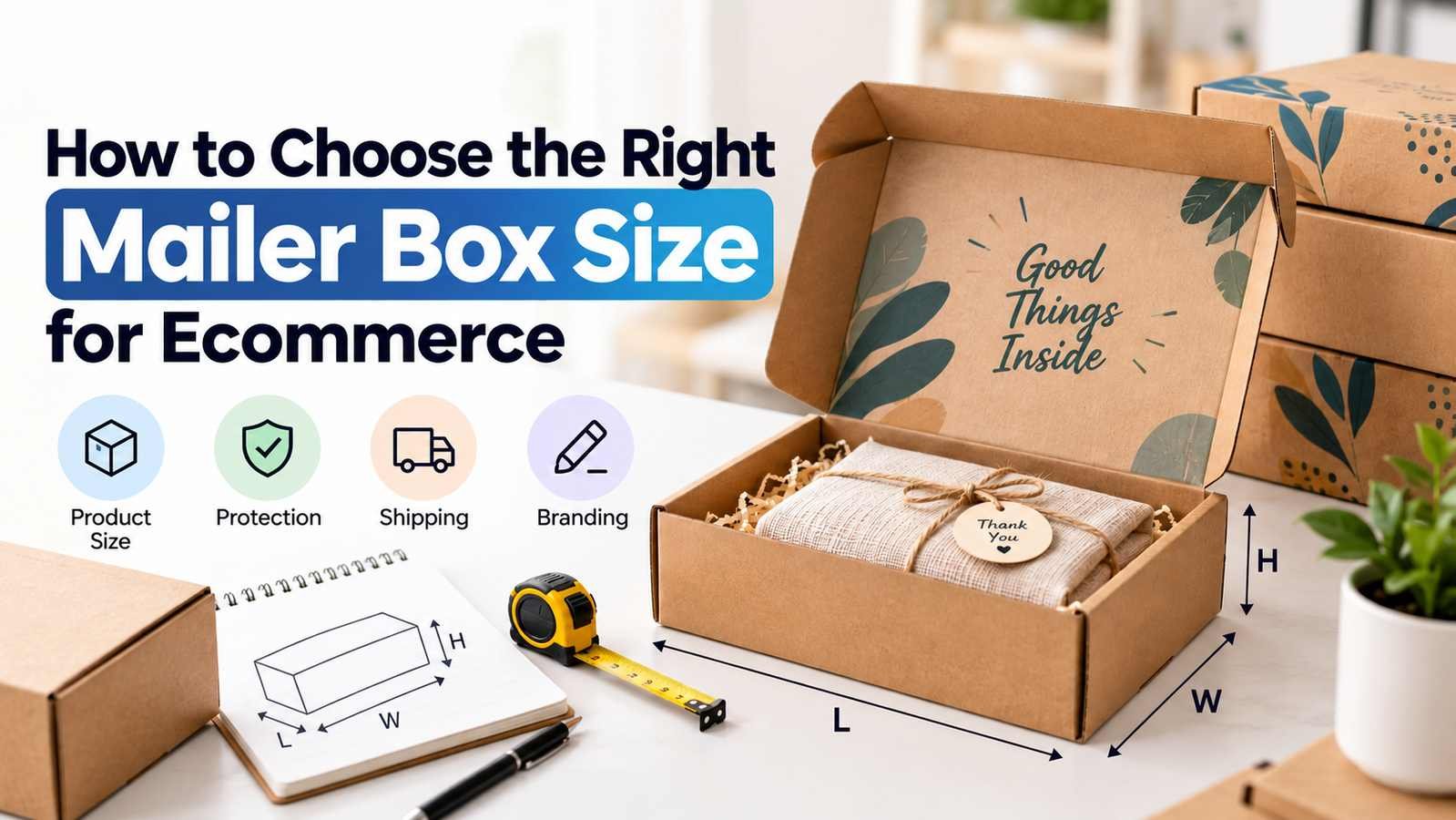
How to Choose the Right Mailer Box Size for Ecommerce

Choosing the right mailer box size is one of the simplest ways to improve ecommerce packaging. A box that is too large can create unnecessary movement, extra void space, and higher shipping costs. A box that is too small can crush the product, damage inserts, or make packing frustrating.

For online brands, the goal is not simply to find a box that fits. You want a mailer that protects the product, supports an efficient fulfillment process, looks professional when it reaches the customer, and leaves enough room for any inserts or branded materials you actually use.

Quick answer: Measure the packed product first, then account for protection, inserts, and practical packing clearance. Choose the smallest mailer box that safely accommodates the complete package without forcing or compressing the contents.

Why Mailer Box Size Matters for Ecommerce

Ecommerce packaging has to work across several stages: packing, storage, transportation, delivery, and unboxing. The right dimensions can make each stage more efficient.

If your box has too much empty space, the product may move around during handling and require additional filler. Oversized packaging can also take more warehouse space and may increase dimensional shipping charges depending on the carrier and package characteristics.

On the other hand, a box that is too tight can put pressure on the product or make it difficult for fulfillment staff to close and seal consistently. This is especially important for products with rigid shapes, fragile components, clothing folds, jars, cosmetics, or gift-ready presentations.

Start With Your Product Dimensions

The most reliable starting point is the product itself—not the box you currently use. Measure the item in its normal shipping condition and record its length, width, and height.

Measurement What to measure Why it matters
Length Longest side of the packed product Sets the main internal footprint
Width Second horizontal dimension Determines side-to-side clearance
Height Thickness or vertical dimension Ensures the lid closes without pressure

For products that change shape—such as apparel, soft goods, or products already inside a retail carton—measure the form that will actually go into the mailer. If the product is sold as a bundle, measure the complete bundle rather than an individual item.

Ready to Choose the Right Mailer Box Size for Your Products?

Create packaging that fits your products, protects every order, and supports a smoother ecommerce fulfillment process.

Explore Custom Mailer Boxes →

Account for Protection and Inserts

Your product dimensions are only the beginning. A practical mailer box size also needs room for whatever travels with the product.

  • Protective paper, tissue, or cushioning
  • Product cards, thank-you notes, or care instructions
  • Branded inserts or promotional cards
  • Multiple products packed together
  • Dividers or simple internal protection

Do not automatically add a large amount of empty space. Instead, estimate the thickness of the protection you actually use. The objective is controlled clearance, not a large gap around the product.

Practical tip: Pack one real sample exactly as your fulfillment team would. Measure that complete packed unit before choosing the final mailer dimensions. This catches issues that product-only measurements often miss.

How Much Extra Space Should You Leave?

There is no single clearance number that works for every ecommerce product. The right amount depends on product rigidity, protective materials, presentation requirements, and how tightly the package needs to close.

For a durable product that needs little protection, minimal clearance may be enough. Fragile or presentation-sensitive products may require more room for protective materials. The important point is to calculate the space from your actual packing method rather than choosing a much larger box “just in case.”

Choose the Box Around the Complete Order

If customers frequently order more than one item, test common order combinations before standardizing your packaging. A box that is perfect for a single product may become inefficient when an order contains two or three units.

Order pattern What to test
Single item Fit, protection, closure, and unboxing
Two or more items Stacking, movement, and total packing clearance
Mixed products Different shapes, fragile items, and inserts together
Gift or premium order Presentation space and protective layers

Think About Shipping Efficiency

Mailer boxes are part of your shipping system, so dimensions should be considered alongside carrier requirements and your fulfillment workflow. USPS provides packaging and shipping resources that can help businesses understand package preparation and mailing considerations.

For ecommerce brands, the practical goal is to avoid paying to ship unnecessary volume while still giving the product adequate protection. A compact, repeatable package can also be easier to store, pick, pack, and label.

Mailer Box Size by Product Type

Different products naturally call for different packaging approaches. Use these categories as a starting point, then test your actual product and packing configuration.

Product type Sizing priority
Apparel Folded footprint and protection from crushing
Cosmetics Product arrangement and protective clearance
Small accessories Compact fit with limited unnecessary void space
Subscription products Repeatable fit across the standard monthly assortment
Gift sets Presentation, inserts, and protective layers

Custom Mailer Boxes vs. Standard Sizes

Standard mailer boxes can be useful when your product fits comfortably within an available size. They can simplify purchasing and make sense for brands with straightforward packaging needs.

Custom packaging becomes more valuable when your product dimensions are unusual, your brand needs a precise presentation, or you want to reduce excess space. Custom mailer boxes can be designed around the actual product and packing configuration instead of forcing the product into a generic footprint.

For brands shipping across the United States, custom mailer boxes in the USA can also support a consistent branded presentation across ecommerce orders.

Test Before Ordering in Bulk

Before committing to a large packaging order, create a physical prototype or sample. Put the product inside, add the exact protection and inserts you plan to use, close the box, and inspect the finished package.

Then test the workflow. Can your team pack it quickly? Does the lid close cleanly? Does the product stay in position? Is the label area practical? Does the finished package look the way you want customers to see it?

Size-selection checklist:

  • Measure the product in its real shipping configuration.
  • Account for protection, inserts, and multiple-item orders.
  • Choose enough clearance for reliable closure without excessive empty space.
  • Consider storage, fulfillment, labeling, and shipping efficiency.
  • Test a physical sample before placing a bulk order.

Common Mailer Box Sizing Mistakes

  • Choosing by product name alone: Two products in the same category can have very different dimensions.
  • Ignoring inserts: Cards, tissue, and protective materials need real space.
  • Buying the largest box: More space is not automatically better protection.
  • Testing only one order: Multi-item orders can expose sizing problems.
  • Skipping a physical sample: A theoretical fit can behave differently during real packing.

Final Thoughts

The right mailer box size balances protection, product fit, packing speed, presentation, storage, and shipping efficiency. Start with accurate product measurements, build in only the clearance your packing method needs, and test common order combinations before finalizing the dimensions.

If you want a broader look at ecommerce packaging, see our ecommerce packaging guide. You can also compare structure and use cases in our guide to mailer boxes vs. shipping boxes, or review our kraft box sizes guide for more sizing considerations.

Ready to Create Custom Mailer Packaging for Your Brand?

Turn the right box size into a consistent, branded unboxing experience for your ecommerce customers.

Explore PrintnBox →