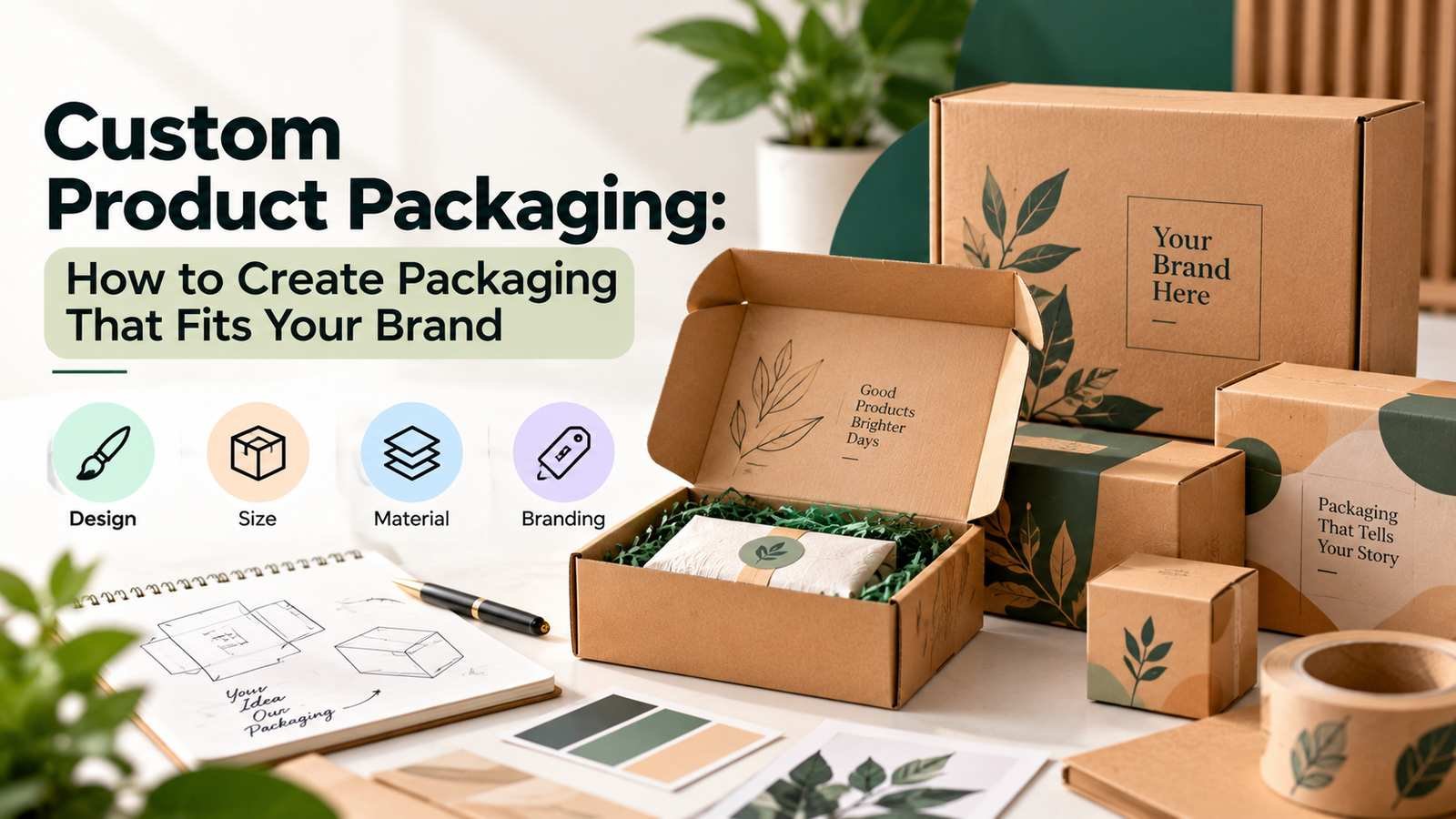
Learning how to package products for shipping properly can help reduce product damage, improve fulfillment efficiency, control unnecessary packaging space, and create a better customer experience. Whether you run a small online store or ship products at higher volumes, the right packaging process starts with choosing the right box and protecting the product inside it.
Shipping packaging has to do more than simply hold a product. It needs to keep the contents secure during handling, transportation, and delivery while also fitting your fulfillment process and branding requirements.
Why Proper Product Packaging Matters for Shipping
Products can experience movement, compression, vibration, and repeated handling during the shipping process. Packaging helps create a protective layer between the product and these conditions.
A poorly sized package can allow too much movement inside the box, while an undersized package may place unnecessary pressure on the product. Both situations can increase the chance of damage.
Good shipping packaging should provide a practical balance between protection, product fit, packing speed, appearance, and shipping efficiency.
Step 1: Measure the Product Before Choosing a Box
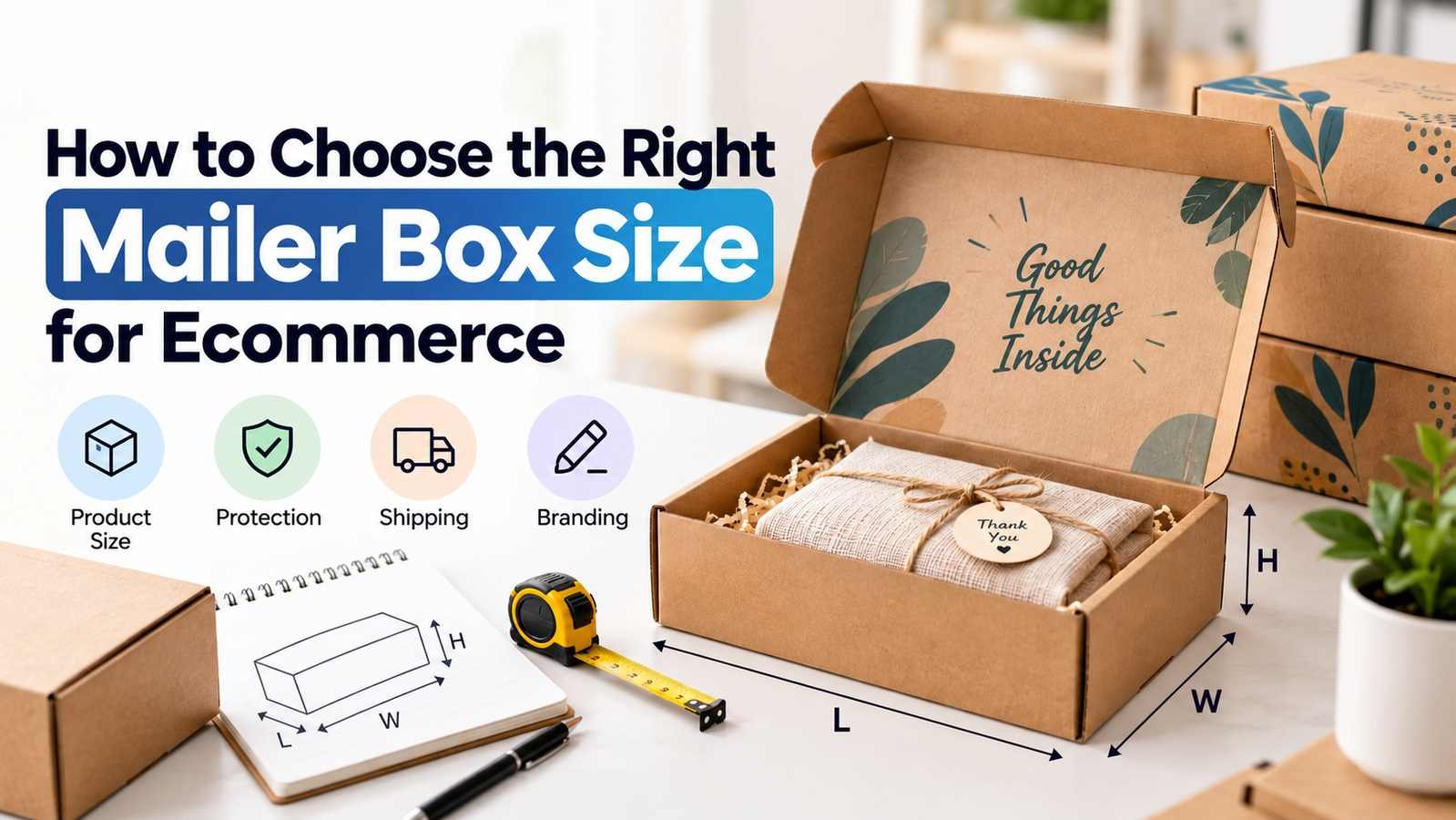
The first step in learning how to package products for shipping is measuring the product accurately. Record the product’s length, width, and height in the condition it will actually be packed.
Remember to measure products in their real shipping configuration. If clothing is folded, measure it folded. If a product is already inside a retail package, measure the packaged product. If multiple products are commonly ordered together, test the complete order as well.
Step 2: Choose the Right Shipping Box Size
Once you know the product dimensions, choose a box that provides enough room for the product and the protective materials you intend to use.
The box should not be so tight that the product is forced into position, and it should not be so large that the product moves excessively inside the package.
For ecommerce businesses, custom kraft shipping boxes can be useful when standard dimensions do not provide the right fit. Custom dimensions allow the packaging to be planned around the actual product instead of forcing the product into an oversized generic box.
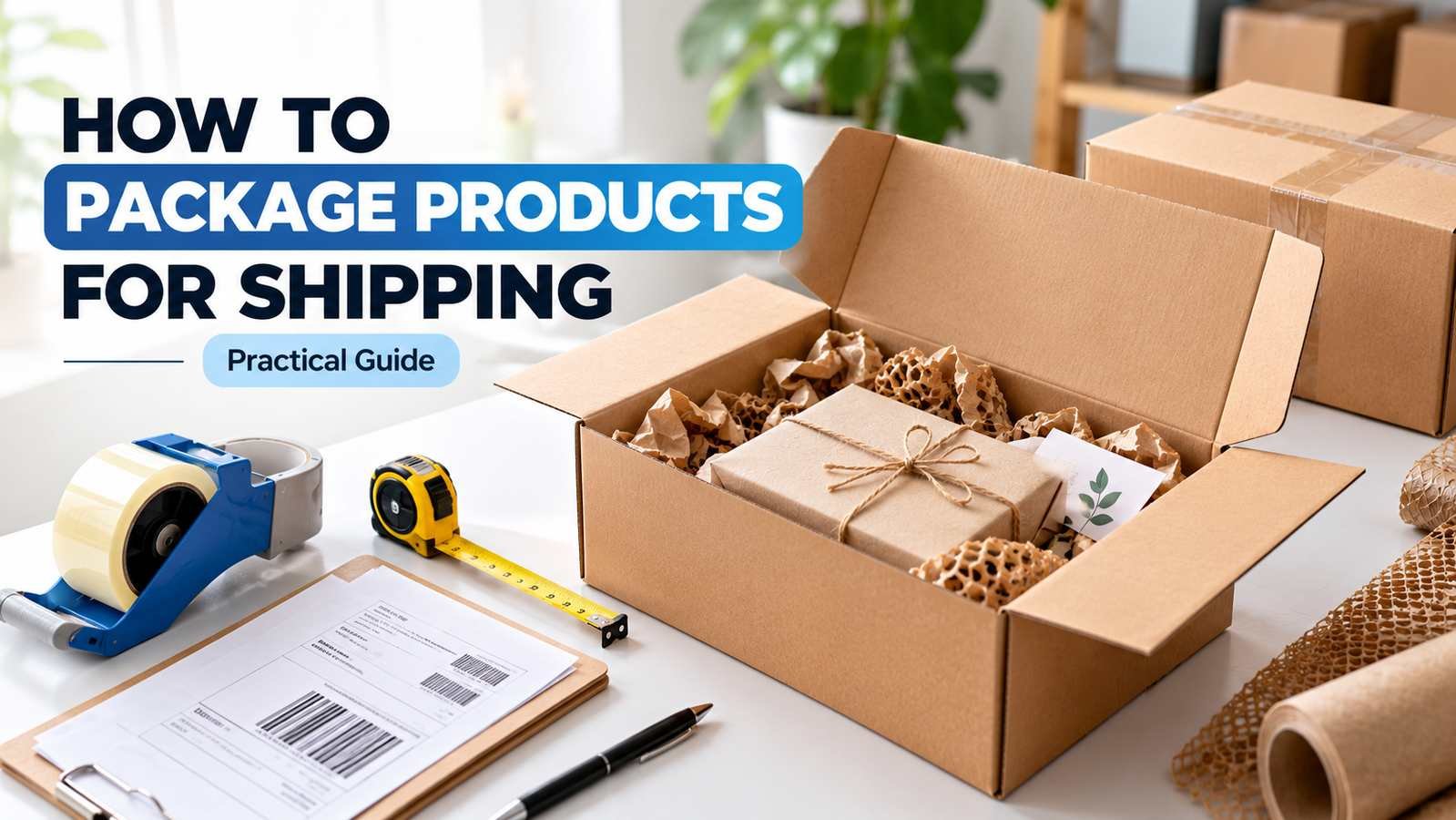
Step 3: Select Appropriate Protective Materials
The right protective material depends on the product. Not every item requires the same level of cushioning or internal support.
- Use cushioning around fragile products that can break or crack.
- Use paper or other protective materials to limit unnecessary movement.
- Use inserts when products need to remain separated or positioned.
- Use tissue or wrapping when product presentation is important.
- Consider additional internal support for products with delicate components.
The objective is to prevent the product from moving excessively while avoiding unnecessary packaging volume.
Create shipping packaging that fits your products, supports protection, and gives your brand a consistent presentation.
Step 4: Position the Product Inside the Box
After selecting your box and protective materials, position the product so it remains stable during transportation.
Try to keep the product centered when appropriate and use internal materials to reduce unnecessary movement. For multiple products, consider how they may contact each other during handling.
If the package contains several items, separate products when needed rather than allowing them to move freely throughout the box.
Step 5: Close and Seal the Package Properly
A properly packed product can still become vulnerable if the package is not securely closed. Follow the closure method appropriate for the selected box structure.
Traditional shipping boxes may require packing tape across the main seams, while certain kraft shipping boxes and mailer-style structures may use integrated folding and locking features.
Check the finished package before it leaves your facility. The box should be fully closed, stable, and ready for labeling.
Step 6: Add the Shipping Label Correctly
Labels should be placed on a flat, visible surface where important information can remain readable throughout the shipping process.
Avoid placing labels across major folds, openings, or heavily curved areas. If your fulfillment process involves automated or repeated handling, create a consistent labeling position for your packages.
For businesses shipping a large number of orders, consistency can make the packing and labeling workflow easier to manage.
How to Package Different Types of Products
The best shipping method depends on the product’s size, weight, fragility, shape, and presentation requirements.
Custom Shipping Boxes for Ecommerce
Ecommerce businesses often ship products directly to customers, making packaging both a protective tool and part of the customer experience.
Custom kraft shipping boxes can be designed around the dimensions, weight, presentation, and shipping requirements of the products being sold.
For online stores, custom kraft shipping boxes for ecommerce can provide a consistent packaging format for recurring orders. They can also support a more recognizable branded experience when printed with company graphics or messaging.
Can Shipping Boxes Be Customized?
Yes. Shipping packaging can be customized in terms of dimensions, structure, printed design, branding, and other specifications depending on the packaging requirements.
Customization becomes especially useful when standard boxes leave too much empty space, do not provide the desired presentation, or do not match the product’s dimensions.
For small businesses, custom kraft shipping boxes for small businesses can provide a more consistent packaging solution without requiring the business to rely entirely on generic shipping cartons.
Can Shipping Boxes Be Printed?
Yes. Printed shipping packaging can include logos, brand colors, graphics, product information, messaging, patterns, or other visual elements.
Custom printed kraft shipping boxes can turn the shipping package into an extension of the brand while still serving its primary protective function.
For ecommerce businesses, printed packaging can also make the delivered order feel more intentional and recognizable.
How to Reduce Empty Space Inside Shipping Boxes
Excessive empty space can allow products to move around during transportation and may require additional filler. It can also make the package larger than necessary.
To reduce unnecessary space:
- Measure products before selecting box dimensions.
- Consider the packed product rather than the bare product.
- Choose protective materials based on actual product needs.
- Test common single-item and multi-item orders.
- Consider custom dimensions when standard sizes are inefficient.
The right package is usually the one that provides enough room for safe packing without creating large unused areas.
What Sizes Are Available for Shipping Boxes?
Shipping boxes are available in a wide range of dimensions, but the best size depends on what you are shipping.
Instead of selecting a box based only on a product category, measure the actual product and packing configuration. Consider length, width, height, protective materials, inserts, and whether customers commonly purchase multiple units together.
When standard dimensions do not work efficiently, custom shipping packaging can provide a better fit.
Wholesale and Bulk Shipping Boxes
Businesses with recurring shipping requirements may need larger quantities of packaging. Ordering in bulk can make sense when box dimensions, design, and specifications are already established.
Before ordering wholesale custom kraft shipping boxes, confirm your most common product dimensions and packing process.
Businesses looking for wholesale kraft shipping boxes USA or bulk packaging should also consider storage space, reorder frequency, packaging consistency, and expected order volume.
Common Product Shipping Mistakes to Avoid
- Choosing the box before measuring the product: Start with accurate dimensions.
- Using excessive empty space: Oversized packaging can create unnecessary movement.
- Ignoring protective materials: Account for everything that will be packed inside.
- Using one box for every product: Different products can require different packaging solutions.
- Skipping a physical test: Test the complete package before ordering large quantities.
- Forgetting the customer experience: Shipping packaging can also contribute to your brand presentation.
How to Test Your Shipping Package
Before moving to large-scale fulfillment, create a real package using the exact product, box, protective materials, inserts, and closure method you plan to use.
Check whether the product moves inside the package. Confirm that the box closes correctly and that the finished package is practical for your fulfillment team.
It is also useful to test your most common order combinations. A package that works for one product may need a different configuration when customers purchase multiple products together.
- Measure the product accurately.
- Select an appropriately sized box.
- Choose protection based on the product.
- Position the product securely.
- Close and seal the package correctly.
- Apply the shipping label to a suitable flat surface.
- Test the finished package before ordering in bulk.
Choose packaging designed around your products, shipping needs, and brand presentation.
Frequently Asked Questions
Are kraft shipping boxes suitable for ecommerce?
Yes. Kraft shipping boxes can be suitable for ecommerce when the box dimensions, construction, product fit, and protective materials match the shipping requirements of the product.
Can shipping boxes be customized?
Yes. Shipping boxes can be customized according to dimensions, structure, printed design, branding, and other packaging requirements.
Can shipping boxes be printed?
Yes. Depending on the selected packaging specifications, shipping boxes can incorporate logos, graphics, messaging, patterns, and other brand elements.
What sizes are available?
Shipping boxes can be produced in different dimensions. The appropriate size depends on the product, protective materials, inserts, and order configuration.
Can I order bulk shipping boxes?
Yes. Businesses with recurring packaging requirements can order shipping boxes in larger quantities. It is best to confirm the dimensions, design, and specifications before placing a bulk order.
Final Thoughts
Knowing how to package products for shipping starts with understanding the product and building the packaging around its actual requirements. Measure carefully, choose the right box size, use appropriate protection, secure the product, and test the finished package before scaling your shipping operation.
For businesses that need a more precise or branded solution, custom kraft shipping boxes in the USA can help create packaging that combines product protection, efficient fulfillment, and consistent brand presentation.