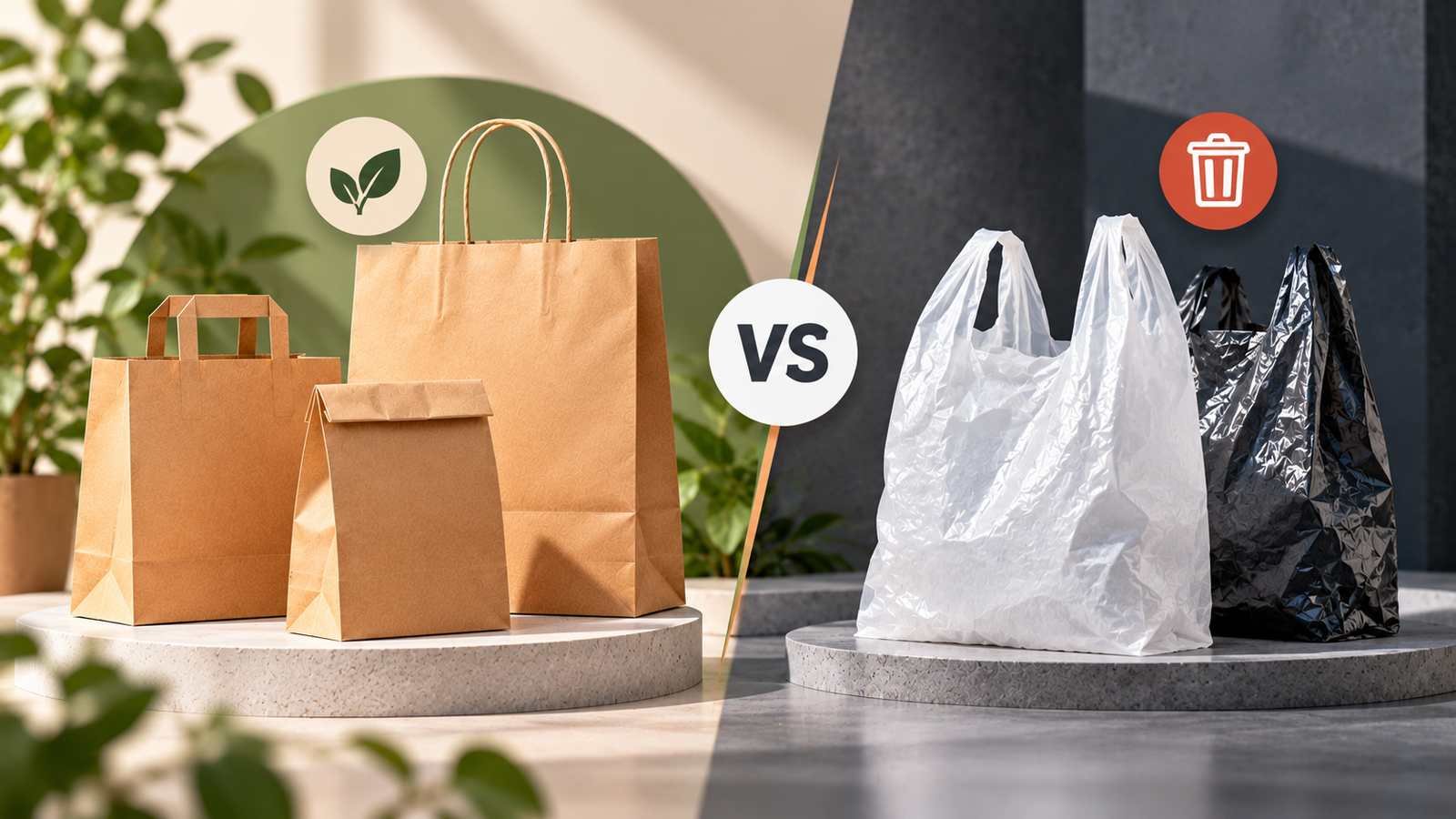
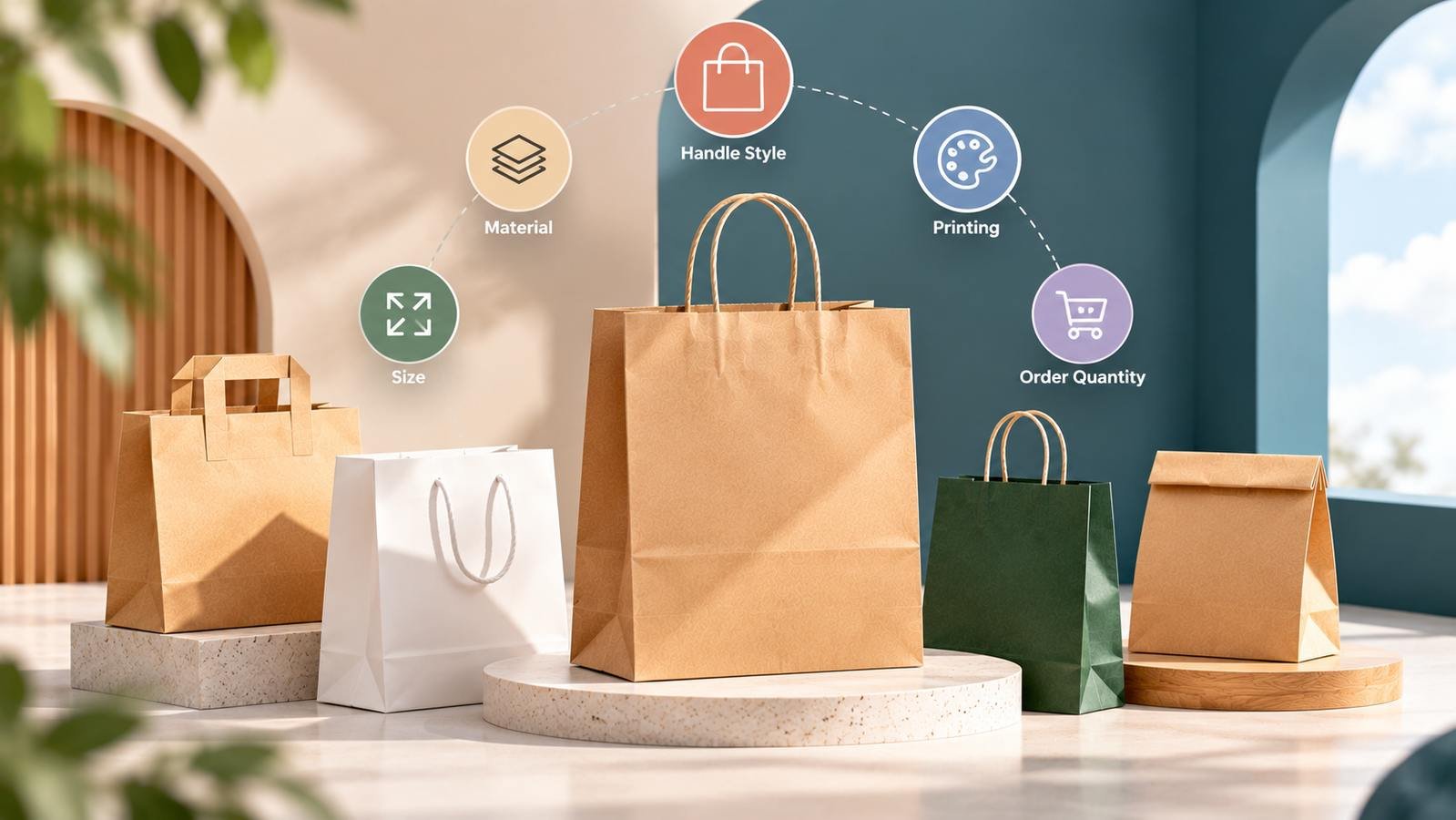
Choosing the right paper bag for your business involves more than selecting a color or adding a logo. The bag should fit your products, carry them comfortably, support your brand, and suit the way customers will use it. Retail stores, boutiques, cafes, gift shops, and small businesses can have very different packaging requirements.
This guide explains how to choose paper bags by comparing common bag styles, dimensions, handles, paper specifications, printing options, and wholesale considerations. Use these steps to prepare a clear brief before you request samples or a quote.
Quick Takeaway
Start with the product you need to carry, then confirm the bag dimensions, paper strength, handle style, and intended use. Decide whether custom printing is important, test a sample when possible, and compare the full cost of wholesale or bulk orders—not only the unit price.
1. Identify What Your Paper Bags Need to Do
Before choosing a bag, list the products it will hold and the experience you want customers to have. A boutique carrying clothing may prioritize presentation and comfortable handles, while a bakery may need a format that accommodates a food container or suitable dry goods.
- Retail stores: Consider shopping bags that fit merchandise and provide space for branding.
- Small businesses: Balance practical dimensions, order quantity, and design requirements.
- Gift shops: Consider appearance, handle comfort, and room for tissue or protective wrapping.
- Cafes and takeaway: Choose a bag suitable for the packaged items and the conditions in which it will be carried.
- Events and promotions: Consider printed bags that make your brand easy to recognize.
Also consider how customers will carry the bag, how long it needs to hold the contents, and whether it is intended for in-store handover or parcel shipping. A shopping bag is not automatically a substitute for protective shipping packaging.
2. Compare the Main Paper Bag Styles
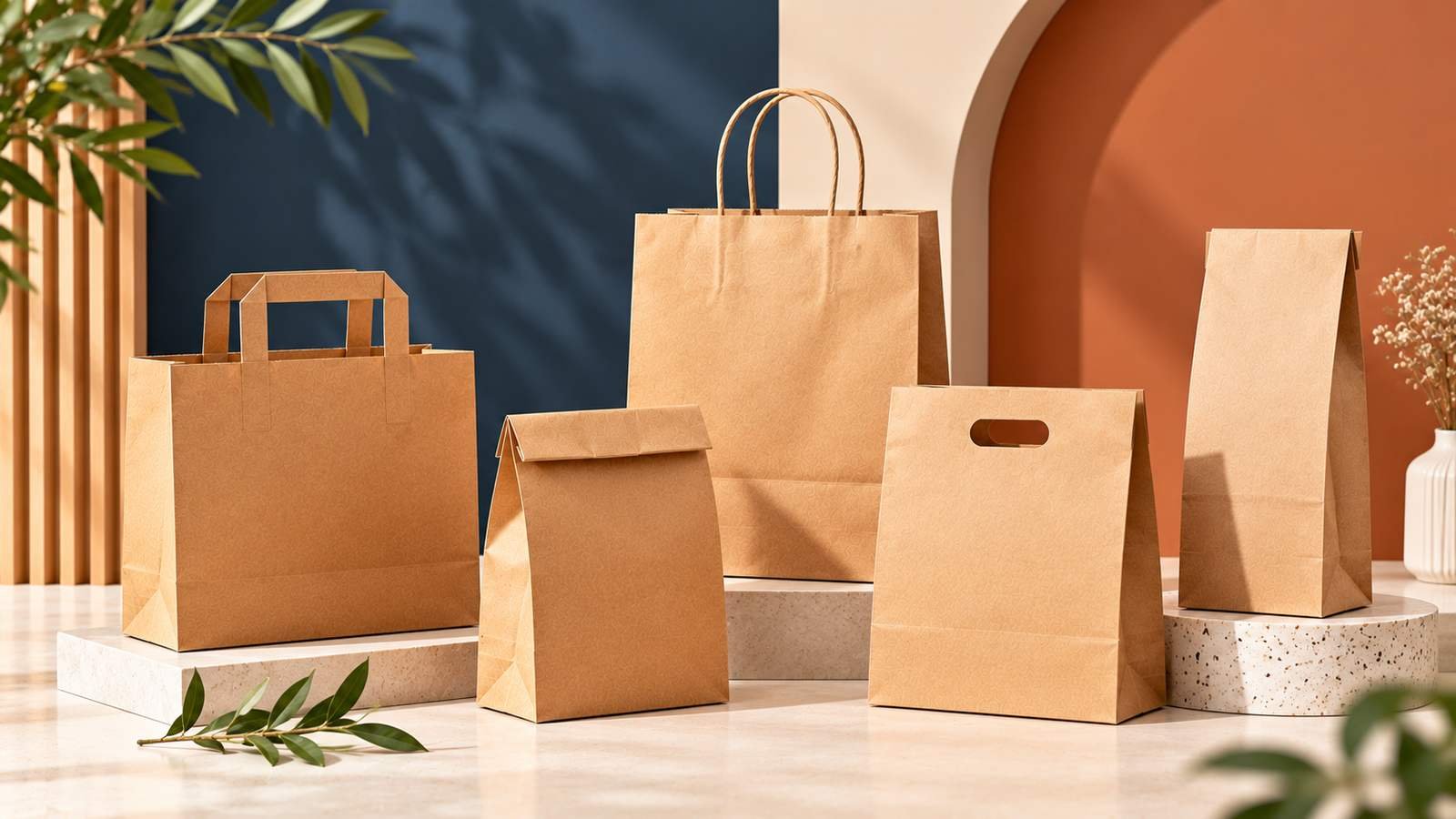
Different paper bag styles suit different products and shopping experiences. The names can overlap: for example, a custom kraft shopping bag may have twisted paper handles and a gusseted base.
For a deeper explanation of handle and bag formats, see our guide to kraft paper bag types and their uses. This article focuses on choosing a bag for your business rather than repeating every style detail.
3. Choose the Right Bag Size
A good fit makes a bag easier to use and helps the contents sit securely. If the bag is too small, products may be difficult to insert or could strain the seams. If it is too large, items may shift and the package may look poorly fitted.
Follow these steps to choose suitable dimensions:
- Measure the product: Record its width, height, and depth.
- Include inner packaging: Account for product boxes, tissue, wrapping, inserts, or containers.
- Check the opening: Make sure the item can be placed inside without bending or damaging it.
- Confirm the gusset: For bags with side or bottom folds, ask how the supplier measures usable space.
- Test the fit: Place an actual product inside a sample and check how it sits and comes out.
Ask your supplier to confirm whether dimensions refer to the flat bag or usable internal dimensions. For irregular products, a sample is often more useful than choosing from measurements alone.
4. Select Handles That Suit Your Customers
Handle style affects carrying comfort, appearance, and the way customers interact with the bag. The right option depends on the intended load, bag construction, and how the packaging will be used.
Do not assume that a handle style guarantees a particular weight capacity. Ask for the supplier’s specifications and test the bag with representative products when appropriate.
5. Consider Paper Strength and Construction
Paper grade, thickness, seams, folds, base design, and handle attachment can all influence how a bag performs. The right specification depends on the weight and shape of the contents and the conditions in which the bag will be used.
- Paper specification: Ask which paper options are recommended for your intended use.
- Base and seams: Check that the construction supports the product and keeps the bag in shape.
- Handle attachment: Confirm that the handles are suited to the expected load.
- Moisture and grease: Paper may be affected by wet or greasy conditions, so verify any relevant barrier or coating specifications.
- Food contact: If food will directly contact the bag, confirm that the complete packaging is suitable for that use.
- Storage: Consider how much space you have to store the bags before use.
Paper thickness alone does not tell the whole story. Construction and the actual application matter, so request specifications instead of relying only on appearance.
6. Decide Whether You Need Custom Printing
Custom printed paper shopping bags can help create a consistent brand experience across stores, events, and customer handovers. A clear design can make your business easier to recognize without overcrowding the packaging.
Before approving artwork, consider:
- Logo clarity: Keep your logo readable at the planned print size.
- Brand colors: Choose colors that work well with the paper surface.
- Print placement: Check how the design appears on the front, back, sides, and gussets.
- Typography: Keep text legible and avoid unnecessary details.
- Proof approval: Review spelling, dimensions, color specifications, and positioning before production.
Printing methods, color availability, and coverage depend on the supplier and bag construction. Ask which options are available for your chosen style and quantity.
7. Choose Bags for Your Business Type
Your business model helps narrow the options. Use the following table as a starting point, then confirm the bag’s suitability for your products.
8. Compare Wholesale and Bulk Ordering
If your business uses bags regularly, wholesale kraft shopping bags or bulk shopping bags may help you plan stock and maintain a consistent packaging design. The best quantity depends on sales volume, storage space, budget, and how frequently your artwork changes.
Before requesting a quote, prepare these details:
- Bag style, handle option, and dimensions.
- Paper specification and intended use.
- Estimated order quantity.
- Logo files, print colors, and coverage.
- Sample requirements and approval process.
- Delivery destination and required timeline.
Compare the complete cost, including any setup or printing charges, shipping, minimum order requirements, and storage considerations. A lower unit price may not be the best value if you order more bags than your business can use.
If you’re planning to buy paper shopping bags for regular business use, confirm the final specifications and total delivered cost before approving the order.
9. A Simple Paper Bag Buying Checklist
- Identify the products and their dimensions.
- Choose a bag style and suitable handle.
- Confirm paper and construction specifications.
- Check whether the bag suits the intended use.
- Decide whether custom printing is required.
- Review artwork and request a sample where appropriate.
- Compare wholesale quantities and full order costs.
- Confirm delivery timing and storage requirements.
Explore Custom Kraft Shopping Bags
Looking for shopping bags tailored to your products and brand? Explore custom kraft shopping bags for retail stores, small businesses, and branded customer packaging. Confirm available sizes, handles, print options, and order requirements for your project.
Frequently Asked Questions
How do I choose paper bags for my business?
Start with your product dimensions and weight, then compare bag styles, handle options, paper specifications, and intended use. If branding matters, consider printing and review a proof before production.
What are kraft shopping bags used for?
Kraft shopping bags are commonly used for retail purchases, merchandise, gifts, and selected business packaging applications. The right bag depends on the product, construction, and how customers will carry it.
What handle options are available?
Common options include twisted paper handles, flat paper handles, die-cut handles, and handle-free formats. Availability varies by bag style and supplier, so confirm the options for your required size.
Can shopping bags be printed?
Many paper shopping bags can be customized with logos, brand colors, text, or graphics. Printing methods and coverage depend on the bag material, design, supplier, and order requirements.
What sizes are available for paper shopping bags?
Sizes vary by supplier and bag style. Provide product measurements and any inner packaging dimensions, and confirm the bag’s usable space, opening, and gusset before ordering.
Can small businesses order custom kraft shopping bags?
Options depend on the supplier’s minimum order quantities and customization requirements. Ask about available sizes, printing costs, sample options, and the total delivered price for your planned quantity.
Should I buy wholesale kraft shopping bags?
Wholesale ordering may suit businesses with steady packaging needs. Compare unit cost with printing, shipping, minimum quantities, storage space, and the risk of unused bags if your branding changes.
Are paper shopping bags suitable for shipping products?
Shopping bags are generally designed for carrying products, not necessarily for parcel transit. For carrier shipping, choose protective outer packaging appropriate for the product and expected handling conditions.
Final Thoughts
The best paper bag for your business balances product fit, carrying comfort, construction, branding, and cost. Choose dimensions based on real products, confirm the handle and paper specifications, and decide whether custom printing supports your customer experience.
Before placing a wholesale order, compare the complete cost and review a sample or proof when available. For your next step, explore custom kraft shopping bags and confirm the available specifications for your business needs.