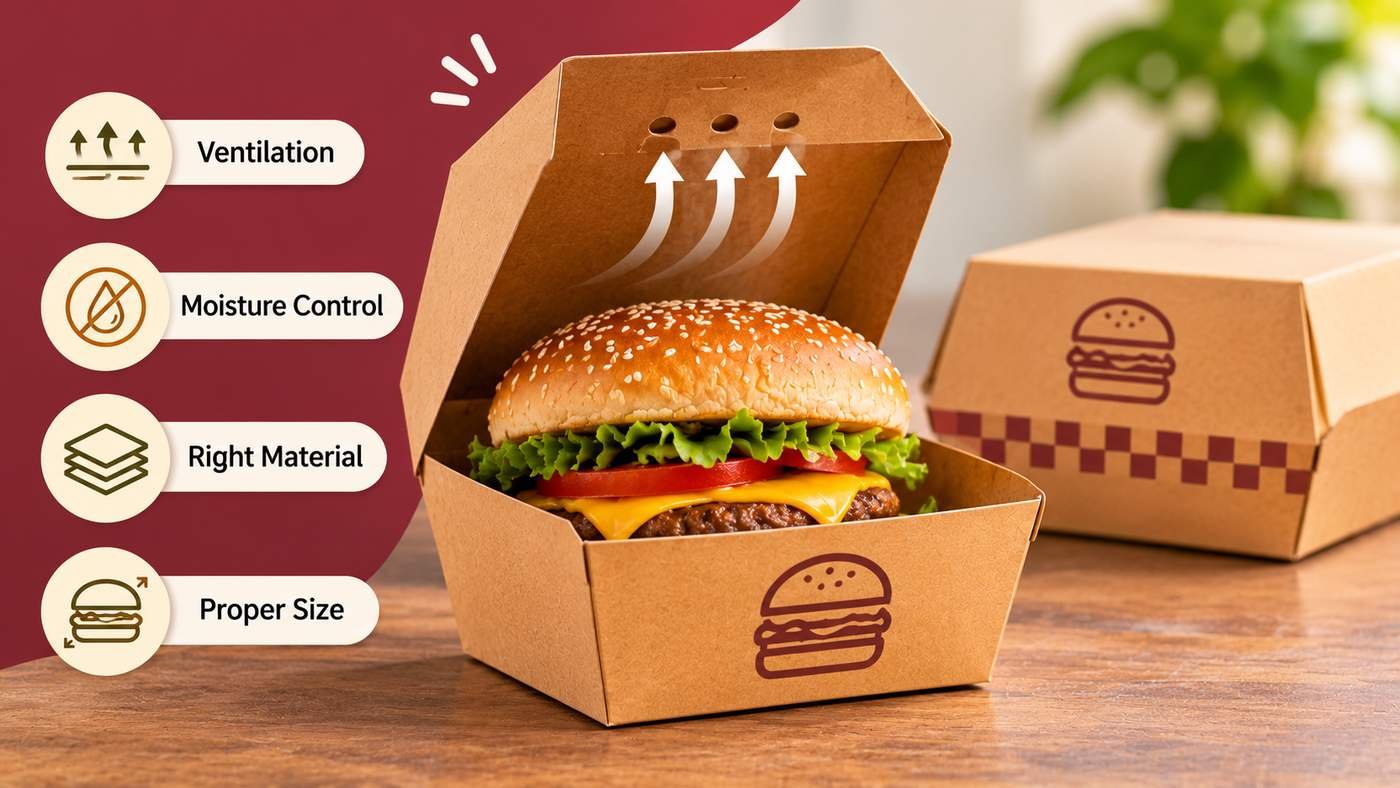
Burgers are best served hot, with a toasted bun and toppings that still have their intended texture. But during delivery and takeout, trapped steam can turn a crisp bun soft, make fries feel damp, and leave sauces running into the bread. The right packaging can help reduce these problems. Learning how to keep burgers from getting soggy in packaging starts with managing moisture, choosing a suitable box, and packing each order carefully.
A burger box cannot stop every change that happens during transport. Heat, humidity, travel time, ingredients, and assembly all matter. However, thoughtful packaging and a consistent packing routine can help preserve the burger’s quality until it reaches the customer.
To help prevent soggy takeout burgers, let excess steam escape briefly before closing the box, avoid over-saucing, keep wet ingredients controlled, choose a box with suitable ventilation and enough room, and minimize the time between packing and delivery. Test the complete burger and packaging together before placing a large order.
Why burgers get soggy in takeout packaging
Sogginess usually develops when moisture stays in contact with the bun or other crisp components. A freshly cooked patty releases heat and water vapor. When a hot burger is sealed in a box with little opportunity for steam to escape, moisture can condense on the inside surfaces and settle back onto the food.
- Trapped steam: Hot patties and buns release vapor after cooking. A tightly closed container can hold that moisture close to the burger.
- Wet toppings: Tomatoes, pickles, sauces, and other moist ingredients can transfer liquid into the bun.
- Over-saucing: Excess sauce can soak into bread, especially when the burger sits for an extended period.
- Long delivery times: The longer a packed burger waits, the more time moisture has to affect its texture.
- Incorrect box size: A box that is too tight can press ingredients together, while an oversized box can allow the burger to slide around.
1. Choose a burger box that manages moisture
Packaging is part of the food-quality process. Select a box that fits the burger without crushing it and consider how the container handles heat and moisture during the expected delivery period.
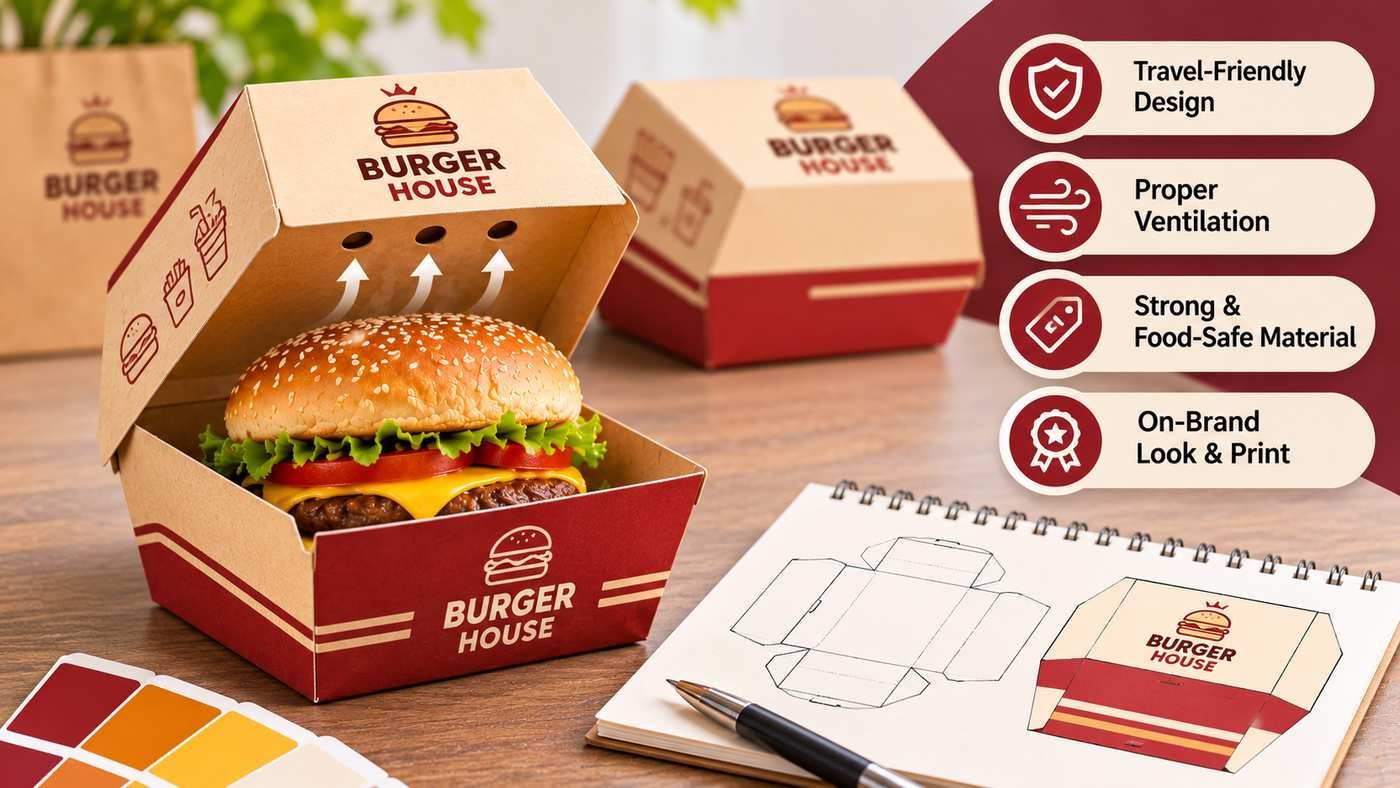
Depending on the product and service model, a food-grade paperboard box with thoughtfully placed ventilation may help release some steam. Ventilation needs to be tested: too little may trap moisture, while too much can allow the burger to cool faster than desired. The best balance depends on the recipe, box construction, and delivery conditions.
When evaluating custom burger boxes, review the material, dimensions, closure, food-contact suitability, and whether the design can accommodate ventilation. Ask for samples and test them with your actual menu items.
2. Allow excess steam to escape before closing
Closing a box immediately after a burger leaves the grill can trap a large amount of hot vapor. A short, controlled pause before closing may reduce the initial steam buildup.
- Use a clean, food-safe preparation area and follow your food-safety procedures.
- Allow excess surface steam to dissipate briefly when operationally appropriate.
- Do not leave food sitting out for extended periods; manage holding time and temperature according to applicable food-safety requirements.
- Close the package securely once the burger is ready for dispatch.
This is a practical packaging adjustment, not a substitute for safe hot-food handling. Establish a consistent process that protects both food quality and food safety.
3. Control sauces and high-moisture toppings
Packaging cannot fully compensate for excess moisture inside the burger. Review how ingredients are prepared and layered before changing the box.
- Use a consistent, measured amount of sauce rather than applying it heavily by default.
- Consider serving extra sauce separately when the menu and customer experience allow it.
- Drain or manage excess liquid from pickles and other wet toppings during preparation.
- Keep ingredients that release substantial moisture from sitting directly against the bun where practical.
- Standardize assembly so every order is prepared consistently.
These adjustments should be tested with the actual recipe. Some burgers rely on sauces and toppings for their signature flavor, so the goal is controlled moisture—not removing ingredients that make the product distinctive.
4. Match the box size to the burger
A good fit helps protect the burger during handling. The box should provide enough clearance for the bun, patty, and toppings without leaving so much extra room that the food shifts during delivery.
Measure the assembled burger, not just the bun. Check the internal length, width, and height of the box, including the space needed for toppings and a secure closure. For more guidance, see our article on choosing burger box sizes for different burger styles.
5. Consider the material and box construction
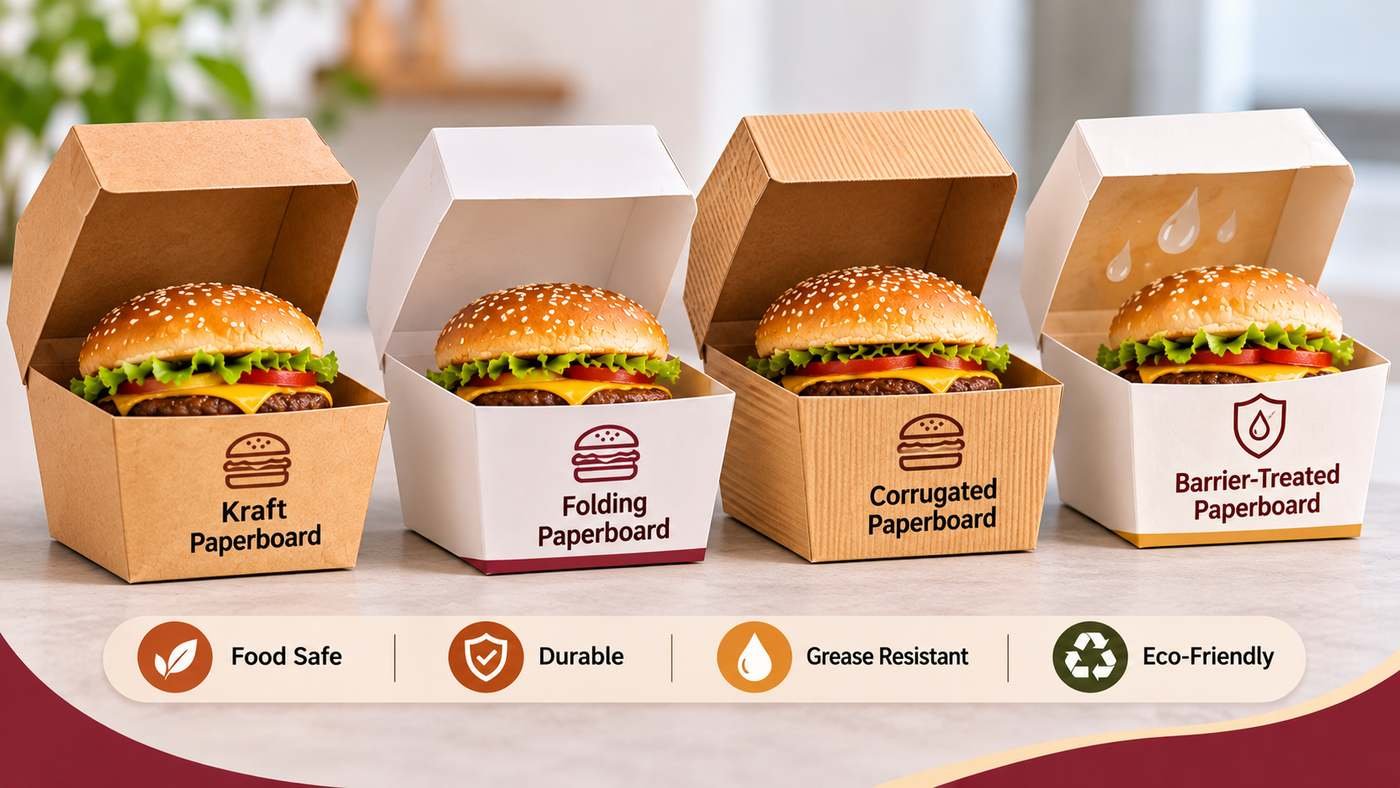
Paperboard packaging is available in different grades, thicknesses, coatings, and structural designs. The right choice depends on the food, expected contact with grease or moisture, temperature, and local food-contact requirements.
- Food-contact suitability: Confirm that the material and any coating or ink system are suitable for the intended food-contact application.
- Grease resistance: If the menu includes oily patties or sauces, ask about an appropriate grease-resistant construction.
- Structural strength: The box should hold its shape during packing, stacking, and delivery.
- Closure design: A practical closure helps keep the order contained without unnecessarily compressing the burger.
- Vent design: Evaluate whether the ventilation pattern works for the recipe and delivery time.
Do not assume that every paper box, coating, or printed finish is suitable for direct food contact. Request the supplier’s specifications and documentation for your intended use.
6. Pack burgers carefully for delivery
Even a well-designed container can perform poorly if the packing process is inconsistent. Create a simple packing standard for kitchen staff.
- Prepare the burger using a consistent assembly method.
- Check that excess liquid is not collecting inside the bun or on the wrapper.
- Place the burger centrally in a correctly sized box.
- Avoid pressing down on the bun or toppings when closing the lid.
- Keep hot items organized in the delivery bag so they are not crushed by heavier products.
- Separate fries or other crisp sides when combined packaging causes steam to collect around them.
- Dispatch orders promptly and avoid unnecessary waiting after packing.
7. Test packaging under real delivery conditions
A box that performs well at the counter may behave differently after a 20-minute trip. Before ordering packaging in bulk, test it with the burger styles and delivery conditions your business actually uses.
- Pack the same burger in each candidate box using the normal kitchen process.
- Record the time from packing to opening.
- Repeat the test at realistic short and longer delivery intervals.
- Check bun texture, bottom-bun moisture, temperature, topping movement, grease marks, and box strength.
- Repeat the test more than once so one unusual order does not determine the result.
- Choose the construction that gives the best overall balance of food quality, protection, cost, and presentation.
How custom printed burger boxes support your brand
Packaging has two jobs: help protect the food and present the business professionally. Once the functional design has been tested, printing can add your logo, brand colors, product details, and other approved artwork.
Printed burger boxes can create a consistent look across dine-in takeaway, pickup, and delivery orders. When planning branded packaging, consider print placement, readability, color consistency, and the appearance of the box after handling. Ask your supplier to confirm which print methods, inks, and finishes are suitable for the intended food-packaging application.
Restaurants comparing wholesale burger boxes should compare more than unit price. Review minimum order quantities, sample availability, production lead times, storage needs, repeat-order consistency, and shipping costs. Businesses sourcing branded burger boxes should also confirm artwork requirements and proof approval before production.
For restaurants looking for custom burger boxes in the USA, share your burger dimensions, menu photos, delivery expectations, and branding files when requesting a packaging quote. Clear specifications make it easier to evaluate a suitable design.
Common mistakes that can make takeout burgers soggy
- Sealing a very hot burger immediately without considering steam buildup.
- Choosing a box only by its outside dimensions instead of checking usable internal space.
- Using a container that presses down on tall toppings.
- Adding more sauce than the bun can comfortably hold during delivery.
- Combining hot, moist food with crisp sides in a way that traps steam.
- Ordering a large quantity before testing the box with real menu items.
- Assuming a printed or coated paperboard is automatically suitable for every food-contact use.
Frequently asked questions
How do you keep burgers from getting soggy in packaging?
Control moisture in the recipe, allow excess steam to dissipate briefly when safe and practical, choose a properly sized box with a tested ventilation design, and reduce the time between packing and delivery.
Do vented burger boxes prevent soggy buns?
Ventilation may help release steam, but it does not guarantee a dry bun. Results depend on the vent design, burger ingredients, packaging material, temperature, and delivery time. Test the complete package with your menu.
Should burgers be wrapped before placing them in a box?
That depends on the recipe, service process, and packaging design. Wrapping may help contain ingredients and make handling easier, but some wraps can also hold moisture close to the bun. Test the chosen wrap and box together.
What type of box is best for burger delivery?
The best box fits the burger, protects it from crushing, uses food-suitable materials, and performs well during the expected delivery time. A sample test is more reliable than choosing by material name alone.
Can custom burger boxes be printed with a restaurant logo?
Yes. Custom packaging can be designed with brand artwork, colors, and other approved details. Confirm print specifications, food-contact suitability, and the final proof with your packaging supplier.
What should restaurants check before ordering wholesale burger boxes?
Check internal dimensions, material and grease resistance, ventilation, structural strength, minimum order quantity, sample options, print quality, production lead time, and shipping costs.
Find the right packaging for your burgers
The right burger packaging starts with your recipe, dimensions, and delivery conditions. Explore custom options and discuss a box design that supports food presentation and your brand.