Choosing the right burger box size is about more than making a burger fit. The box should hold the bun and fillings without crushing them, leave enough room for toppings, and make the meal easy to carry and serve. A compact box may suit a single smash burger, while a taller or wider burger with multiple patties needs a different package.
This guide explains how to choose burger box sizes for different burgers, what to measure before ordering, and how box dimensions, height, material, ventilation, and printing affect the final packaging choice. If you are planning branded takeaway packaging, explore our custom burger boxes for options based on your menu and brand requirements.
Measure the burger at its widest point and tallest point after assembly. Choose a box with enough internal width and length to avoid squeezing the bun, plus sufficient depth for the patty stack and toppings. The size ranges in this guide are planning estimates, not universal industry standards; confirm the internal dimensions against your actual burger and sample box.
1. Why Burger Box Size Matters
A box that is too small can compress buns, shift toppings, and make the burger difficult to remove. A box that is much too large may let the burger slide during delivery. The right fit helps keep the product presentable while making packing and handling more consistent.
- Product presentation: gives the burger enough room without unnecessary movement.
- Food protection: helps shield the burger from handling and contact with other items.
- Delivery performance: a suitable fit can reduce shifting when the package is carried or transported.
- Service efficiency: consistent box sizes can make packing easier during busy periods.
- Brand experience: the package becomes part of the meal customers take away or receive at home.
2. Common Burger Box Size Ranges
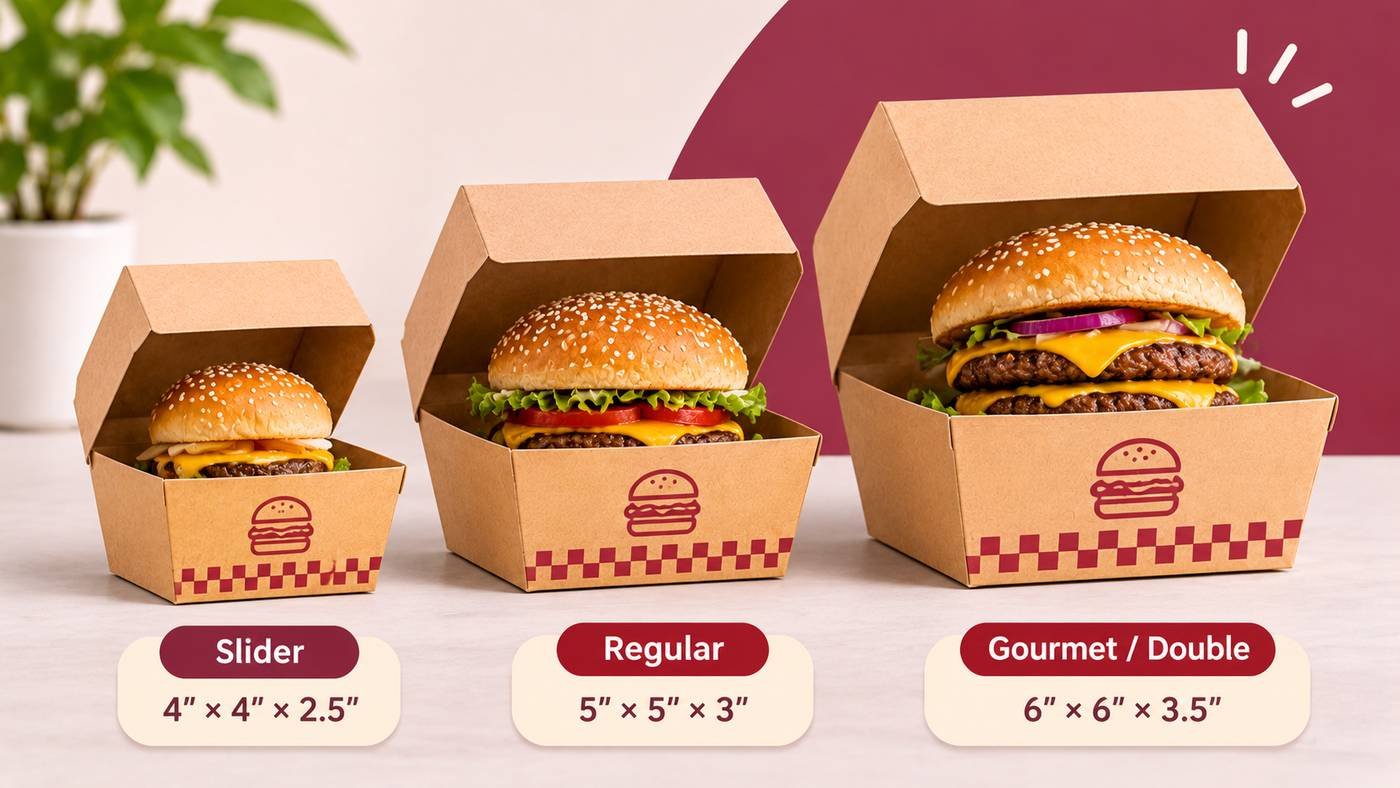
Burger dimensions vary by recipe, bun supplier, patty size, and how toppings are stacked. Use these approximate internal-size ranges as a starting point for planning a sample—not as fixed standards. Always measure your own menu items before placing a production order.
Dimensions are approximate examples for initial discussion. Actual box sizes, board thickness, folding style, and usable internal space differ by design and manufacturer. Ask for a dieline or sample to confirm fit.
3. How to Choose a Box for Each Burger Style
Slider and Mini Burgers
Sliders are smaller, but they still need enough room for the bun, patty, cheese, and sauces. A compact box can help keep the burger in place. If you sell sliders in pairs or groups, consider a multi-compartment or wider box rather than forcing several burgers into a single-burger package.
- Measure the assembled slider, not only the bun.
- Allow space for fillings that extend beyond the bun.
- Consider dividers or a multi-unit layout for assorted sliders.
Regular Single Burgers
A regular single burger is often the easiest menu item to standardize. Choose a footprint that fits the bun without pressing its edges and a depth that accommodates the patty and toppings. If you offer several single-burger recipes, test the tallest or widest one before selecting a common box size.
Large and Gourmet Burgers
Gourmet burgers may use larger buns, thick patties, fried toppings, vegetables, or sauces. These ingredients can increase both the footprint and height. A wider box can help prevent side compression, while additional depth can reduce pressure on the top bun.
Double and Stacked Burgers
For double patties or tall specialty builds, depth is especially important. Measure the burger after it has been assembled, including any skewers or tall toppings if they remain in place during packing. Avoid choosing a box based on footprint alone: a burger can fit across the base but still press against the lid.
Chicken, Veggie, and Specialty Burgers
Chicken fillets, plant-based patties, and specialty buns can have different shapes from a standard beef burger. A wide fillet may need more footprint, while a thick vegetable patty or layered filling may need extra depth. Base the choice on the complete menu item rather than assuming every burger uses the same dimensions.
4. How to Measure a Burger Before Ordering Boxes
Take measurements from the finished burger in the way it will be packed. Use the largest version of each recipe when you are choosing one box for multiple menu items.
- Measure the length and width. Record the widest points across the assembled burger, including toppings that extend beyond the bun.
- Measure the total height. Include both buns, patties, cheese, vegetables, sauces, and any other stacked ingredients.
- Check the closure clearance. Make sure the lid can close without pressing down on the top bun or toppings.
- Allow practical clearance. Leave enough room to place and remove the burger without scraping the sides or crushing it.
- Test the actual package. Place the burger in a sample box, close it, carry it, and check the presentation after a realistic holding period.
- Confirm internal dimensions. Ask whether the supplier’s listed measurements refer to the inside or outside of the box.
5. Consider Box Depth, Shape, and Closure
Footprint is only one part of burger box sizing. The shape and construction determine how the burger sits inside and how the package closes.
- Depth: important for double patties, thick buns, and tall toppings.
- Base shape: a square or rectangular footprint should suit the burger’s shape and orientation.
- Lid clearance: the top should close securely without compressing the food.
- Locking tabs: should hold the box closed during normal handling.
- Stacking: consider how filled boxes will be carried, stored, and arranged for delivery.
6. Choose Suitable Food Packaging Material
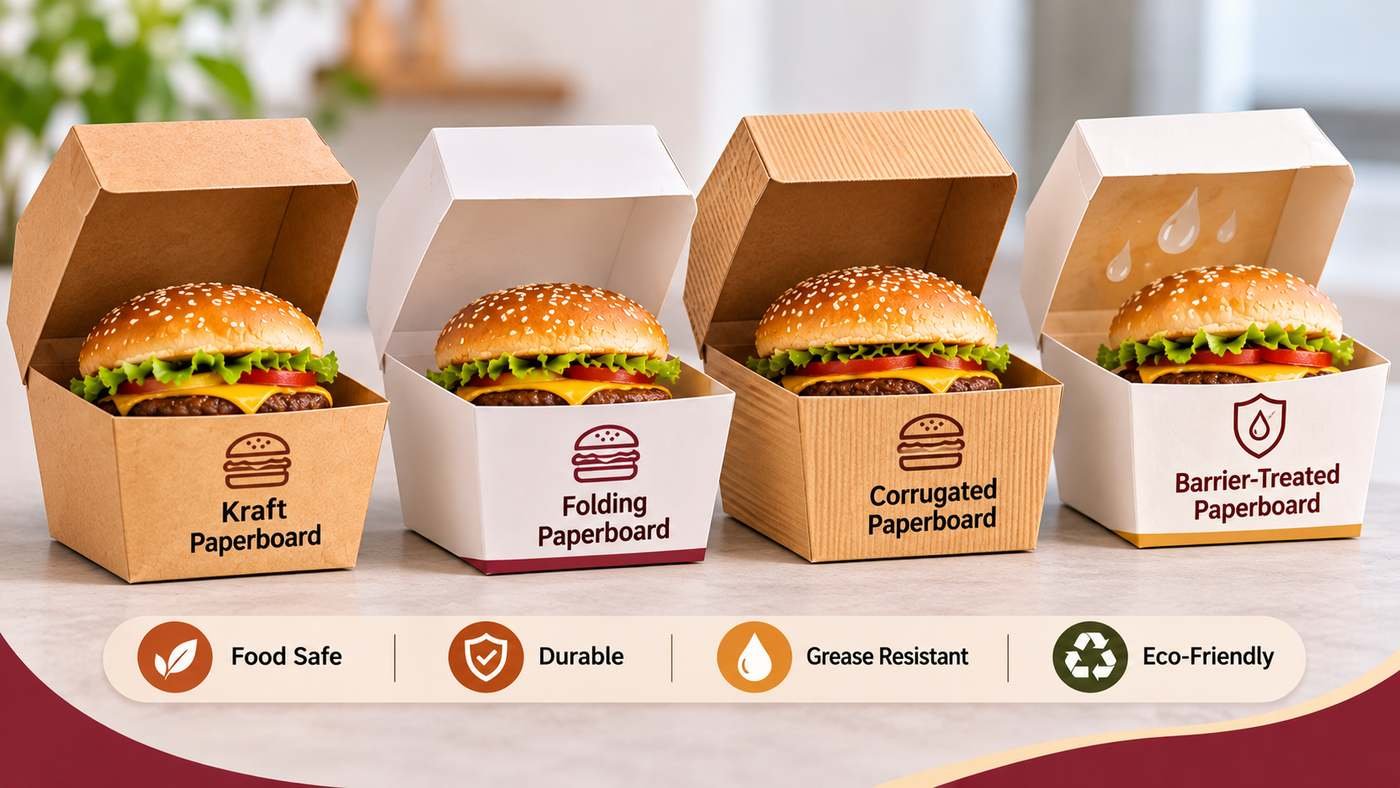
The material should suit the food, expected holding time, temperature, and service method. Burger packaging may be exposed to heat, steam, grease, and moisture. Ask your packaging supplier about the board specification, food-contact suitability, grease resistance, and any coating or barrier used in the construction.
Kraft-look packaging can provide a natural paper appearance and a useful surface for branding, but the appearance alone does not establish grease resistance or food-contact suitability. Confirm that the specific material and any treatment are appropriate for the intended food application.
7. Why Ventilation and Moisture Management Matter
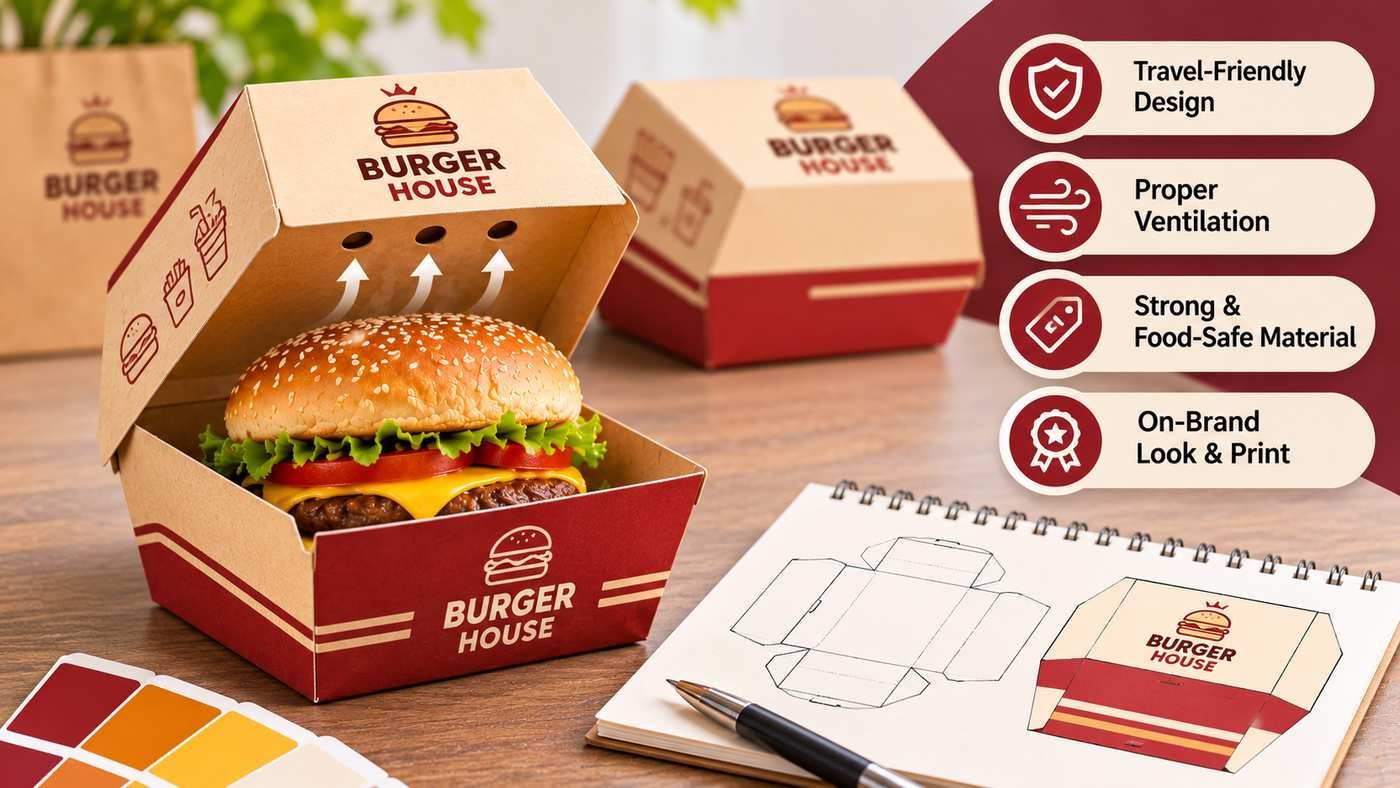
Hot burgers release steam. If moisture becomes trapped, buns can soften and the package may become damp. The right packaging design should consider the time between packing and eating, the temperature of the food, and how the burger will be transported.
- Discuss ventilation options with your supplier where the box design supports them.
- Do not assume more vents are always better; the design should balance steam release and heat retention.
- Test packaging with your actual burger and normal takeaway or delivery process.
- Check whether sauces, juicy toppings, or greasy ingredients require additional packaging considerations.
8. One Box Size or Multiple Sizes?
Using one box size can simplify inventory and packing, but it may not suit every item on your menu. Multiple sizes can improve fit and presentation, although they require more storage space and inventory management.
9. Add Branding Without Compromising Function
Once the size and construction are right, consider how the box can represent your restaurant. Custom burger boxes can be planned around your logo, brand colors, menu identity, and packaging requirements. Depending on the selected format and print specification, you may choose a simple logo, a full printed design, or a coordinated layout across several box sizes.
For a consistent presentation, consider printed burger boxes with a repeatable brand design. Restaurants ordering for regular service can also ask about wholesale burger boxes and branded burger boxes that align with their expected quantities and menu range.
10. Burger Box Ordering Checklist
Before requesting a quote, prepare the following information so the supplier can review the right size and construction:
- Finished burger length, width, and height.
- Menu item name and the largest or tallest version to be packed.
- Preferred internal box dimensions and box style, if known.
- Food type, temperature, grease, and moisture considerations.
- Material and food-contact requirements.
- Ventilation and closure preferences.
- Logo artwork, brand colors, and print requirements.
- Estimated order quantity and delivery timeline.
- Sample or prototype approval before full production.
If your restaurant serves customers across the U.S., discuss custom burger boxes in the USA with your supplier and confirm the final specifications, shipping, and production schedule.
Frequently Asked Questions About Burger Box Sizes
What size box is best for a regular burger?
As a starting point, a regular single burger may fit a box with an internal footprint around 5–6 inches square and a depth around 2.5–3 inches. Measure your assembled burger and confirm the fit with a sample because bun and topping sizes vary.
What size burger box do I need for a double burger?
A double burger often needs additional depth for the stacked patties and toppings. An approximate 3–4 inch depth may be a useful starting point, but measure the complete burger and check that the lid closes without pressing the bun.
How do I measure a burger for packaging?
Measure the widest length and width of the assembled burger, then measure its total height. Include toppings and allow enough clearance for easy packing and removal.
Should burger boxes be bigger than the burger?
They should have enough clearance to avoid squeezing the burger, but not so much extra space that the burger moves excessively. A sample test helps find the right balance.
Are all burger box sizes standard?
No single size fits every burger or supplier. Dimensions vary by box style, construction, material thickness, and the food being packed. Confirm internal measurements with the manufacturer.
Does burger box depth matter?
Yes. Depth is especially important for double patties, thick buns, and tall toppings. The lid should close without compressing the food.
Can I print my restaurant logo on burger boxes?
Custom printing may be available depending on the box material, format, and production specification. Provide your artwork and request a proof before approving the order.
Can I order burger boxes wholesale?
Wholesale ordering may be available depending on the supplier’s minimum quantities and production requirements. Ask for pricing based on your selected size, material, print, and order volume.
Find the Right Custom Burger Boxes for Your Menu
Choose packaging that fits your burger styles, supports takeaway and delivery, and gives your restaurant a consistent branded presentation. Share your burger measurements, preferred box style, artwork, and order quantity to plan the right specification.
Important: Size ranges in this article are illustrative planning estimates, not certified or universal standards. Final fit and food-contact suitability depend on the burger recipe, box construction, material, and supplier specifications. Always test a sample before ordering at scale.