Choosing the right handle is an important part of designing a paper bag. The handle affects how comfortable a bag feels to carry, how much weight it can reasonably support, how it looks on a shelf, and how customers experience your brand. A lightweight bag for a boutique purchase has different needs from a larger shopping bag used for clothing, gifts, or groceries.
This guide explains the most common paper bag handle types, how they differ, where each style works best, and what to consider when ordering custom bags. If you are comparing materials and bag formats too, see our guide to kraft paper bag types, uses, and styles.
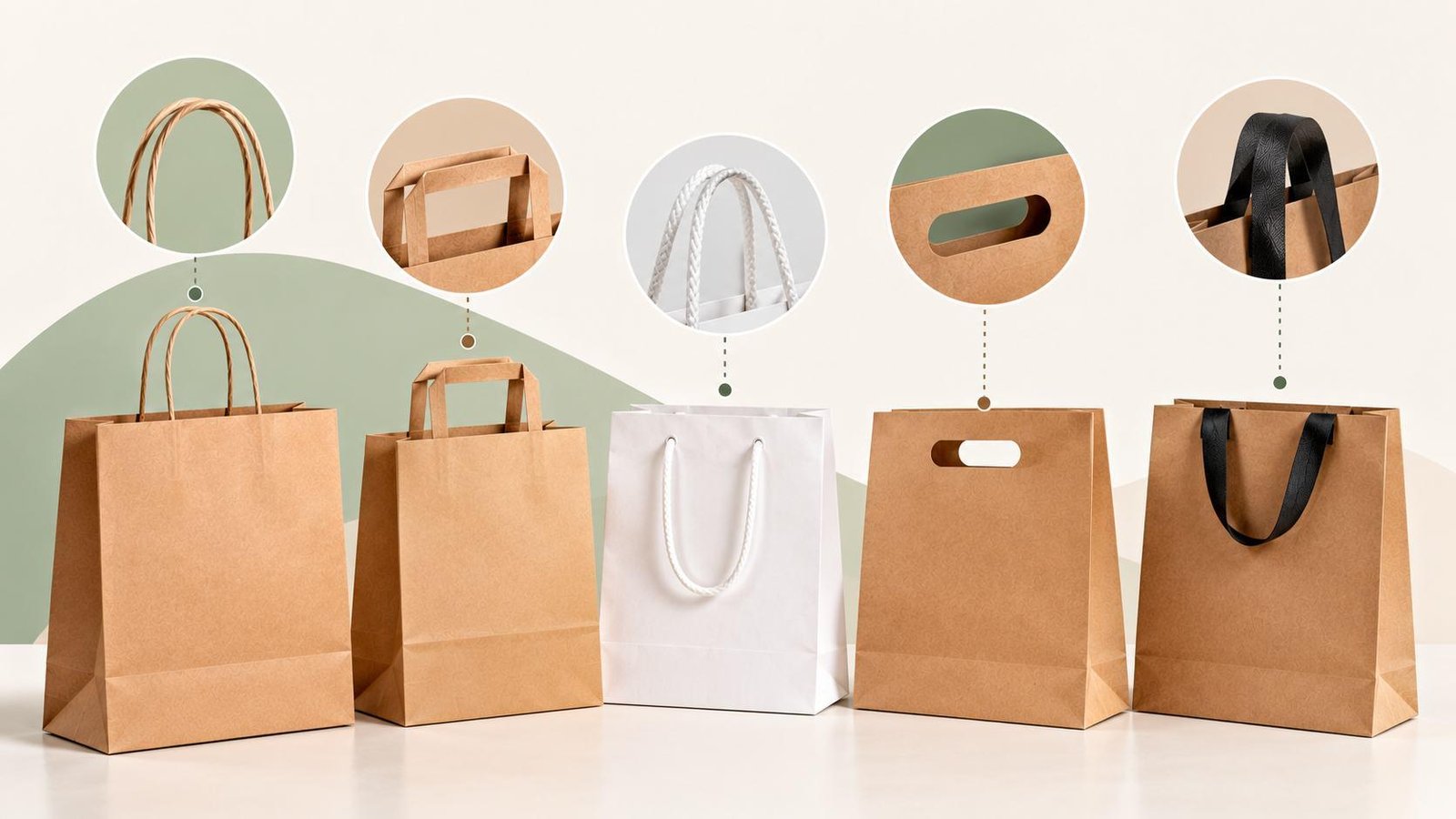
Common paper bag handle styles include twisted paper handles, flat paper handles, rope handles, die-cut handles, and ribbon or fabric handles. The best option depends on bag size, expected contents, carrying comfort, brand presentation, and budget.
1. What Are the Main Types of Paper Bag Handles?
Paper bags are available with several handle constructions. Some use paper twisted or folded into a grip, while others use cord, ribbon, or a cutout in the bag itself. Here is how the main options compare.
2. Twisted Paper Handles
Twisted paper handles are made by twisting paper into a narrow, cord-like shape. The ends are usually secured to the inside of the bag, often with reinforcement patches. This style gives a familiar shopping-bag appearance while keeping the handle material consistent with a paper bag.
- Best for: clothing stores, gift shops, boutiques, and general retail.
- Why choose it: a neat appearance, a comfortable grip, and a coordinated paper-based look.
- Check before ordering: handle attachment, paper strength, bag dimensions, and the weight of the products being carried.
3. Flat Paper Handles
Flat paper handles are formed from folded paper strips attached to the bag. Their wider grip can feel practical for everyday carrying, especially for grocery and food-service applications. They are often selected when a simple, functional paper handle is preferred.
- Best for: grocery stores, cafes, food businesses, and everyday shopping.
- Why choose it: a broad grip and a straightforward, practical design.
- Check before ordering: handle width, attachment area, bag construction, and intended load.
4. Rope and Cord Handles
Rope or cord handles add a more substantial and decorative detail. Depending on the specification, they may be made from paper cord, cotton, or another cord material and attached through reinforced holes or other suitable fittings. They are often used when presentation is a priority.
- Best for: boutiques, premium retail, gift packaging, and event merchandise.
- Why choose it: a distinctive finish and a handle that can complement a premium design.
- Check before ordering: cord material, diameter, attachment method, reinforcement, and color availability.
5. Die-Cut Handles
A die-cut handle is an opening cut into the bag itself, rather than a separate handle attached to it. Some designs include a reinforced area around the opening. This creates a clean, integrated look, but the bag material and handle area must be appropriate for the intended contents.
- Best for: lightweight products, promotional bags, and selected retail uses.
- Why choose it: an integrated appearance without a separate handle component.
- Check before ordering: grip dimensions, reinforcement, paper weight, and whether the contents are light enough for the design.
6. Ribbon and Fabric Handles
Ribbon or fabric handles are decorative options often selected for gift bags and premium presentation. They can add contrast, texture, and a more customized appearance. The attachment and material should be chosen to suit the bag construction and expected use.
- Best for: luxury gifts, cosmetics, fashion retail, and special occasions.
- Why choose it: a refined look and opportunities to coordinate handle color with brand design.
- Check before ordering: ribbon or fabric type, width, color, attachment, and carrying requirements.
7. How to Choose the Right Handle for Your Paper Bags
Start with the way customers will use the bag, then compare comfort, construction, and appearance. These factors can help narrow the options:
- Consider the product weight. Match the handle and bag construction to the expected contents. Do not assume a particular handle style guarantees a specific load capacity; ask for specifications and testing where needed.
- Think about carrying comfort. Flat or wider grips may suit everyday shopping, while cord handles can provide a different feel. Consider how far customers are likely to carry the bag.
- Match the handle to the bag size. Larger bags may need a different handle length, attachment area, or reinforcement than small gift bags.
- Choose the right appearance. Twisted and flat paper handles give a coordinated paper look; rope, ribbon, and fabric can create a more decorative finish.
- Review the attachment method. Handle material is only one part of the construction. Ask how the handle is fixed and whether the top panel needs reinforcement.
- Plan for printing and branding. Make sure the handle color and style work with your logo, artwork, and overall packaging design.
- Compare the complete order specification. Check dimensions, paper material and weight, handle type, printing, quantity, and delivery requirements before approving production.
8. Which Handle Style Works Best for Different Businesses?
9. Can Paper Bags Be Customized With Different Handle Styles?
Many custom paper bag projects can specify the handle style alongside bag dimensions, paper material, color, and printed artwork. Available combinations depend on the bag format and production specifications. If you are planning branded packaging, explore custom kraft bags in the USA for options for retail and business packaging.
Before placing a wholesale order, share your preferred bag size, intended use, approximate product weight, handle preference, print requirements, and order quantity. Request a sample or production specification when you need to confirm the feel, construction, and appearance.
10. Frequently Asked Questions About Paper Bag Handle Types
What are the most common paper bag handle types?
Common options include twisted paper, flat paper, rope or cord, die-cut, and ribbon or fabric handles.
Which paper bag handle is best for shopping bags?
Twisted and flat paper handles are common choices for everyday shopping. The right option depends on the bag size, contents, construction, and desired appearance.
Are twisted paper handles strong?
They can be suitable for many retail uses when correctly specified and attached. Actual performance depends on the paper, handle construction, attachment, and bag design.
Are flat paper handles comfortable?
Their wider shape can provide a practical grip for everyday carrying. Comfort still depends on handle width, bag weight, and how the bag is used.
Are die-cut handles suitable for heavy products?
Not automatically. A die-cut opening can concentrate stress around the cutout, so material, reinforcement, and intended load should be reviewed before choosing it.
Can I customize the handle color?
Some handle materials and production options allow color coordination. Confirm available colors and specifications with your packaging supplier.
Can I order custom kraft bags wholesale?
Yes, wholesale orders can be planned around bag dimensions, material, handle style, printing, and quantity. Confirm the available specifications and production details before ordering.
Choose Custom Kraft Bags for Your Brand
The right handle can make a paper bag easier to carry and help your packaging look consistent with your brand. Compare bag formats, handle styles, sizes, and printing requirements before choosing your specification.
Note: Handle suitability and carrying performance vary by material, dimensions, attachment method, reinforcement, and product weight. Confirm specifications with your packaging supplier before production.