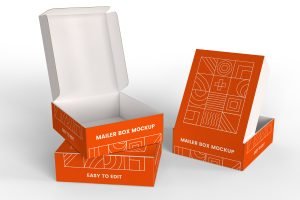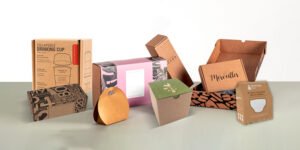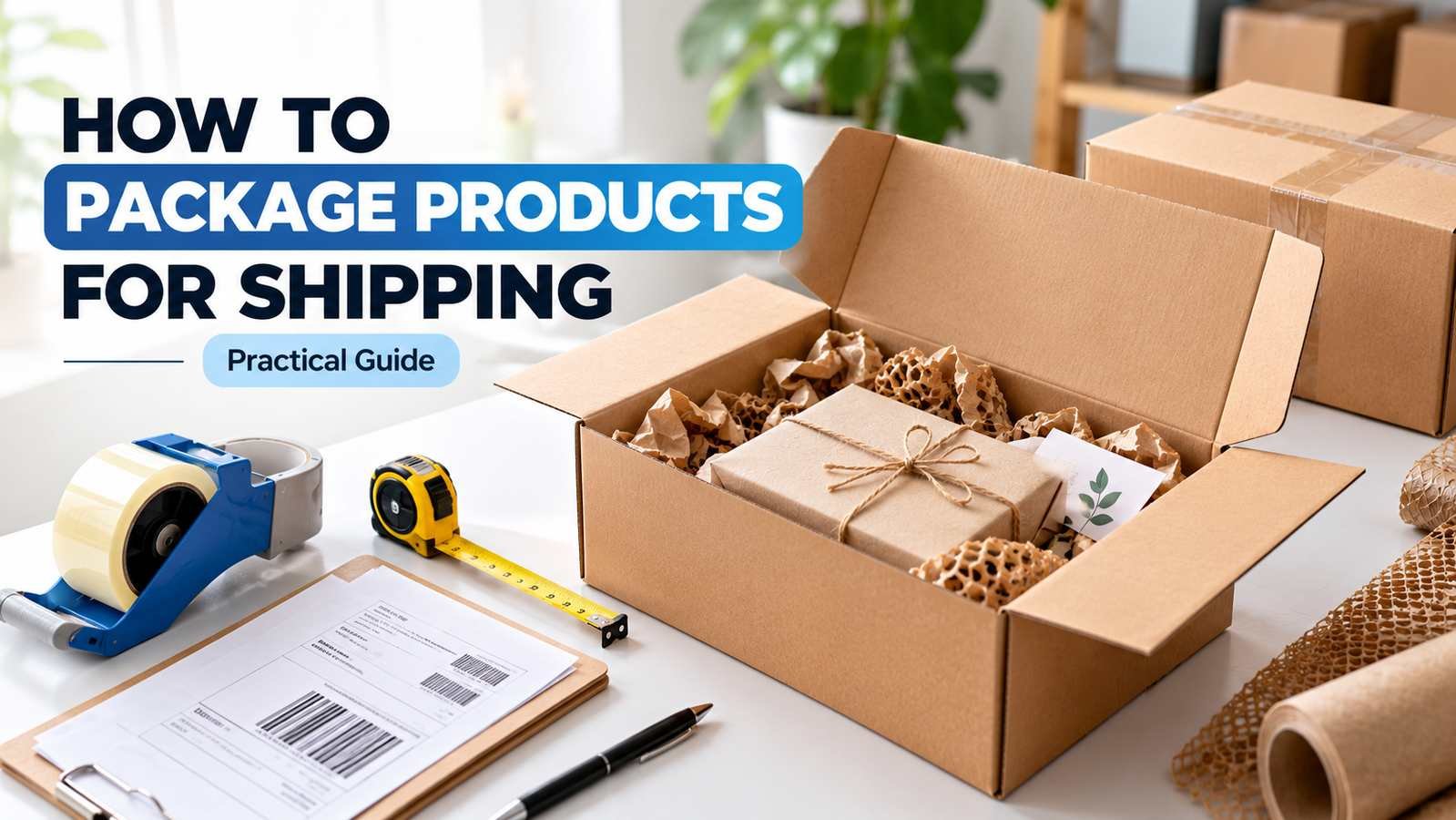
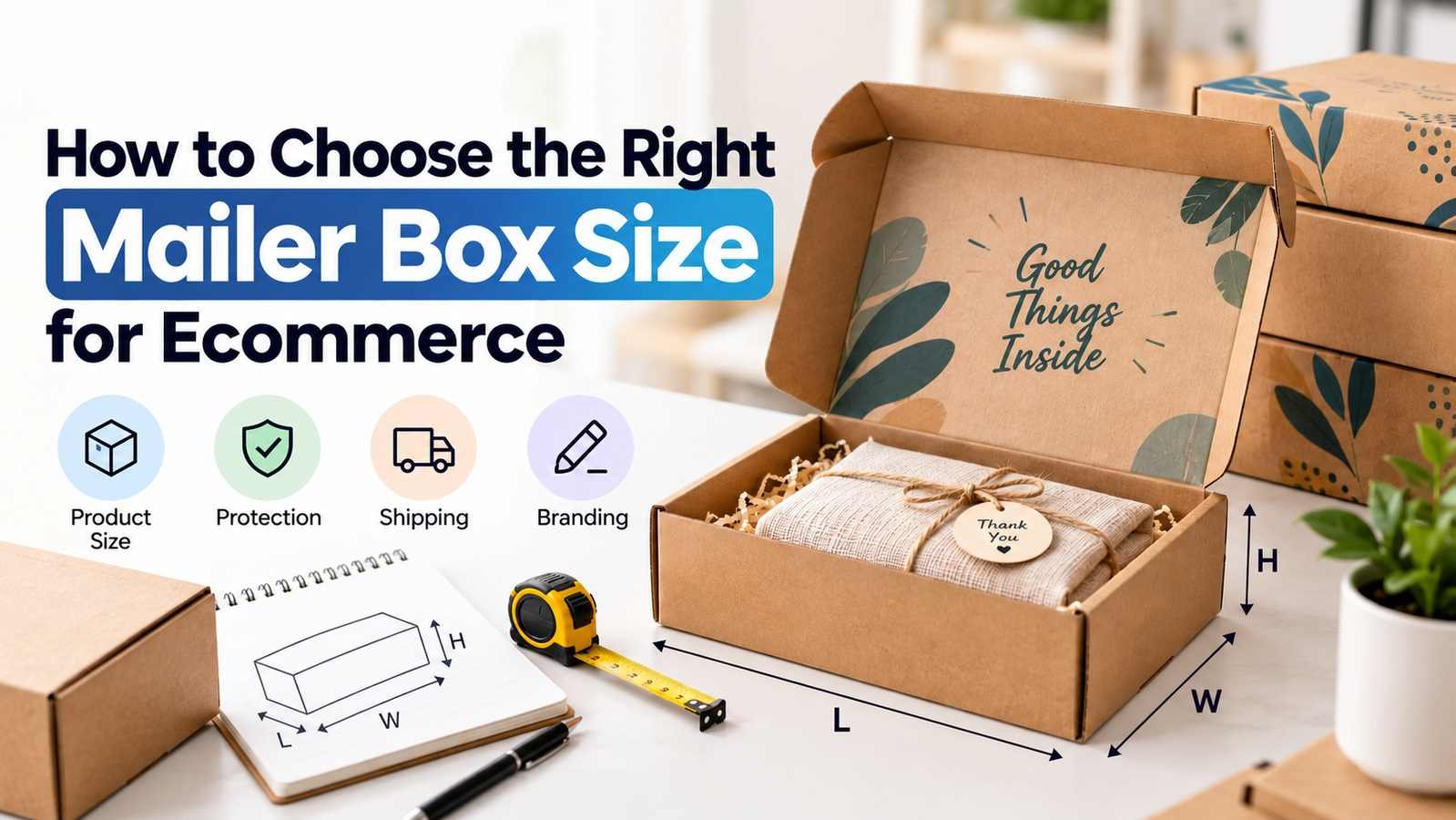
Choosing the right mailer box size is one of the simplest ways to improve ecommerce packaging. A box that is too large can create unnecessary movement, extra void space, and higher shipping costs. A box that is too small can crush the product, damage inserts, or make packing frustrating.
For online brands, the goal is not simply to find a box that fits. You want a mailer that protects the product, supports an efficient fulfillment process, looks professional when it reaches the customer, and leaves enough room for any inserts or branded materials you actually use.
Why Mailer Box Size Matters for Ecommerce
Ecommerce packaging has to work across several stages: packing, storage, transportation, delivery, and unboxing. The right dimensions can make each stage more efficient.
If your box has too much empty space, the product may move around during handling and require additional filler. Oversized packaging can also take more warehouse space and may increase dimensional shipping charges depending on the carrier and package characteristics.
On the other hand, a box that is too tight can put pressure on the product or make it difficult for fulfillment staff to close and seal consistently. This is especially important for products with rigid shapes, fragile components, clothing folds, jars, cosmetics, or gift-ready presentations.
Start With Your Product Dimensions
The most reliable starting point is the product itself—not the box you currently use. Measure the item in its normal shipping condition and record its length, width, and height.
For products that change shape—such as apparel, soft goods, or products already inside a retail carton—measure the form that will actually go into the mailer. If the product is sold as a bundle, measure the complete bundle rather than an individual item.
Create packaging that fits your products, protects every order, and supports a smoother ecommerce fulfillment process.
Account for Protection and Inserts
Your product dimensions are only the beginning. A practical mailer box size also needs room for whatever travels with the product.
- Protective paper, tissue, or cushioning
- Product cards, thank-you notes, or care instructions
- Branded inserts or promotional cards
- Multiple products packed together
- Dividers or simple internal protection
Do not automatically add a large amount of empty space. Instead, estimate the thickness of the protection you actually use. The objective is controlled clearance, not a large gap around the product.
How Much Extra Space Should You Leave?
There is no single clearance number that works for every ecommerce product. The right amount depends on product rigidity, protective materials, presentation requirements, and how tightly the package needs to close.
For a durable product that needs little protection, minimal clearance may be enough. Fragile or presentation-sensitive products may require more room for protective materials. The important point is to calculate the space from your actual packing method rather than choosing a much larger box “just in case.”
Choose the Box Around the Complete Order
If customers frequently order more than one item, test common order combinations before standardizing your packaging. A box that is perfect for a single product may become inefficient when an order contains two or three units.
Think About Shipping Efficiency
Mailer boxes are part of your shipping system, so dimensions should be considered alongside carrier requirements and your fulfillment workflow. USPS provides packaging and shipping resources that can help businesses understand package preparation and mailing considerations.
For ecommerce brands, the practical goal is to avoid paying to ship unnecessary volume while still giving the product adequate protection. A compact, repeatable package can also be easier to store, pick, pack, and label.
Mailer Box Size by Product Type
Different products naturally call for different packaging approaches. Use these categories as a starting point, then test your actual product and packing configuration.
Custom Mailer Boxes vs. Standard Sizes
Standard mailer boxes can be useful when your product fits comfortably within an available size. They can simplify purchasing and make sense for brands with straightforward packaging needs.
Custom packaging becomes more valuable when your product dimensions are unusual, your brand needs a precise presentation, or you want to reduce excess space. Custom mailer boxes can be designed around the actual product and packing configuration instead of forcing the product into a generic footprint.
For brands shipping across the United States, custom mailer boxes in the USA can also support a consistent branded presentation across ecommerce orders.
Test Before Ordering in Bulk
Before committing to a large packaging order, create a physical prototype or sample. Put the product inside, add the exact protection and inserts you plan to use, close the box, and inspect the finished package.
Then test the workflow. Can your team pack it quickly? Does the lid close cleanly? Does the product stay in position? Is the label area practical? Does the finished package look the way you want customers to see it?
- Measure the product in its real shipping configuration.
- Account for protection, inserts, and multiple-item orders.
- Choose enough clearance for reliable closure without excessive empty space.
- Consider storage, fulfillment, labeling, and shipping efficiency.
- Test a physical sample before placing a bulk order.
Common Mailer Box Sizing Mistakes
- Choosing by product name alone: Two products in the same category can have very different dimensions.
- Ignoring inserts: Cards, tissue, and protective materials need real space.
- Buying the largest box: More space is not automatically better protection.
- Testing only one order: Multi-item orders can expose sizing problems.
- Skipping a physical sample: A theoretical fit can behave differently during real packing.
Final Thoughts
The right mailer box size balances protection, product fit, packing speed, presentation, storage, and shipping efficiency. Start with accurate product measurements, build in only the clearance your packing method needs, and test common order combinations before finalizing the dimensions.
If you want a broader look at ecommerce packaging, see our ecommerce packaging guide. You can also compare structure and use cases in our guide to mailer boxes vs. shipping boxes, or review our kraft box sizes guide for more sizing considerations.
Turn the right box size into a consistent, branded unboxing experience for your ecommerce customers.