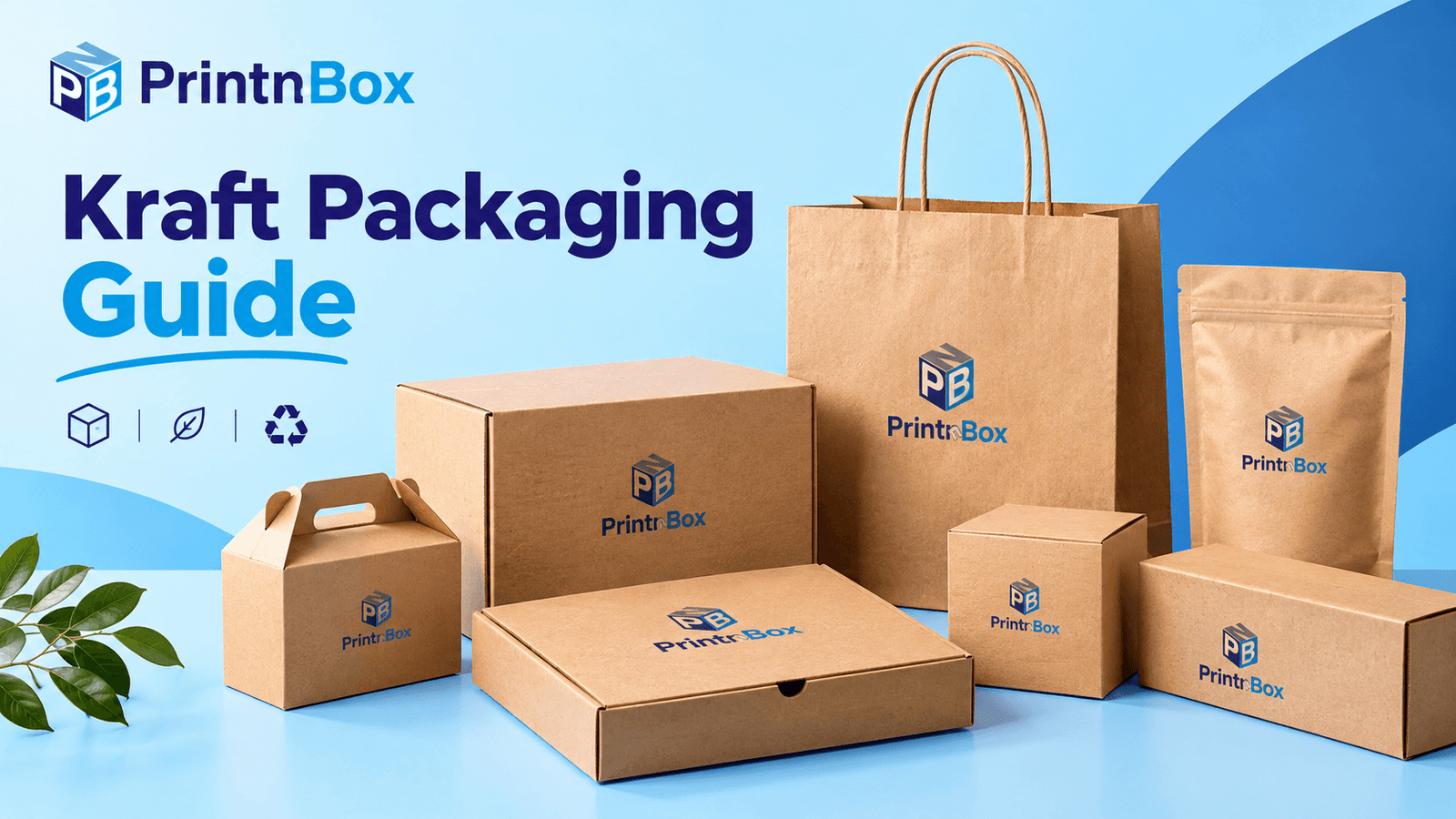
Kraft packaging is widely used for retail products, e-commerce orders, food, shipping, gifts, and merchandise. Its natural appearance, versatility, and range of available formats make it useful for businesses looking for practical packaging that can also support their branding.
But kraft packaging isn’t limited to one type of box. You can choose from kraft boxes, mailers, bags, food containers, cartons, and shipping boxes depending on your product and packaging requirements.
This kraft packaging guide explains the main types, their common uses, and how to choose the right option for your business.
What Is Kraft Packaging?
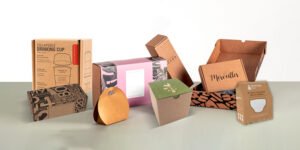
Kraft packaging is made from kraft paper, kraft paperboard, or kraft-based corrugated materials. While natural brown is the traditional appearance, kraft packaging can also be printed with logos, colors, graphics, product information, and other branding elements.
Common types include:
- Kraft product boxes
- Kraft mailer boxes
- Kraft shipping boxes
- Kraft paper bags
- Kraft merchandise bags
- Kraft food boxes
- Kraft bakery boxes
- Kraft folding cartons
- Kraft wrapping paper
If you’re looking for packaging that combines product presentation with customization, custom kraft packaging can be designed around your product dimensions, branding, and intended application.
Why Is Kraft Packaging Popular?
Kraft packaging is popular because it can serve both functional and branding purposes.
A kraft folding carton may be suitable for retail products, while a corrugated kraft box can provide greater protection for products being shipped.
Packaging Fact: According to the U.S. Environmental Protection Agency (EPA), containers and packaging accounted for 82.2 million tons of municipal solid waste generation in 2018, or 28.1% of total generation. Corrugated boxes had a reported 96.5% recycling rate that year.
Kraft Packaging at a Glance
| Feature | Kraft Packaging |
| Material | Kraft paper, paperboard, or corrugated board |
| Appearance | Natural brown or custom printed |
| Common uses | Retail, shipping, food, e-commerce, gifts |
| Customization | Logos, graphics, colors, messaging |
| Strength | Depends on material and construction |
| Sustainability | Depends on material, coatings, sourcing, and disposal |
Types of Kraft Packaging
1. Kraft Boxes
Kraft boxes are versatile packaging solutions for retail products, cosmetics, gifts, food, and e-commerce products.
They can be customized with logos, product information, graphics, and brand colors.
Best for: Product packaging and retail presentation.
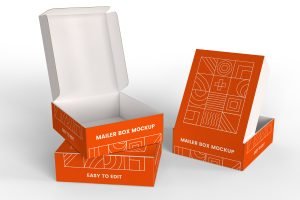
2. Kraft Mailer Boxes
Kraft mailer boxes are designed for products shipped directly to customers. Their integrated construction can make packing and closing orders convenient.
They’re commonly used for:
- Subscription boxes
- Clothing
- Cosmetics
- Gifts
- Small e-commerce products
Best for: E-commerce and direct-to-consumer brands.
3. Kraft Shipping Boxes
Shipping boxes need to provide suitable protection during transportation and handling. Corrugated kraft boxes use a fluted middle layer between linerboard layers to create a stronger board structure.
Best for: Shipping, fulfillment, storage, and heavier products.
4. Kraft Paper Bags
Kraft paper bags are commonly used by retailers, boutiques, restaurants, bakeries, and other businesses.
They can be printed with your logo, website, brand message, or promotional graphics.
Best for: Retail and carryout packaging.
5. Kraft Food & Bakery Boxes
Kraft food packaging can be used for takeout meals, desserts, cookies, pastries, bakery products, and other food applications.
For food packaging, consider grease resistance, moisture, heat, food-contact suitability, ventilation, and closure requirements.
Best for: Restaurants, bakeries, cafés, food trucks, and food brands.
Kraft vs. Corrugated Packaging: What’s the Difference?
Kraft and corrugated aren’t necessarily competing materials.
Kraft generally refers to the paper material, while corrugated describes the construction of the board. A corrugated shipping box can therefore use kraft linerboard.
| Feature | Kraft Paper/Paperboard | Corrugated Kraft |
| Construction | Paper or paperboard | Linerboard + fluted medium |
| Typical use | Bags, cartons, wrapping | Shipping and protection |
| Protection | Low to moderate | Moderate to high |
| Retail presentation | Excellent | Good to excellent |
| Shipping | Depends on construction | Well suited |
Choose based on your product rather than the name of the material alone.
How to Choose the Right Kraft Packaging
1. Measure Your Product
Measure the product’s length, width, and height accurately. If you need inserts or protective material, include the additional space required.
Avoid unnecessarily large packaging because excess space can require more void fill and increase shipping volume.
2. Consider Product Weight and Fragility
Lightweight products may work well with paperboard packaging, while heavier or fragile products may require corrugated construction or protective inserts.
3. Think About the Distribution Method
Ask where and how the package will be used:
- Retail shelf
- Customer carryout
- E-commerce shipping
- Local delivery
- Warehouse storage
- Home delivery
Retail packaging generally emphasizes presentation, while shipping packaging places greater emphasis on protection.
4. Consider Branding
Custom kraft packaging can make your package part of your overall brand experience.
Consider adding:
- Logo
- Brand colors
- Product name
- Website
- Instructions
- Social media information
- Promotional messaging
For businesses targeting customers across the United States, custom kraft packaging in the USA can be considered when comparing packaging formats and customization options.
5. Evaluate Material and Sustainability
Don’t assume every brown package is automatically sustainable.
Consider the actual material, recycled content, coatings, laminations, sourcing, and local recycling requirements.
The EPA provides data on recovered fiber and paper packaging materials, including kraft bags, wrapping paper, corrugated containers, folding cartons, and other packaging products.
For businesses concerned about responsible forest sourcing, the Forest Stewardship Council (FSC) explains how certified paper and packaging can support responsible sourcing and supply-chain transparency.
Kraft Packaging for E-Commerce
E-commerce packaging needs to balance protection, branding, size, and convenience.
A suitable package should:
- Protect the product during transportation
- Fit the product appropriately
- Be easy to open
- Support your branding
- Avoid unnecessary empty space
- Work with your fulfillment process
A custom kraft mailer or corrugated kraft box can combine shipping functionality with a branded customer experience.
Kraft Packaging for Retail
Retail packaging has another important purpose: helping customers recognize and understand the product.
Depending on the product, your package can display:
- Product name
- Brand logo
- Ingredients
- Instructions
- Barcode
- Website
- Brand story
- Promotional information
Keep the design clear and prioritize the information customers need most.
Is Kraft Packaging Recyclable?
Kraft packaging can be recyclable, but not every kraft package is automatically recyclable.
Coatings, plastic components, laminations, food contamination, and other materials can affect how packaging is handled after use.
EPA Recycling Statistics: Paper and paperboard containers and packaging had an overall recycling rate of 80.9% in 2018, while corrugated boxes had a 96.5% recycling rate.
Recycling rules can also differ between communities, so businesses and consumers should check applicable local requirements.
7 Tips for Choosing Kraft Packaging
- Measure your product accurately.
- Consider product weight and fragility.
- Match packaging to its distribution method.
- Avoid unnecessary empty space.
- Choose printing that fits your brand.
- Review material, coating, and recycling considerations.
- Test a sample with the actual product before ordering in volume.
Quick Kraft Packaging Selection Guide
| Application | Kraft Packaging to Consider |
| E-commerce | Kraft mailer or corrugated kraft box |
| Retail products | Custom kraft product box |
| Boutique | Kraft merchandise bag |
| Restaurant | Kraft food box |
| Bakery | Kraft bakery box |
| Cosmetics | Custom kraft product box |
| Subscription products | Kraft mailer box |
| Shipping | Corrugated kraft shipping box |
| Gifts | Kraft gift box or wrapping paper |
Final Thoughts
The right kraft packaging depends on your product, handling requirements, branding, and distribution method.
Start by evaluating your product’s size, weight, fragility, shipping requirements, and presentation needs. Then choose the appropriate kraft box, bag, mailer, carton, or shipping format.
For businesses that need packaging customized around their products and brand, explore custom kraft packaging to compare suitable options.
Sources
- U.S. Environmental Protection Agency: Containers and Packaging: Product-Specific Data — EPA packaging and recycling data
- U.S. Environmental Protection Agency: Comprehensive Procurement Guidelines for Paper and Paper Products — EPA paper and packaging guidelines
- Forest Stewardship Council: Paper, Print & Packaging — FSC paper and packaging information