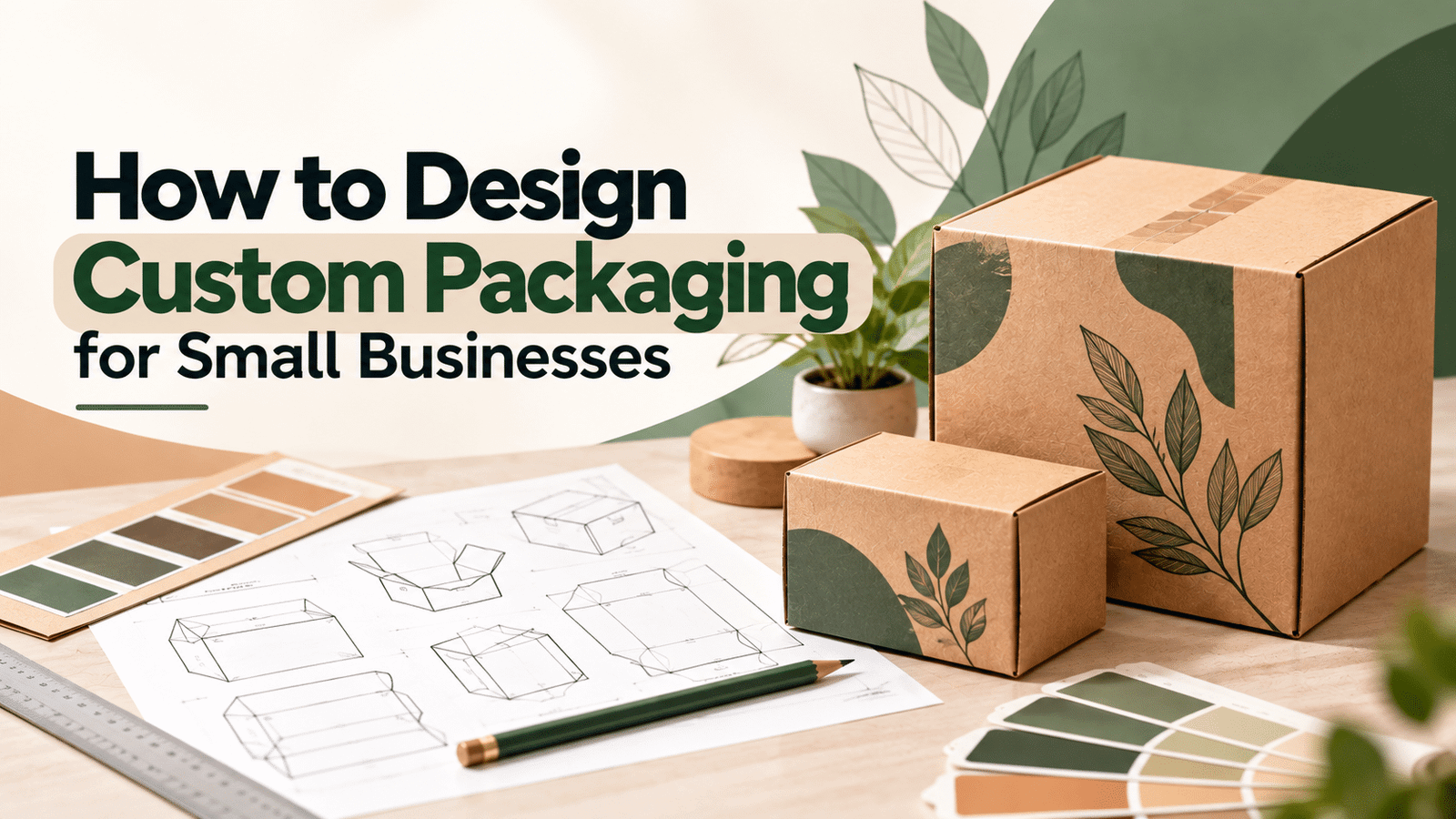
Designing custom packaging for small businesses is about more than putting a logo on a box. Good packaging should protect the product, communicate the brand, fit the customer’s expectations, and work within the business’s budget. For a small business, every packaging decision matters because unnecessary complexity can increase costs without improving the customer experience.
The most effective approach is to design packaging around the product and the customer journey first, then add branding, printing, and finishing elements that support those goals. This guide explains how small businesses can plan and design custom packaging from the initial concept through production.
Quick Answer: To design custom packaging for a small business, start with the product and customer experience. Define the packaging purpose, select an appropriate structure and material, determine dimensions, create a simple brand hierarchy, prepare print artwork, consider shipping and storage, and order a sample or proof before committing to a larger production run.
Why Custom Packaging Matters for Small Businesses
Small businesses often compete with larger brands that have established visual identities and extensive marketing resources. Packaging gives smaller brands another physical touchpoint where they can communicate who they are.
A well-designed package can help create a consistent experience from the moment a customer receives the product until they open it. It can also make products easier to recognize when customers see them again online or in a retail environment.
- Creates a recognizable brand presentation
- Protects the product during handling and transportation
- Improves the customer’s first physical impression
- Makes product information easier to communicate
- Supports a consistent brand identity
- Can make products more suitable for retail or e-commerce
However, custom packaging does not automatically mean complicated packaging. A small business can achieve a professional result with a relatively simple structure and a carefully planned visual identity.
1. Define What Your Packaging Needs to Do
Before opening a design program or choosing colors, define the main purpose of the package. Different products require different packaging priorities.
Ask these questions first:
- What product will the package hold?
- Will the package be sold in a store or shipped directly?
- Does the product need additional protection?
- Will customers see the packaging before purchasing?
- Does the package need to support an unboxing experience?
- Will the packaging need inserts, dividers, or other components?
- What information must appear on the package?
This first step prevents a common mistake: designing attractive packaging before determining whether the structure actually works for the product.
2. Understand Your Customer
Packaging should reflect the expectations of the people buying your product. A handmade candle company, boutique clothing brand, specialty food business, and cosmetics company may all need very different packaging experiences.
Consider:
- Who is buying the product?
- Where will they receive or purchase it?
- What type of visual style appeals to them?
- Is the product positioned as everyday, premium, handmade, natural, playful, or professional?
- What will customers expect when they open the package?
The answers should influence the packaging design without forcing the brand into unnecessary trends.
3. Choose the Packaging Structure Before the Artwork
One of the most important design decisions is the physical structure of the package. The structure determines how the product is inserted, removed, protected, displayed, and transported.
| Packaging Format | Potential Use | Design Priority |
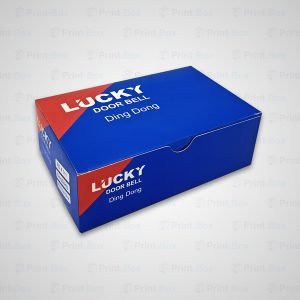
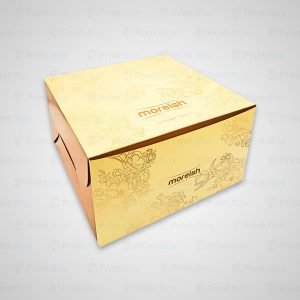
| Folding Boxes | Retail products, cosmetics, gifts | Presentation and product fit |
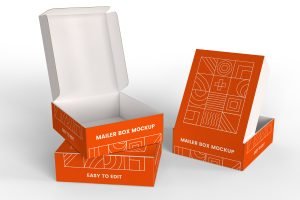
| Mailer Boxes | E-commerce and subscription products | Shipping and unboxing |
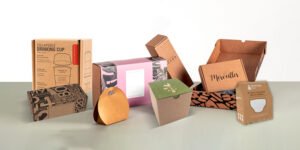
| Kraft Boxes | Retail, gifts, handmade products, food packaging | Material appearance and branding |
| Shipping Boxes | E-commerce and transportation | Protection and handling |
| Custom Bags | Retail stores, events, boutiques | Brand visibility and usability |
If you are still deciding between different kraft packaging structures, our Kraft Packaging Guide provides additional information about kraft packaging types and applications.
4. Measure the Product Accurately
Packaging dimensions should be based on the actual product rather than an approximate measurement. Measure the product’s length, width, and height and consider any components that need to fit inside the package.
Also consider:
- Protective materials
- Inserts
- Dividers
- Lids or closures
- Product movement inside the package
- How the customer will remove the product
The goal is not simply to create the smallest possible package. The package should provide enough room for the product and any necessary protection while avoiding excessive unused space.
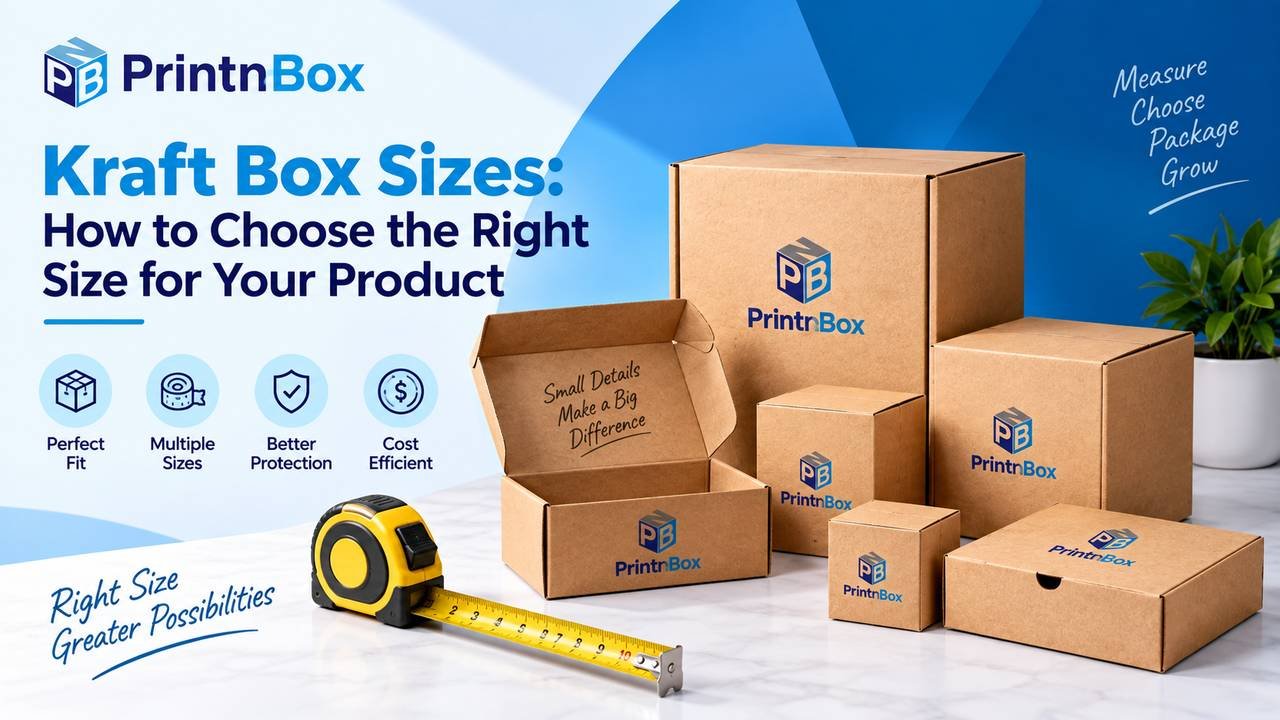
For a deeper explanation of dimensional planning, see our Kraft Box Sizes Guide.
5. Build a Simple Brand Hierarchy
Once the structure is established, move to the visual design. The most important elements should be easy to identify without making the package feel crowded.
A basic hierarchy can include:
- Brand logo: Establishes immediate brand recognition.
- Product name: Tells customers what the product is.
- Key message: Communicates an important benefit or positioning statement.
- Supporting information: Provides useful product details.
- Contact information: Helps customers reconnect with the business.
You do not need to place every piece of information on the front panel. Different sides of the package can have different purposes.
6. Select Colors That Fit Your Brand
Color should reinforce the identity of your business rather than simply making the package look attractive. Start with the colors already used across your website, logo, social media, and marketing materials.
A small packaging system may only need a few consistent colors:
- One primary brand color
- One secondary color
- A neutral background or packaging material color
- A contrasting text color
When printing on natural kraft material, remember that the brown surface can influence the appearance of printed colors. Artwork should therefore be prepared with the actual packaging material in mind.
7. Decide What Information Belongs on the Package
Packaging can communicate more than a logo. Depending on the product, customers may need product details, instructions, ingredients, care information, contact details, or other relevant information.
Before finalizing the design, make a complete list of the information that needs to appear on the packaging. Then organize it according to importance.
This avoids the common problem of trying to squeeze additional information into the design after the artwork has already been completed.
8. Design for Shipping and Storage
A package can look excellent in a product photograph but still be unsuitable for shipping. If your small business sells online, think about what happens after the product leaves your facility.
Consider:
- Handling during transportation
- Stacking
- Storage conditions
- Product weight
- Potential impacts or compression
- Available shipping space
- Whether additional protective packaging is required
If your packaging will be used for shipping, structural requirements should be considered before the visual design is finalized.
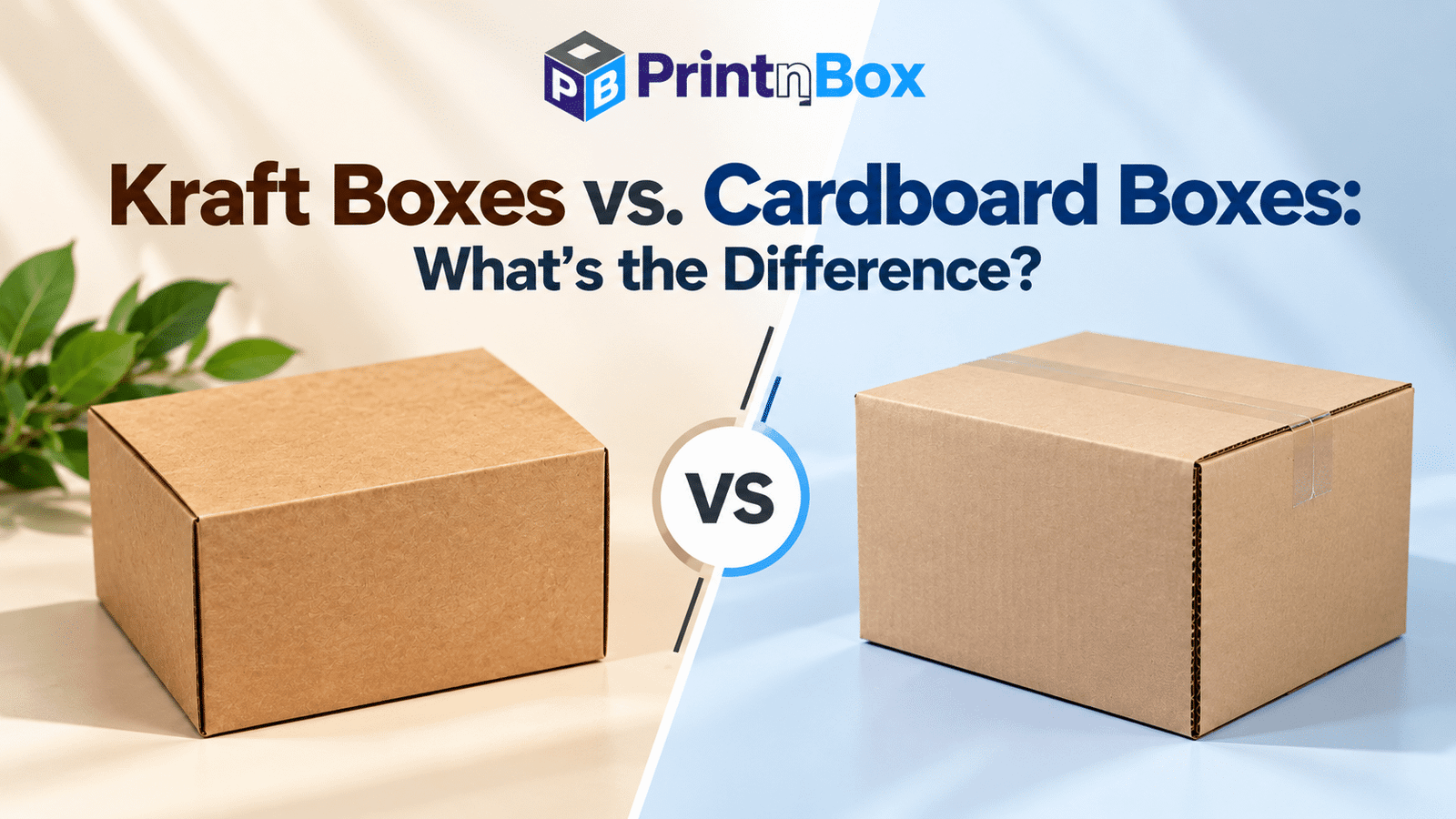
For more information about how material choice affects packaging applications, you can also review Kraft Boxes vs. Cardboard Boxes.
9. Use Custom Kraft Packaging When It Fits Your Brand
For businesses that want a natural, understated, or handmade visual identity, kraft packaging can be a useful design direction. The material itself can become part of the brand presentation instead of simply acting as a blank surface.
Custom kraft packaging can be developed around different products and brand styles. Depending on the packaging format, businesses can incorporate logos, artwork, product information, patterns, structural features, and other branding elements.
For small businesses interested in this approach, explore custom kraft packaging for packaging options designed around different product and branding requirements.
10. Plan the Unboxing Experience
For e-commerce brands, the packaging is part of the product experience. Customers may see the exterior before opening the package and then discover additional details as they unpack the product.
A simple unboxing experience can include:
- Clear exterior branding
- Easy-to-open packaging
- Organized product placement
- Interior branding
- Thank-you cards
- Product information cards
- Protective inserts
The goal is to make opening the package feel intentional without adding features that do not provide value.
11. Keep the Design Practical for Production
A packaging design has to work not only on screen but also during manufacturing and assembly. Very complicated structures, excessive finishing, or unnecessarily detailed artwork may make production more difficult.
Before approving the final design, review:
- Artwork dimensions
- Bleed and safe areas
- Logo placement
- Text readability
- Color requirements
- Die-cut areas
- Folding and assembly points
- Closure or opening mechanisms
12. Order a Sample Before a Large Production Run
A digital design does not always show exactly how packaging will look or function in real life. A physical sample can reveal issues with dimensions, colors, opening mechanisms, product fit, and overall appearance.
Use the sample to check:
- Does the product fit correctly?
- Is there too much empty space?
- Is the packaging easy to open?
- Is the product adequately protected?
- Does the printed artwork look correct?
- Is the logo positioned properly?
- Does the package match the intended brand appearance?
- Does the finished structure feel appropriate for the product?
Testing before a larger order gives a small business an opportunity to refine the design before committing to a larger quantity.
Custom Packaging in the USA for Small Businesses
Businesses serving customers in the United States may have different packaging requirements depending on whether products are sold through retail stores, online marketplaces, direct-to-consumer websites, events, or other sales channels.
When evaluating custom packaging in the USA, small businesses should consider the product category, packaging dimensions, material, printing requirements, order quantity, shipping method, and customer experience.
If you are looking for packaging designed around your brand and product requirements, explore custom packaging in the USA and compare suitable packaging options.
Common Packaging Design Mistakes Small Businesses Should Avoid
Good packaging design is not only about what you include. It is also about knowing what to avoid.
- Designing before measuring: Artwork cannot solve an incorrect package size.
- Adding too much information: Crowded packaging can be difficult to understand.
- Ignoring the customer experience: Packaging should be practical as well as attractive.
- Choosing materials based only on appearance: The material must also meet the product’s functional needs.
- Forgetting shipping: E-commerce packaging may face considerably different conditions from retail packaging.
- Changing the brand completely: Packaging should reinforce the existing brand identity.
- Skipping physical testing: A sample can reveal problems that are not obvious on screen.
- Adding unnecessary features: Every additional feature should have a purpose.
Custom Packaging Design Checklist
- ☐ Product dimensions have been measured
- ☐ Packaging purpose has been defined
- ☐ Target customer has been considered
- ☐ Packaging structure has been selected
- ☐ Material requirements have been reviewed
- ☐ Brand colors and typography are consistent
- ☐ Logo placement is clear
- ☐ Product information is organized
- ☐ Shipping and storage requirements have been considered
- ☐ Artwork has been checked carefully
- ☐ A physical sample has been reviewed
- ☐ Final packaging works within the business budget
Frequently Asked Questions About Custom Packaging for Small Businesses
What is custom packaging for small businesses?
Custom packaging is packaging designed around a business’s specific product, brand identity, dimensions, and customer experience. It can include custom boxes, mailers, bags, inserts, and other packaging formats.
How should a small business start designing packaging?
Start by defining the product’s packaging requirements, measuring the product, understanding the target customer, selecting the appropriate packaging structure, and establishing the brand’s visual direction.
What should be printed on custom packaging?
Common elements include the business logo, product name, brand messaging, product information, and other information relevant to the product. The exact requirements depend on the packaging and product category.
Is custom packaging expensive for a small business?
Packaging costs depend on factors such as material, dimensions, structure, printing, finishing, quantity, and production requirements. Small businesses can control costs by prioritizing the packaging features that provide the greatest functional and branding value.
Is kraft packaging suitable for small businesses?
Kraft packaging can be suitable for businesses that want a natural or understated visual style and packaging customized around their products. The appropriate structure still depends on the product’s functional requirements.
Should I test custom packaging before ordering?
Yes. Reviewing a physical sample can help identify problems with product fit, structure, artwork, printing, opening, and overall presentation before a larger production run.
Final Thoughts
Designing custom packaging for small businesses starts with understanding the product and ends with creating a package that works for both the customer and the business. The strongest designs balance function, branding, protection, usability, production, and cost.
Rather than adding every available packaging feature, focus on the elements that make the package easier to recognize, use, ship, and remember. A simple structure with thoughtful branding can create a professional customer experience without making the packaging unnecessarily complicated.
For businesses interested in a natural packaging style, custom kraft packaging can be designed around different products, brand identities, and packaging requirements.
If you are planning packaging for a small business in the United States, explore custom packaging in the USA and consider how the packaging structure, dimensions, branding, and customer experience can work together.